

Chiesi
Laevolac Constipation Syrup 180 ml
Laevolac Constipation Syrup 180 ml

Couldn't load pickup availability

NET WEIGHT OF THE PRODUCT
NET WEIGHT OF THE PRODUCT
180ml
EAN
EAN
029565013
MINSAN
MINSAN
029565013

In ottemperanza all'articolo 118 “autorizzazione della pubblicità presso il pubblico” del decreto legislativo 24 aprile 2006, numero 219
INDICATIONS
Short-term treatment of occasional constipation in adults and children
ACTIVE INGREDIENTS
LAEVOLAC 66.7 g/100 ml syrup 100 ml of syrup contain: active ingredient: lactulose 66.7 g. For the full list of excipients, see section 6.1.
EXCIPIENTS
Syrup: none.
CONTRAINDICATIONS AND SIDE EFFECTS
• Hypersensitivity to lactulose or to any of the excipients listed in section 6.1. • Acute abdominal pain or pain of unknown origin, • nausea or vomiting, • intestinal obstruction or stenosis, • rectal bleeding of unknown origin, • severe dehydration.
DOSAGE
Dosage The correct dose is the minimum sufficient to produce an easy evacuation of loose stools. It is recommended to initially use the minimum doses envisaged. Do not exceed the maximum recommended daily dose. Adults The recommended dose is 15 - 30 ml (corresponding to 10 - 20 g of lactulose) to be taken in one or two administrations per day. When necessary the dose can be increased. The maximum daily dose is 45 ml (corresponding to 30 g of lactulose). Adolescents and children ≥ 10 years The recommended dose is 15 ml (corresponding to 10 g of lactulose) to be taken in one or two doses per day. The maximum daily dose is 15 ml. Children 5 - < 10 years The recommended dose is 10 ml (corresponding to 6.67 g of lactulose) to be taken in one or two administrations per day. The maximum daily dose is 10 ml. Children >1 - < 5 years The recommended dose is 5 ml (corresponding to 3.33 g of lactulose) to be taken in one or two administrations per day. The maximum daily dose is 5 ml. Children 1 month - 1 year The recommended dose is 2.5 ml (corresponding to 1.66 g of lactulose) to be taken in a single administration in the evening. The maximum daily dose is 2.5 ml. Duration of treatment Laxatives should be used as infrequently as possible and for no longer than seven days. The prescription for prolonged use must be established after adequate clinical evaluation. Method of administration In case of single daily administration, take preferably in the evening. If the dose is divided into two administrations per day, take preferably in the morning and in the evening.
CONSERVATION
Syrup: Store below 25°C. Shelf life after first opening the bottle: 12 months if stored at temperatures below 25°C.
WARNINGS
Warnings: Abuse of laxatives (frequent or prolonged use or with excessive doses) can cause persistent diarrhea with consequent loss of water, mineral salts (especially potassium) and other essential nutritional factors. In more severe cases, the onset of dehydration or hypokalemia is possible which can cause cardiac or neuromuscular dysfunction, especially in case of simultaneous treatment with cardiac glycosides, diuretics or corticosteroids. The abuse of laxatives, especially contact ones (stimulant laxatives), can cause addiction (possible need to progressively increase the dosage), chronic constipation and loss of normal intestinal functions (intestinal atony). If diarrhea appears, therapy should be suspended. LAEVOLAC contains galactose and lactose. Patients with rare hereditary problems of galactose intolerance, e.g. galactosemia, or glucose-galactose malabsorption, should not take this medicine. LAEVOLAC contains fructose. The additive effect of co-administration of medicinal products containing fructose (or sorbitol) and dietary intake of fructose (or sorbitol) should be considered.
INTERACTIONS
Laxatives can reduce the residence time in the intestine, and therefore the absorption, of other drugs administered simultaneously orally. Avoid ingesting laxatives and other medicines at the same time: after taking a medicine, leave an interval of at least 2 hours before taking the laxative. Laevolac may lead to increased toxicity of digitalis due to potassium depletion. A synergistic effect with neomycin is possible. Broad-spectrum antibacterial agents, administered orally at the same time as lactulose, can reduce its degradation, limiting the possibility of acidification of the intestinal contents and, consequently, the therapeutic efficacy.
SIDE EFFECTS
The following are the side effects organized according to the MedDRA System Organ classification. The frequency is defined as follows: very common (≥1/10), common (≥1/100 to <1/10), uncommon (≥1/1000 to <1/100), rare (≥1/10,000 to <1/1000), very rare (<1/10,000), not known (the frequency cannot be estimated from the available data).
Gastrointestinal disorders - Frequency: Very common. Side effect: Abdominal pain, flatulence.
Gastrointestinal disorders - Frequency: Common. Side effect: Abdominal distention, urgency of evacuation, diarrhea, nausea.
Gastrointestinal disorders - Frequency: Uncommon. Side effect: Vomiting.
General disorders and conditions relating to the administration site - Frequency: Common. Side effect: Reduced appetite.
Nervous system disorders - Frequency: Common. Side effect: Headache.
Metabolism and nutrition disorders - Frequency: Not known. Side effect: Electrolyte depletion.
Immune system disorders - Frequency: Not known. Side effect: Hypersensitivity reactions
Skin and subcutaneous tissue disorders - Frequency: Not known. Side effect: Skin rash, itching, urticaria.
Reporting of suspected adverse reactions Reporting suspected adverse reactions that occur after authorization of the medicine is important, as it allows continuous monitoring of the benefit/risk balance of the medicine. Healthcare professionals are asked to report any suspected adverse reactions via the national reporting system at https://www.aifa.gov.it/content/segnalazioni-reazioni-avverse
OVERDOSE
Excessive doses can cause abdominal pain and diarrhea, in which case treatment should be suspended and the resulting losses of fluids and electrolytes must be replenished.
PREGNANCY AND BREASTFEEDING
There are no adequate and well-controlled studies on the use of the medicine during pregnancy or during breastfeeding. The use of LAEVOLAC should be considered only in case of actual need and if the expected benefit for the mother outweighs the risk for the child.
EFFECTS ON DRIVING ABILITY
Laevolac does not alter the ability to drive and use machines.
OUR PRODUCTS FOR THIS SEASON
-
Curial βeta Dry eye supplement 30 capsules Dr.Tili
Vendor:TilpharmaRegular price €22,50Regular priceUnit price per€22,50Sale price €22,50 -
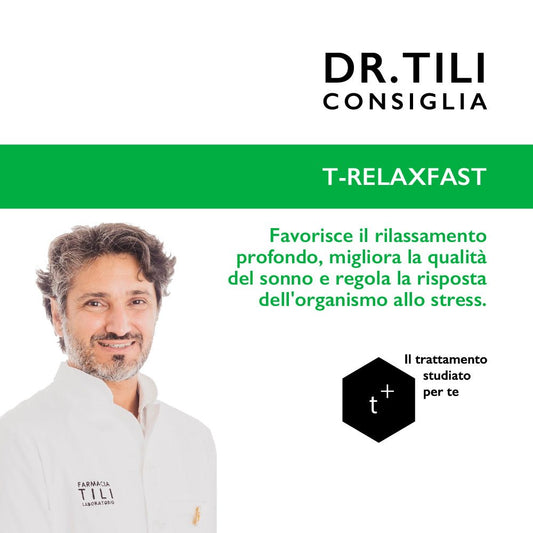
T - Relaxfast Sleep Supplement 60 Capsules Dr.Tili
Vendor:TilpharmaRegular price €24,50Regular priceUnit price per€24,50Sale price €24,50 -
Face Serum C5 Vitamin C 30ml Dr.Tili Skinlab
Vendor:TilabRegular price €62,50Regular priceUnit price per€62,50Sale price €62,50 -
Dr.Tili Skinlab E15 Vitamin E Face Serum 30ml
Vendor:TilabRegular price €32,50Regular priceUnit price per€32,50Sale price €32,50 -
Vit+ Face Vitamin Cream 50ml Dr.Tili Skinlab
Vendor:TilabRegular price €34,00Regular priceUnit price per€34,00Sale price €34,00 -
Anti-aging Facial Treatment Hyaluronic Acid IAL B3 30ml Dr.Tili Skinlab
Vendor:TilabRegular price €46,00Regular priceUnit price per€46,00Sale price €46,00 -
Body Milk Hydra Milk 200Ml. Dr.Tili Skinlab
Vendor:TilabRegular price €16,90Regular priceUnit price per€16,90Sale price €16,90 -
Facial Cleansing Milk 150ml Dr.Tili Skinlab
Vendor:TilabRegular price €18,90Regular priceUnit price per€18,90Sale price €18,90 -
Soothing Facial Toner 125ml Dr.Tili Skinlab
Vendor:TilabRegular price €14,50Regular priceUnit price per€14,50Sale price €14,50 -
Soothing Face Cream 50ml Dr.Tili Skinlab
Vendor:TilabRegular price €19,50Regular priceUnit price per€19,50Sale price €19,50
















-

ASSISTANCE - TELEPHONE ORDERS
-

SHIPPING
Shipping to Italy 24/48H
Delivery also on Saturday and Sunday
Free over €49.90
Shipping to Europe 24/72H
Free over €80 -

SAFETY
The security of your data is important to us!
We strictly comply with the European GDPR regarding
Privacy and processing of personal data
The payments you make on our site are 100% safe and guaranteed -

RETURNS
Fast returns via DIY portal and 14 days to change your mind.
Immediate and free replacements for incorrect or non-compliant products delivered.


