

Reckitt Benckiser
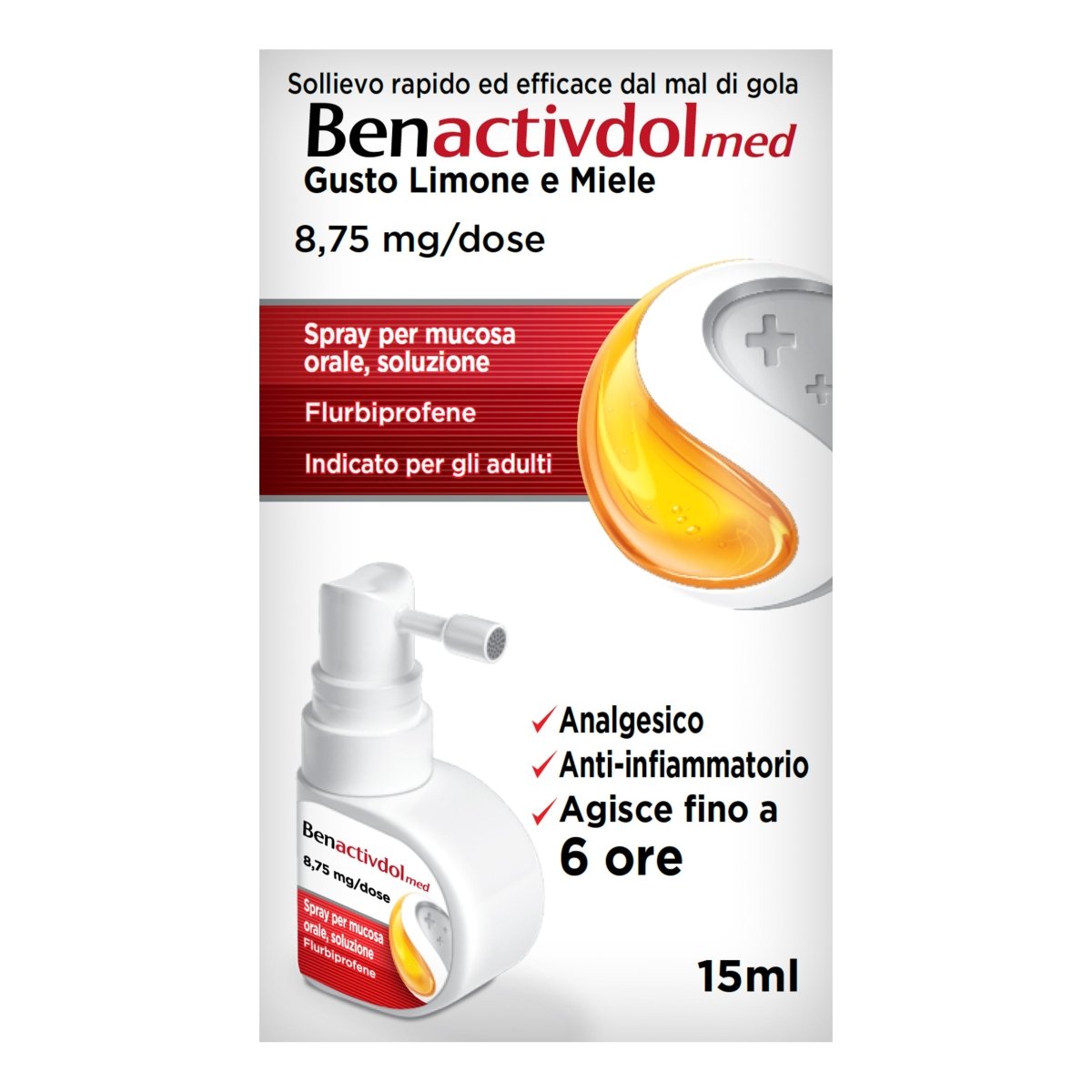
BenactivDolMed 8.75 mg/dose 15 ml lemon and honey oral spray
BenactivDolMed 8.75 mg/dose 15 ml lemon and honey oral spray

Couldn't load pickup availability

NET WEIGHT OF THE PRODUCT
NET WEIGHT OF THE PRODUCT
15ml
EAN
EAN
048231017
MINSAN
MINSAN
048231017
In compliance with article 118 "authorization of advertising to the public" of the legislative decree of 24 April 2006, number 219
INDICATIONS
Benactivdolmed is indicated for the short-term symptomatic treatment of acute pain in sore throat in adults.
CONTRAINDICATIONS
• Hypersensitivity to the active substance or to any of the excipients listed in paragraph 6.1. • Patients who have previously experienced hypersensitivity reactions (e.g. asthma, bronchospasm, rhinitis, angioedema or urticaria) in response to acetylsalicylic acid or other NSAIDs. • Current or previous peptic ulcer/recurrent hemorrhage (two or more distinct episodes of demonstrated ulceration) and intestinal ulceration. • History of gastrointestinal bleeding or perforation, severe colitis, bleeding or haematopoietic disorders related to previous therapy with NSAIDs. • Last trimester of pregnancy (see section 4.6). • Severe heart failure, severe renal failure or severe hepatic failure (see section 4.4). • Children and adolescents under the age of 18.
WARNINGS AND PRECAUTIONS FOR USE
Side effects can be minimized by using the lowest effective dose for the shortest duration of treatment needed to control symptoms. Infections: Since an exacerbation of infectious inflammations (e.g. development of necrotizing fasciitis) has been described in isolated cases in temporal association with the systemic use of drugs belonging to the NSAID class, the patient is recommended to immediately consult a doctor in the event of the appearance or worsening of signs of a bacterial infection during therapy with flurbiprofen spray. Consideration should be given to whether initiation of antibiotic therapy is indicated. In case of purulent bacterial pharyngitis/tonsillitis, the patient is advised to consult the doctor for a re-evaluation of the treatment. Treatment should be administered for a maximum of 3 days. If symptoms worsen or new symptoms appear, treatment should be reevaluated. If mouth irritation occurs, treatment with flurbirprofen should be discontinued. Elderly population: Elderly people experience an increased frequency of adverse reactions to NSAIDs, especially bleeding and gastrointestinal perforation, which may be fatal. Respiratory effects: Bronchospasm may be precipitated in patients with or with a previous history of bronchial asthma or allergic disease. Flurbiprofen spray should be used with caution in these patients. Other NSAIDs: The use of flurbiprofen spray should be avoided concomitantly with other NSAIDs, including selective cyclooxygenase-2 inhibitors (see section 4.5). Systemic lupus erythematosus (SLE) and mixed connective tissue disease: Patients with systemic lupus erythematosus (SLE) and mixed connective tissue disease may have an increased risk of aseptic meningitis (see section 4.8), however this effect is not usually seen with products intended for limited and short-term use such as flurbiprofen spray. Cardiovascular, renal and hepatic impairment: NSAIDs have been reported to cause various forms of nephrotoxicity, including interstitial nephritis, nephrotic syndrome, and renal failure. The administration of an NSAID may cause a dose-dependent reduction in prostaglandin formation and precipitate renal failure. Patients at greatest risk of developing this reaction are those with impaired renal function, cardiac impairment, liver dysfunction, those on diuretic therapy and the elderly; however, this effect is not usually seen with products intended for limited, short-term use such as flurbiprofen spray. Hepatic effects: Mild to moderate hepatic dysfunction (see sections 4.3 and 4.8). Cardiovascular and cerebrovascular effects: Before starting treatment in patients with a history of hypertension and/or heart failure, caution is required (contact your doctor or pharmacist) since fluid retention, hypertension and edema have been reported in association with NSAID therapy. Clinical studies and epidemiological data suggest that the use of some NSAIDs (particularly at high doses and in long-term treatment) may be associated with a slight increase in the risk of arterial thrombotic events (for example myocardial infarction or stroke). There are insufficient data to exclude this risk with flurbiprofen when administered at a daily dose not exceeding 5 doses (3 actuations for each dose). Effects on the nervous system: Headache induced by analgesics - In case of prolonged or irregular use of analgesics, headache may occur, which must not be treated by increasing the dose of the medicine. Gastrointestinal effects: NSAIDs should be administered with caution to patients with a history of gastrointestinal disease (ulcerative colitis, Crohn's disease) as these conditions may be exacerbated (see section 4.8). Gastrointestinal bleeding, ulceration or perforation, which may be fatal, have been reported with all NSAIDs at any time during treatment, with or without warning symptoms or a prior history of serious gastrointestinal events. The risk of gastrointestinal bleeding, ulceration or perforation is higher with increasing doses of NSAIDs, in patients with a history of ulcer, especially if complicated by haemorrhage or perforation (see section 4.3) and in the elderly; however, this effect is not usually seen with products intended for short-term limited use such as flurbiprofen spray. Patients with a history of gastrointestinal toxicity, particularly if elderly, should report any unusual abdominal symptoms (especially gastrointestinal bleeding) to their doctor. Caution should be advised in patients receiving concomitant medicinal products that may increase the risk of ulceration or bleeding, such as oral corticosteroids, anticoagulants such as warfarin, selective serotonin reuptake inhibitors or antiplatelet agents such as acetylsalicylic acid (see section 4.5). If gastrointestinal bleeding or ulceration occurs in patients taking flurbiprofen, treatment should be discontinued. Hematological effects: Flurbiprofen, like other NSAIDs, can inhibit platelet aggregation and prolong bleeding time. Flurbiprofen spray should be used with caution in patients with potential for abnormal bleeding. Dermatological effects: Serious skin reactions, some of them fatal, including exfoliative dermatitis, Stevens-Johnson syndrome and toxic epidermal necrolysis have been reported very rarely in association with the use of NSAIDs (see section 4.8). Flurbiprofen spray should be discontinued at the first appearance of skin rash, mucosal lesions or any other sign of hypersensitivity. This product contains methyl parahydroxybenzoate and propyl parahydroxybenzoate which may cause allergic reactions (sometimes delayed). This product contains less than 1 mmol (23 mg) sodium per dose, i.e. essentially “sodium-free”. Flavors containing allergens: This product contains flavors containing anisilic alcohol, citral, citronellol, d-Limonene, geraniol and linalool. Anisilic alcohol, citral, citronellol, d-Limonene, geraniol, linalool can cause allergic reactions.
INTERACTIONS
Flurbiprofen must be avoided in association with:
Other NSAIDs including selective cyclooxygenase-2 inhibitors: | Avoid concomitant use of two or more NSAIDs, as this may increase the risk of adverse effects (especially gastrointestinal adverse events such as ulcers and bleeding) (see section 4.4).
Acetylsalicylic acid (at low doses): | Unless taking low-dose aspirin (not exceeding 75 mg/day) has been recommended by your doctor, as the risk of adverse events may increase (see section 4.4).
Flurbiprofen must be used with caution in association with:
Anticoagulants: | NSAIDs may potentiate the effects of anticoagulants such as warfarin (see section 4.4).
Antiplatelet agents: | There is an increased risk of gastrointestinal ulceration or bleeding (see section 4.4).
Antihypertensive drugs (Diuretics, ACE inhibitors, angiotensin II antagonists): | NSAIDs may reduce the effect of diuretics and other antihypertensive drugs may potentiate nephrotoxicity caused by inhibition of cyclooxygenase, especially in patients with impaired renal function.
Alcohol: | May increase the risk of adverse reactions, especially bleeding in the gastrointestinal tract.
Cardiac glycosides: | NSAIDs can exacerbate heart failure, reduce VGR (glomerular filtration rate) and increase plasma glycoside levels - adequate monitoring and, if necessary, dose adjustment is recommended.
Cyclosporine: | There is an increased risk of nephrotoxicity.
Corticosteroids: | There is an increased risk of gastrointestinal ulceration or bleeding (see section 4.4).
Lithium: | There may be an increase in serum lithium levels - adequate monitoring and, if necessary, dose adjustment is recommended.
Methotrexate: | The administration of NSAIDs within 24 hours before or after the administration of methotrexate can lead to high concentrations of methotrexate and an increase in its toxic effects.
Mifepristone: | NSAIDs should not be used for 8 - 12 days after administration of mifepristone, as NSAIDs may reduce the effect of mifepristone.
Oral antidiabetics: | Alterations in blood glucose levels have been reported (increasing the frequency of checks is recommended).
Phenytoin: | Serum levels of phenytoin may increase - adequate monitoring and, if necessary, dose adjustment is recommended.
Potassium-sparing diuretics: | Concomitant use may cause hyperkalemia.
Probenecid and Sulfinpyrazone: | Medicines containing probenecid and sulfinpyrazone may delay the excretion of flurbiprofen.
Quinolone antibiotics: | Animal data indicate that NSAIDs may increase the risk of seizures associated with quinolone antibiotics. Patients taking NSAIDs and quinolones may be at increased risk of developing seizures.
Selective serotonin reuptake inhibitors (SSRIs): | There is an increased risk of gastrointestinal ulceration or bleeding (see section 4.4).
Tacrolimus: | An increased risk of nephrotoxicity is possible when NSAIDs are administered concomitantly with tacrolimus.
Zidovudine: | There is an increased risk of haematological toxicity when NSAIDs are administered together with zidovudine.
Pediatric population: No additional information available.
SIDE EFFECTS
Hypersensitivity reactions to NSAIDs have been reported and these may consist of: (a) non-specific allergic reactions and anaphylaxis; (b) respiratory tract reactivity, e.g. asthma, aggravated asthma, bronchospasm, dyspnoea; (c) various skin reactions, e.g. pruritus, urticaria, angioedema and, more rarely, exfoliative and bullous dermatosis (including epidermal necrolysis and erythema multiforme). Edema, hypertension and heart failure have been reported in association with treatment with NSAIDs. Data are insufficient to exclude this risk with the use of flurbiprofen oral mucosal spray, solution. The list of adverse effects reported below refers to those recorded with flurbiprofen, used at doses compatible with the OTC classification and for a short period. (Very common (≥1/10), Common (≥1/100 to <1/10), Uncommon (≥1/1,000 to <1/100), Rare (≥1/10,000 to <1/1,000), Very rare (<1/10,000), Not known (cannot be estimated from the available data)). Pathologies of the blood and lymphatic system. Not known: anemia, thrombocytopenia. Cardiovascular and cerebrovascular diseases. Not known: edema, hypertension, heart failure. Nervous system disorders. Common: dizziness, headache, paraesthesia; Uncommon: drowsiness. Respiratory, thoracic and mediastinal disorders. Common: throat irritation; Uncommon: exacerbation of asthma and bronchospasm, dyspnoea, wheezing, oropharyngeal vesicular rash, hypoesthesia of the pharynx. Gastrointestinal disorders. Common: diarrhoea, mouth ulceration, nausea, oral pain, oral paraesthesia, oropharyngeal pain, oral discomfort (warm or burning sensation, tingling in the mouth); Uncommon: abdominal distension, abdominal pain, constipation, dry mouth, dyspepsia, flatulence, glossodynia, dysgeusia, oral dysesthesia, vomiting. Pathologies of the skin and subcutaneous tissue. Uncommon: various types of skin rashes, itching; Not known: severe forms of skin reactions such as bullous reactions, including Stevens-Johnson syndrome and toxic epidermal necrosis. General pathologies and conditions relating to the administration site. Uncommon: pyrexia, pain. Immune system disorders. Rare: anaphylactic reaction. Psychiatric disorders. Uncommon: insomnia. Hepatobiliary disorders. Not known: hepatitis. Reporting of suspected adverse reactions. Reporting suspected adverse reactions that occur after authorization of the medicine is important, as it allows continuous monitoring of the benefit/risk balance of the medicine. Healthcare professionals are asked to report any suspected adverse reactions via the national reporting system at https://www.aifa.gov.it/content/segnalazioni-reazioni-avverse.
OUR PRODUCTS FOR THIS SEASON
-
Curial βeta Dry eye supplement 30 capsules Dr.Tili
Vendor:TilpharmaRegular price €18,00Regular priceUnit price per€22,50Sale price €18,00Sold out -
T - Relaxfast Sleep Supplement 60 Capsules Dr.Tili
Vendor:TilpharmaRegular price €19,60Regular priceUnit price per€24,50Sale price €19,60Sale -
Face Serum C5 Vitamin C 30ml Dr.Tili Skinlab
Vendor:TilabRegular price €50,00Regular priceUnit price per€62,50Sale price €50,00Sale -
Dr.Tili Skinlab E15 Vitamin E Face Serum 30ml
Vendor:TilabRegular price €26,00Regular priceUnit price per€32,50Sale price €26,00Sale -
Vit+ Face Vitamin Cream 50ml Dr.Tili Skinlab
Vendor:TilabRegular price €27,20Regular priceUnit price per€34,00Sale price €27,20Sale -
Anti-aging Facial Treatment Hyaluronic Acid IAL B3 30ml Dr.Tili Skinlab
Vendor:TilabRegular price €36,80Regular priceUnit price per€46,00Sale price €36,80Sale -
Body Milk Hydra Milk 200Ml. Dr.Tili Skinlab
Vendor:TilabRegular price €13,52Regular priceUnit price per€16,90Sale price €13,52Sale -
Facial Cleansing Milk 150ml Dr.Tili Skinlab
Vendor:TilabRegular price €15,12Regular priceUnit price per€18,90Sale price €15,12Sale -
Soothing Facial Toner 125ml Dr.Tili Skinlab
Vendor:TilabRegular price €11,60Regular priceUnit price per€14,50Sale price €11,60Sale -
Soothing Face Cream 50ml Dr.Tili Skinlab
Vendor:TilabRegular price €15,60Regular priceUnit price per€19,50Sale price €15,60Sale

















-

ASSISTANCE - TELEPHONE ORDERS
-

SHIPPING
Shipping to Italy 24/48H
Delivery also on Saturday and Sunday
Free over €49.90
Shipping to Europe 24/72H
Free over €80 -

SAFETY
The security of your data is important to us!
We strictly comply with the European GDPR regarding
Privacy and processing of personal data
The payments you make on our site are 100% safe and guaranteed -

RETURNS
For returns, contact our customer service: you have 14 days to change your mind.
Immediate, free replacement of wrong or non-conforming products.


