

Aurobindo Pharma
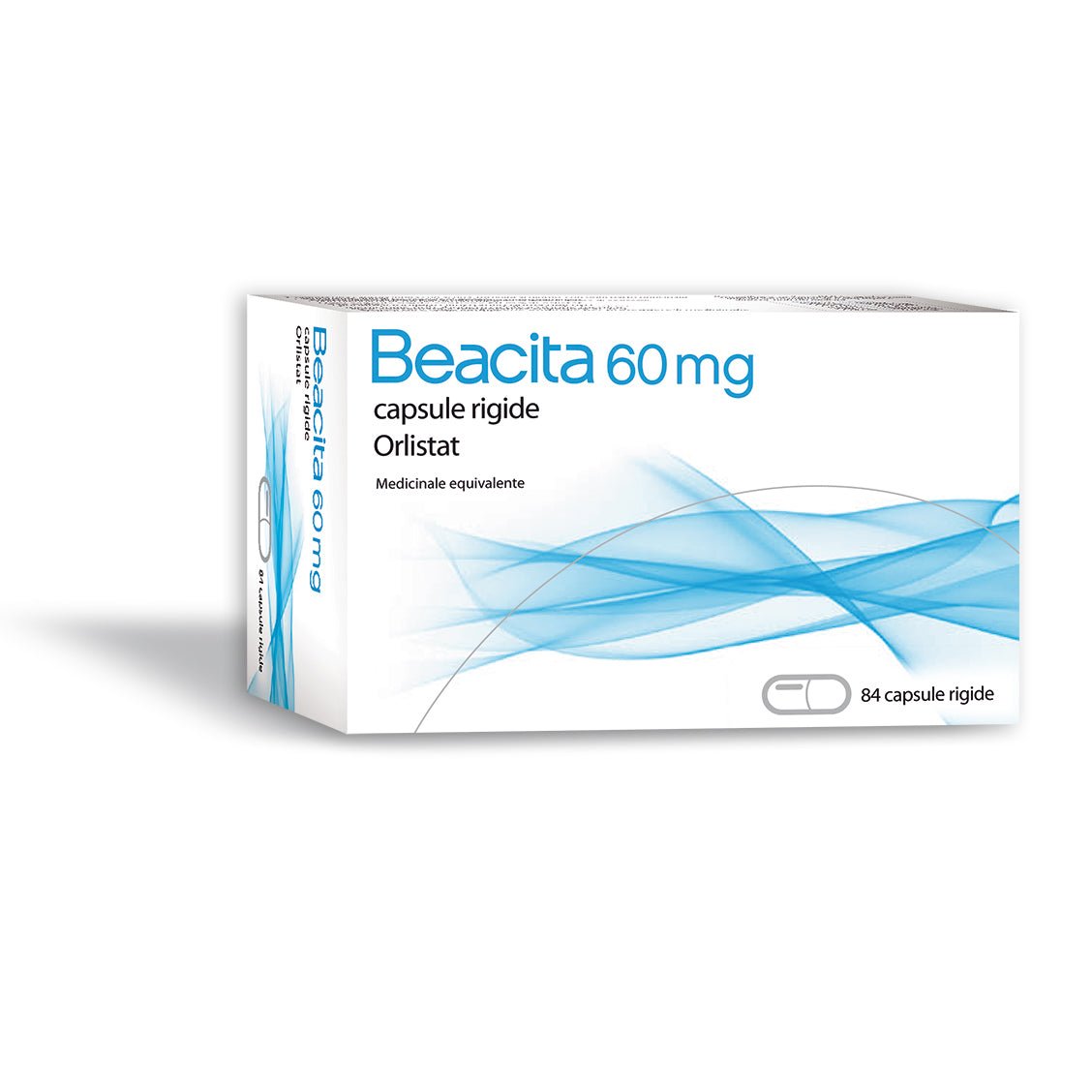
Beacita 60 mg 84 hard capsules
Beacita 60 mg 84 hard capsules
Couldn't load pickup availability

NET WEIGHT OF THE PRODUCT
NET WEIGHT OF THE PRODUCT
84ct
EAN
EAN
042176038
MINSAN
MINSAN
042176038
In ottemperanza all'articolo 118 “autorizzazione della pubblicità presso il pubblico” del decreto legislativo 24 aprile 2006, numero 219
INDICATIONS
BEACITA is indicated for weight loss in overweight adults (body mass index, BMI, ≥ 28 kg/m²) and must be taken in association with a moderately low-calorie, low-fat diet.
ACTIVE INGREDIENTS
Each hard capsule contains 60 mg of orlistat. For the full list of excipients, see section 6.1.
EXCIPIENTS
Capsule contents: PH112 microcrystalline cellulose, sodium starch glycolate (type A), hydrophobic colloidal silica, sodium lauryl sulphate. Capsule lining: Gelatin, indigo carmine (E132), titanium dioxide (E171).
CONTRAINDICATIONS AND SIDE EFFECTS
- Hypersensitivity to the active substance or to any of the excipients listed in paragraph 6.1; - Concomitant treatment with ciclosporin (see section 4.5); - Chronic malabsorption syndrome; - Cholestasis; - Pregnancy (see section 4.6); - Breastfeeding (see paragraph 4.6); - Concomitant treatment with warfarin or other oral anticoagulants (see sections 4.5 and 4.8).
DOSAGE
Dosage Adults The recommended dosage for treatment is one 60 mg capsule to be taken three times a day. No more than three 60 mg capsules should be taken in 24 hours. Diet and exercise are important components of a weight loss program. It is recommended to start a diet and exercise program before starting treatment with BEACITA. During treatment with orlistat, the patient must follow a nutritionally balanced and moderately low-calorie diet, which contains approximately 30% calories from fat (e.g. in a 2000 kcal per day diet, this equates to <67 g of fat). The daily intake of fats, carbohydrates and proteins must be distributed over the three main meals. Your diet and exercise program should continue even when treatment with BEACITA is stopped. Treatment should not be longer than 6 months. If patients are unable to lose weight after 12 weeks of treatment with BEACITA, they should consult their doctor or pharmacist. It may be necessary to stop treatment. Diet and exercise are important components of a weight loss program. It is recommended to start a diet and exercise program before starting treatment with BEACITA. During treatment with orlistat, the patient should follow a nutritionally balanced, moderately low-calorie diet containing approximately 30% calories from fat (e.g. in a 2,000 kcal per day diet, this equates to <67 g of fat). The daily intake of fats, carbohydrates and proteins must be distributed over the three main meals. Your diet and exercise program should continue even when treatment with BEACITA is stopped. Special populations Pediatric population BEACITA should not be used in children and adolescents under 18 years of age due to insufficient data on safety and efficacy. Elderly (>65 years) Only limited data are available on the use of orlistat in older adults. However, since orlistat is only minimally absorbed, no dose adjustment is necessary in the elderly. Hepatic and renal impairment The effects of orlistat in subjects with hepatic and/or renal impairment have not been studied (see section 4.4). However, since orlistat is only minimally absorbed, no dose adjustment is necessary in subjects with hepatic and/or renal impairment. Pediatric population The safety and effectiveness of BEACITA in children under 18 years of age have not yet been established. There is no data available. Method of administration The capsule should be taken with water immediately before, during or within one hour after main meals. If a meal is skipped or if it does not contain fat, the dose of orlistat should be omitted.
CONSERVATION
Do not store above 25°C. Store in the original package to protect the medicine from light and moisture.
WARNINGS
Gastrointestinal symptoms Patients should be encouraged to adhere to the dietary recommendations received (see section 4.2). The risk of gastrointestinal symptoms (see section 4.8) may be increased if orlistat is taken with a single meal or with a high-fat diet. Fat-soluble vitamins Treatment with orlistat may impair the absorption of fat-soluble vitamins (A, D, E and K) (see section 4.5). For this reason, a multivitamin supplement should be taken before bed. Antidiabetic medicines Because weight loss may be associated with improved metabolic control of diabetes, patients taking a diabetes medication should consult their doctor before starting treatment with BEACITA if it becomes necessary to adjust the dose of the antidiabetic drug. Medicines for hypertension and hypercholesterolemia Weight loss can be associated with an improvement in blood pressure and cholesterol levels. Patients taking a medication for hypertension or hypercholesterolemia should consult their doctor or pharmacist during treatment with BEACITA if it becomes necessary to adjust the dose of these medications. Amiodarone Patients taking amiodarone should consult their doctor or pharmacist before starting treatment with BEACITA (see section 4.5). Rectal bleeding Cases of rectal bleeding have been reported in patients receiving orlistat. If this occurs, the patient should consult a doctor. Oral contraceptives The use of an additional method of contraception is recommended to prevent possible failure of oral contraceptives which could occur in case of severe diarrhea (see section 4.5). Nephropathy Patients with kidney problems should consult a doctor before starting treatment with BEACITA, as the use of orlistat may be associated with hyperoxaluria and oxalate nephropathy which sometimes leads to kidney failure. This risk is increased in patients with latent chronic kidney disease and/or volume depletion. Levothyroxine When orlistat and levothyroxine are taken simultaneously, hypothyroidism and/or reduced control of hypothyroidism may occur (see section 4.5). Patients taking levothyroxine should consult their doctor before starting treatment with BEACITA as it may be necessary to take orlistat and levothyroxine at different times and to adjust the dose of levothyroxine. Antiepileptic medicines Patients taking an anti-epileptic drug should consult their doctor before starting treatment with BEACITA, as they should be monitored for changes in the frequency and intensity of seizures. If this occurs, consideration should be given to administering orlistat and anti-epileptic drugs at different times (see section 4.5). Antiretrovirals for HIV Patients should consult a doctor before taking orlistat concomitantly with antiretroviral medicines. Orlistat may potentially reduce the absorption of HIV antiretroviral medicinal products and may adversely affect the efficacy of HIV antiretroviral medicinal products (see section 4.5). Information on excipients Beacita Aurobindo 60 mg hard capsules contain less than 1 mmol (23 mg) sodium per capsule, i.e. it is essentially 'sodium-free'.
INTERACTIONS
Cyclosporine A decrease in plasma levels of ciclosporin was observed in a drug interaction study and has also been reported in many cases of concomitant administration with orlistat. This could lead to a decrease in the immunosuppressive efficacy of ciclosporin. The concomitant use of BEACITA and ciclosporin is therefore contraindicated (see section 4.3). Oral anticoagulants Administration of warfarin or other oral anticoagulants concomitantly with orlistat may affect international normalized ratio values (International Normalized Ratio INR) (see section 4.8). The concomitant use of BEACITA and warfarin or other oral anticoagulants is therefore contraindicated (see section 4.3). Oral contraceptives The absence of an interaction between oral contraceptives and orlistat has been demonstrated in specific drug interaction studies. However, orlistat may indirectly reduce the availability of oral contraceptives and lead, in some individual cases, to unwanted pregnancy. An additional method of contraception is recommended in case of severe diarrhea (see section 4.4). Levothyroxine When orlistat and levothyroxine are taken simultaneously, hypothyroidism and/or reduced control of hypothyroidism may occur (see section 4.4). These effects may be due to reduced absorption of iodine salts and/or levothyroxine. Anti-epileptic drugs Cases of convulsions have been reported in patients treated concomitantly with orlistat and anti-epileptic drugs, e.g. valproate, lamotrigine; for such cases a causal relationship due to an interaction cannot be excluded. Orlistat may decrease the absorption of anti-epileptic drugs, leading to seizures. Antiretroviral medicines Based on literature data and post-marketing experience, orlistat may potentially reduce the absorption of HIV antiretroviral medicinal products and may adversely affect the efficacy of HIV antiretroviral medicinal products (see section 4.4). Fat-soluble vitamins Orlistat therapy may potentially reduce the absorption of fat-soluble vitamins (A, D, E, and K). In clinical studies, the levels of vitamins A, D, E and K, and beta-carotene remained within the normal range in a large majority of subjects undergoing therapy with orlistat for up to 4 years. However, patients should be encouraged to take a multivitamin supplement at bedtime to help ensure adequate vitamin intake (see section 4.4). Acarbose In the absence of pharmacokinetic interaction studies, Beacita is not recommended in patients treated with acarbose. Amiodarone A decrease in plasma levels of amiodarone, administered as a single dose, was observed in a limited number of healthy volunteers treated concomitantly with orlistat. The clinical relevance of this effect in patients receiving amiodarone is still unknown. Patients taking amiodarone should consult their doctor before starting treatment with BEACITA. Amiodarone dose adjustment may be necessary during treatment with BEACITA. Antidepressants, antipsychotics (including lithium) and benzodiazepines Some cases of reduced efficacy of antidepressants, antipsychotics (including lithium) and benzodiazepines have been reported in conjunction with initiation of orlistat treatment in previously well-controlled patients. Therefore treatment with orlistat should be initiated after careful evaluation of the possible impact in these patients.
SIDE EFFECTS
Safety profile summary Adverse reactions to orlistat mainly affect the gastrointestinal system and are related to the pharmacological effect of the medicine on the inhibition of the absorption of ingested fats. Gastrointestinal adverse reactions identified in clinical trials with orlistat 60 mg lasting 18 months to 2 years were generally mild and transient. They generally occurred in the early phase of treatment (within 3 months) and the majority of patients experienced only one episode. Consumption of a low-fat diet tends to decrease the likelihood of developing gastrointestinal adverse reactions (see section 4.4). Tabular list of adverse reactions Adverse reactions are listed below by system organ class and frequency. Frequencies are defined as follows: very common (≥ 1/10), common (≥ 1/100, < 1/10), uncommon (≥ 1/1,000, < 1/100), rare (≥ 1/10,000, < 1/1,000), very rare (< 1/10,000) and not known (which cannot be estimated from the available data). The frequencies of adverse reactions identified during the post-marketing phase of orlistat are unknown as these reactions were voluntarily reported from a population of unknown size. Within each frequency grouping, adverse reactions are reported in order of decreasing seriousness.
Infections and infestations.
Very common: - Adverse reaction: Influenza.
Pathologies of the blood and lymphatic system.
Not known: - Adverse reaction: Decreased prothrombin and increased INR (see sections 4.3 and 4.5).
Immune system disorders.
Not known: - Adverse reaction: Hypersensitivity reactions, including anaphylaxis, bronchospasm, angioedema, pruritus, erythema and urticaria.
Psychiatric disorders.
Common: - Adverse reaction: Anxiety¹.
Gastrointestinal disorders.
Very common: - Adverse reaction: Oily discharge, Flatulence with stool, Urgent defecation, Oily fatty stool, Oily stool, Flatulence, Soft stool;
Common: - Adverse reaction: Abdominal pain, Faecal incontinence, Liquid stools, Increased defecation;
Not known: - Adverse reaction: Diverticulitis, Pancreatitis, Mild rectal bleeding (see section 4.4).
Hepatobiliary disorders.
Not known: - Adverse reaction: Potentially serious hepatitis (some fatal cases or cases requiring liver transplant have been reported), Cholelithiasis, Increased transaminases and alkaline phosphatase.
Pathologies of the skin and subcutaneous tissue.
Not known: - Adverse reaction: Bullous rash.
Renal and urinary disorders.
Not known: - Adverse reaction: Oxalate nephropathy which may lead to renal failure.
¹ It is plausible that treatment with orlistat may induce anxiety anticipatory or secondary to gastrointestinal adverse reactions. Reporting of suspected adverse reactions Reporting suspected adverse reactions that occur after authorization of the medicine is important, as it allows continuous monitoring of the benefit/risk balance of the medicine. Healthcare professionals are asked to report any suspected adverse reactions via the national reporting system at www.aifa.gov.it/content/segnalazioni-reazioni-avverse.
OVERDOSE
Single doses of 800 mg of orlistat and multiple doses of up to 400 mg three times daily for 15 days were studied in normal weight and obese subjects without finding significant clinical evidence. Furthermore, doses of 240 mg three times a day were administered to obese patients for 6 months. The majority of cases of orlistat overdose received postmarketing reported no adverse reactions or reported adverse reactions similar to those reported with the recommended dose of orlistat. In case of overdose, you should contact your doctor. If a significant overdose of orlistat occurs, it is recommended that the patient be monitored for 24 hours. Based on clinical and animal studies, any systemic effects attributable to the lipase inhibitory properties of orlistat are expected to be rapidly reversible.
PREGNANCY AND BREASTFEEDING
Women of childbearing potential/contraception in men and women The use of an additional method of contraception is recommended to prevent possible ineffectiveness of oral contraception in case of severe diarrhea (see sections 4.4 and 4.5). Pregnancy No clinical data relating to exposure during pregnancy are available for orlistat. Animal studies do not indicate direct or indirect harmful effects with respect to pregnancy, embryonic/foetal development, parturition or postnatal development (see section 5.3). BEACITA is contraindicated during pregnancy (see section 4.3). Breastfeeding Since it is not known whether orlistat is excreted in breast milk, BEACITA is contraindicated during breastfeeding (see section 4.3). Fertility Animal studies do not show any harmful effects on fertility.
EFFECTS ON DRIVING ABILITY
Orlistat has no or negligible influence on the ability to drive or use machines.
OUR PRODUCTS FOR THIS SEASON
-
Curial βeta Dry eye supplement 30 capsules Dr.Tili
Vendor:TilpharmaRegular price €22,50Regular priceUnit price per€22,50Sale price €22,50 -
T - Relaxfast Sleep Supplement 60 Capsules Dr.Tili
Vendor:TilpharmaRegular price €24,50Regular priceUnit price per€24,50Sale price €24,50 -
Face Serum C5 Vitamin C 30ml Dr.Tili Skinlab
Vendor:TilabRegular price €62,50Regular priceUnit price per€62,50Sale price €62,50 -
Dr.Tili Skinlab E15 Vitamin E Face Serum 30ml
Vendor:TilabRegular price €32,50Regular priceUnit price per€32,50Sale price €32,50 -
Vit+ Face Vitamin Cream 50ml Dr.Tili Skinlab
Vendor:TilabRegular price €34,00Regular priceUnit price per€34,00Sale price €34,00 -
Anti-aging Facial Treatment Hyaluronic Acid IAL B3 30ml Dr.Tili Skinlab
Vendor:TilabRegular price €46,00Regular priceUnit price per€46,00Sale price €46,00 -
Body Milk Hydra Milk 200Ml. Dr.Tili Skinlab
Vendor:TilabRegular price €16,90Regular priceUnit price per€16,90Sale price €16,90 -
Facial Cleansing Milk 150ml Dr.Tili Skinlab
Vendor:TilabRegular price €18,90Regular priceUnit price per€18,90Sale price €18,90 -
Soothing Facial Toner 125ml Dr.Tili Skinlab
Vendor:TilabRegular price €14,50Regular priceUnit price per€14,50Sale price €14,50 -
Soothing Face Cream 50ml Dr.Tili Skinlab
Vendor:TilabRegular price €19,50Regular priceUnit price per€19,50Sale price €19,50















-

ASSISTANCE - TELEPHONE ORDERS
-

SHIPPING
Shipping to Italy 24/48H
Delivery also on Saturday and Sunday
Free over €49.90
Shipping to Europe 24/72H
Free over €80 -

SAFETY
The security of your data is important to us!
We strictly comply with the European GDPR regarding
Privacy and processing of personal data
The payments you make on our site are 100% safe and guaranteed -

RETURNS
Fast returns via DIY portal and 14 days to change your mind.
Immediate and free replacements for incorrect or non-compliant products delivered.


