

Procter & Gamble
Vicks Sinex Aloe Nasal Spray 15ml
Vicks Sinex Aloe Nasal Spray 15ml
Couldn't load pickup availability

NET WEIGHT OF THE PRODUCT
NET WEIGHT OF THE PRODUCT
15ml
EAN
EAN
023198029
MINSAN
MINSAN
023198029

In compliance with article 118 "authorization of advertising to the public" of the legislative decree of 24 April 2006, number 219
INDICATIONS
Decongestant of the nasal mucosa, especially in case of colds.
CONTRAINDICATIONS
Hypersensitivity to the active substance or to any of the excipients listed in paragraph 6.1, prostatic hypertrophy, severe heart disease and arterial hypertension. Glaucoma, hyperthyroidism. Do not administer during and in the two weeks following therapy with antidepressant drugs (MAOI). Inflammation or lesions of the oral mucosa or the skin around the nostrils. The drug is contraindicated in children under 12 years of age.
WARNINGS AND PRECAUTIONS FOR USE
Use with caution in the first months of pregnancy and, due to the risk of urinary retention, in the elderly. Also use with caution in patients with angina and diabetes. If symptoms persist, a clinical reassessment must be considered; in any case, treatment must not be continued for more than 4 consecutive days to avoid a rebound effect and rhinitis phenomena induced by the drug. Carefully follow the recommended doses. Accidental ingestion may cause severe sedation. It should not be used orally. Avoid contact of the liquid with the eyes. Prolonged use of vasoconstrictors can alter the normal function of the mucosa of the nose and paranasal sinuses, also inducing addiction to the drug. Repeating applications for long periods can be harmful. The use, especially if prolonged, of topical products can give rise to sensitization phenomena; in this case it is necessary to interrupt the treatment and institute suitable therapy. Important information about some excipients Vicks Sinex Aloe 0.05% nebulizer solution contains benzalkonium chloride may cause bronchospasm. This medicine contains 0.01 mg of benzalkonium chloride per dose (1 spray) which is equivalent to 0.2 mg/ml. Benzalkonium chloride can cause irritation and swelling inside the nose, especially if used for long periods. Vicks Sinex Aloe 0.05% spray solution contains benzyl alcohol. This medicine contains 0.1 mg of benzyl alcohol per dose (1 spray), equivalent to 2 mg/ml. Benzyl alcohol can cause allergic reactions. Benzyl alcohol may cause mild local irritation
INTERACTIONS
There is the possibility of interaction between sympathomimetic amines such as oxymetazoline with anti-MAO drugs, therefore use is not recommended during or in the two weeks following treatment with anti-MAO drugs (see section 4.3). Oxymetazoline could reduce the effectiveness of beta-blocking drugs, methyl dopa or other antihypertensive drugs. Hypertension and arrhythmias may occur when tricyclic antidepressants are administered with sympathomimetic drugs such as oxymetazoline. Increased cardiovascular toxicity may occur when sympathomimetic drugs are administered concomitantly with antiparchinsonian drugs such as bromocriptines.
SIDE EFFECTS
If accidentally ingested or if used for a long period in excessive doses, the product can cause toxic phenomena. The product can locally cause sensitization phenomena and rebound congestion of the mucous membranes. In general, no serious side effects were observed. Due to rapid absorption of oxymetazoline through inflamed mucous membranes, side effects may occur divided into the following frequencies: very common (≥1/10); common (≥1/100, <1/10); uncommon (≥1/1000, <1/100); rare (≥1/10000, <1/1000); very rare (>1/10000); not known (frequency cannot be estimated from the available data). Rare: Eye pathologies: eye irritation, discomfort or redness. Respiratory, thoracic and mediastinal disorders: discomfort or irritation of the nose, mouth or throat, sneezing. Very rare: Cardiac diseases: tachycardia, palpitations, increased blood pressure, reflex bradycardia. Central nervous system disorders: insomnia, nervousness, tremor, anxiety, agitation, irritability and headache. Gastrointestinal disorders: nausea. Renal and urinary disorders: urination disorders. Reporting of suspected adverse reactions Reporting suspected adverse reactions that occur after authorization of the medicine is important, as it allows continuous monitoring of the benefit/risk balance of the medicine. Healthcare professionals are asked to report any suspected adverse reactions via the national reporting system at https://www.aifa.gov.it/content/segnalazioni-reazioni-avverse.
OUR PRODUCTS FOR THIS SEASON
-
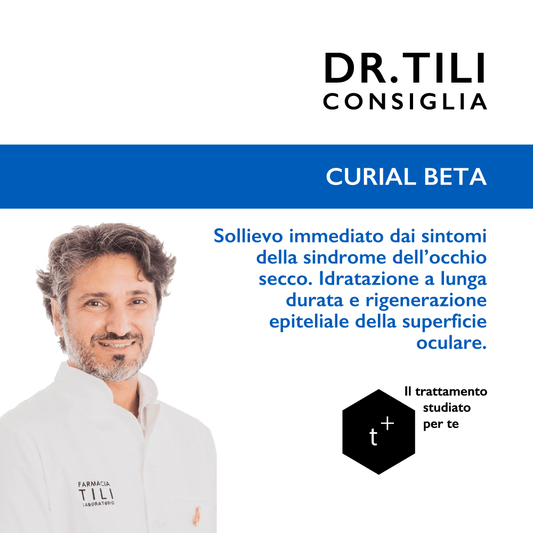
Curial βeta Dry eye supplement 30 capsules Dr.Tili
Vendor:TilpharmaRegular price €22,50Regular priceUnit price per€22,50Sale price €22,50 -
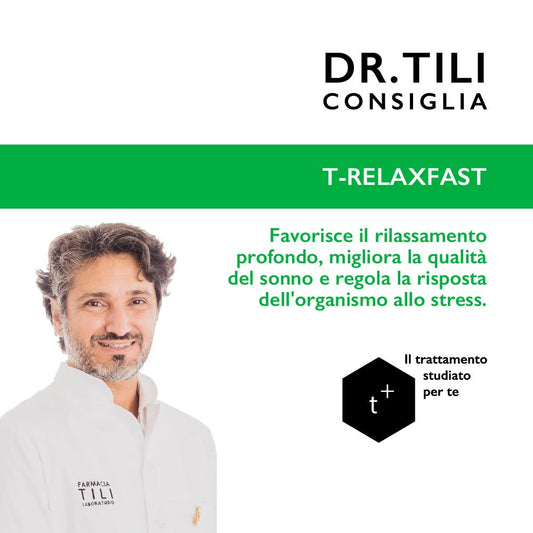
T - Relaxfast Sleep Supplement 60 Capsules Dr.Tili
Vendor:TilpharmaRegular price €24,50Regular priceUnit price per€24,50Sale price €24,50 -
Face Serum C5 Vitamin C 30ml Dr.Tili Skinlab
Vendor:TilabRegular price €62,50Regular priceUnit price per€62,50Sale price €62,50 -
Dr.Tili Skinlab E15 Vitamin E Face Serum 30ml
Vendor:TilabRegular price €32,50Regular priceUnit price per€32,50Sale price €32,50 -
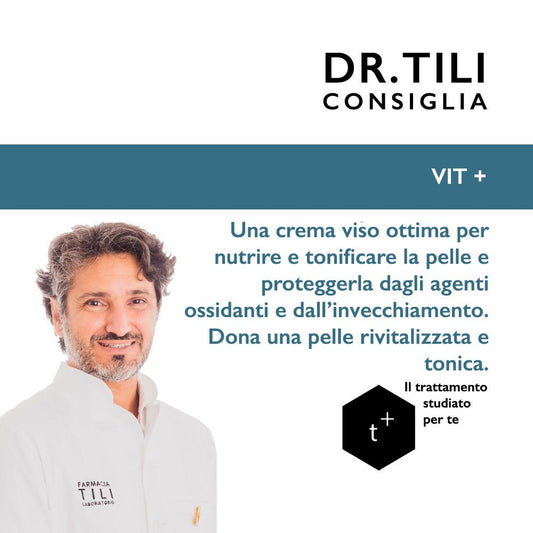
Vit+ Face Vitamin Cream 50ml Dr.Tili Skinlab
Vendor:TilabRegular price €34,00Regular priceUnit price per€34,00Sale price €34,00 -
Anti-aging Facial Treatment Hyaluronic Acid IAL B3 30ml Dr.Tili Skinlab
Vendor:TilabRegular price €46,00Regular priceUnit price per€46,00Sale price €46,00 -
Body Milk Hydra Milk 200Ml. Dr.Tili Skinlab
Vendor:TilabRegular price €16,90Regular priceUnit price per€16,90Sale price €16,90 -
Facial Cleansing Milk 150ml Dr.Tili Skinlab
Vendor:TilabRegular price €18,90Regular priceUnit price per€18,90Sale price €18,90 -
Soothing Facial Toner 125ml Dr.Tili Skinlab
Vendor:TilabRegular price €14,50Regular priceUnit price per€14,50Sale price €14,50 -
Soothing Face Cream 50ml Dr.Tili Skinlab
Vendor:TilabRegular price €19,50Regular priceUnit price per€19,50Sale price €19,50









-

ASSISTANCE - TELEPHONE ORDERS
-

SHIPPING
Shipping to Italy 24/48H
Delivery also on Saturday and Sunday
Free over €49.90
Shipping to Europe 24/72H
Free over €80 -

SAFETY
The security of your data is important to us!
We strictly comply with the European GDPR regarding
Privacy and processing of personal data
The payments you make on our site are 100% safe and guaranteed -

RETURNS
For returns, contact our customer service: you have 14 days to change your mind.
Immediate, free replacement of wrong or non-conforming products.


