

Angelini Pharma
Tantum Verde 0.30% spray 15ml
Tantum Verde 0.30% spray 15ml

Couldn't load pickup availability

NET WEIGHT OF THE PRODUCT
NET WEIGHT OF THE PRODUCT
15ml
EAN
EAN
022088088
MINSAN
MINSAN
022088088
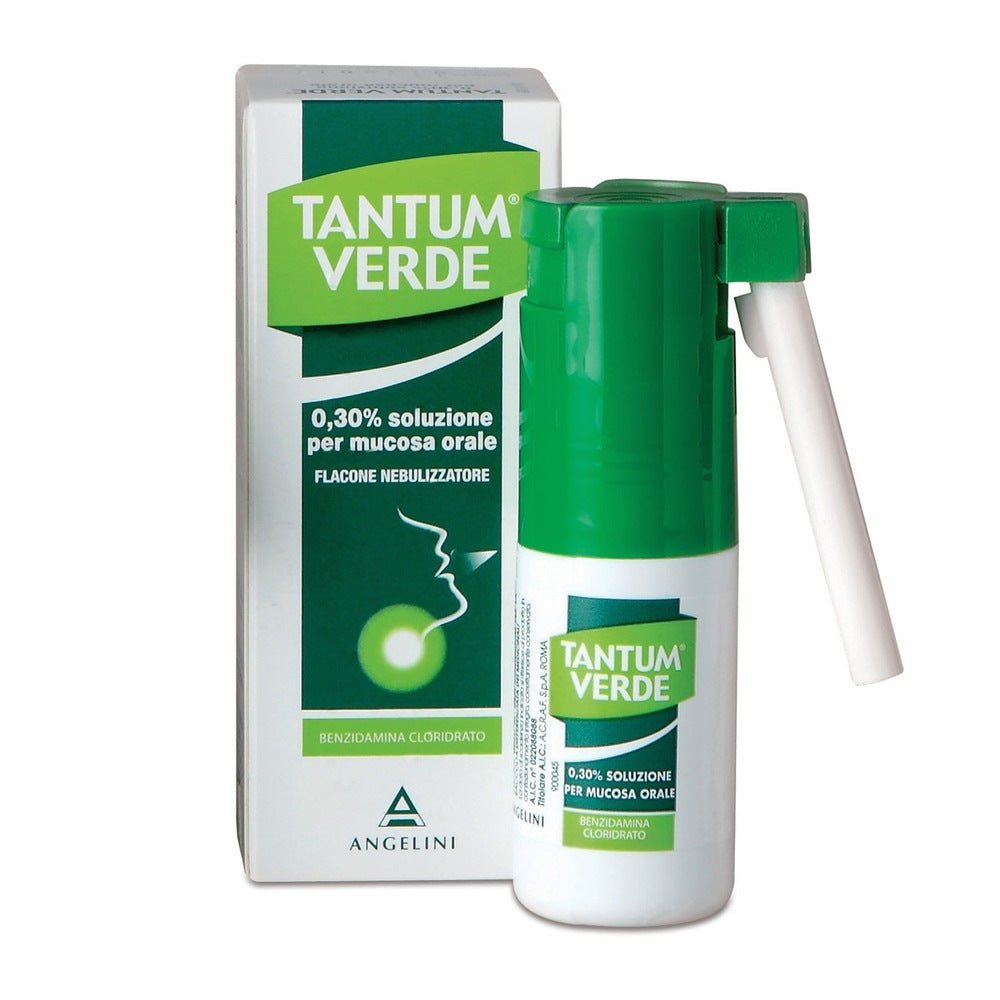
In compliance with article 118 "authorization of advertising to the public" of the legislative decree of 24 April 2006, number 219
INDICATIONS
Symptomatic treatment of irritative-inflammatory conditions also associated with pain in the oropharyngeal cavity (e.g. gingivitis, stomatitis, pharyngitis), also as a consequence of conservative or extractive dental therapy.
CONTRAINDICATIONS
Hypersensitivity to benzydamine or to any of the excipients.
WARNINGS AND PRECAUTIONS FOR USE
Use of the product, especially if prolonged, may give rise to sensitization phenomena. In this case, stop treatment and consult your doctor to institute suitable therapy. In a limited number of patients, oropharyngeal ulcerations can be a sign of more serious pathologies. Therefore, if the symptoms persist for more than three days, the patient should contact his doctor or dentist as necessary. The use of benzydamine is not recommended in patients with hypersensitivity to acetylsalicylic acid or other NSAIDs. Tantum Verde solution for oral mucosa must be administered with caution in subjects who have had episodes of bronchial asthma in the past, as bronchospasm phenomena could occur in this type of patient. Tantum Verde contains parahydroxybenzoates which may cause allergic reactions (even delayed). For those who carry out sporting activities: the use of medicines containing ethyl alcohol can result in positive anti-doping tests in relation to the blood alcohol concentration limits indicated by some sports federations.
INTERACTIONS
No interaction studies with other drugs have been conducted.
SIDE EFFECTS
Within each frequency class, undesirable effects are reported in order of decreasing severity. The following value scales were used: very common (≥1/10); common (≥1/100, <1/10); uncommon (≥ 1/1000, < 1/100); rare ≥ 1/10,000, < 1/1000); very rare (<1/10,000); not known (frequency cannot be estimated from the available data). Gastrointestinal disorders – Rare: burning and dry mouth. Immune system disorders – Rare: hypersensitivity reactions – Not known: anaphylactic reactions. Respiratory, thoracic, mediastinal disorders – Very rare: laryngospasm. Pathologies of the skin and subcutaneous tissue – Uncommon: photosensitivity – Very rare: angioedema.
OUR PRODUCTS FOR THIS SEASON
-
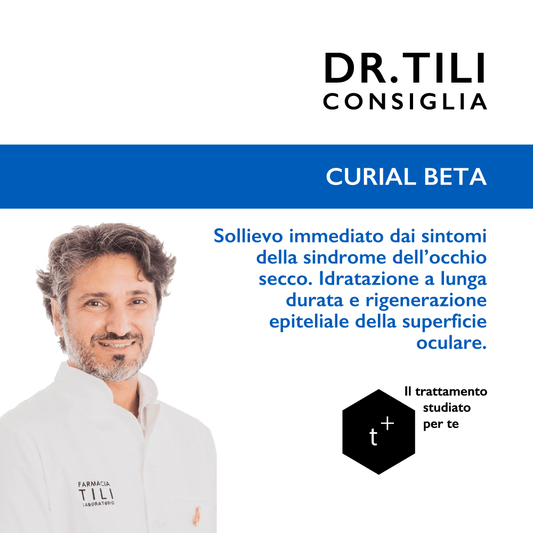
Curial βeta Dry eye supplement 30 capsules Dr.Tili
Vendor:TilpharmaRegular price €22,50Regular priceUnit price per€22,50Sale price €22,50 -
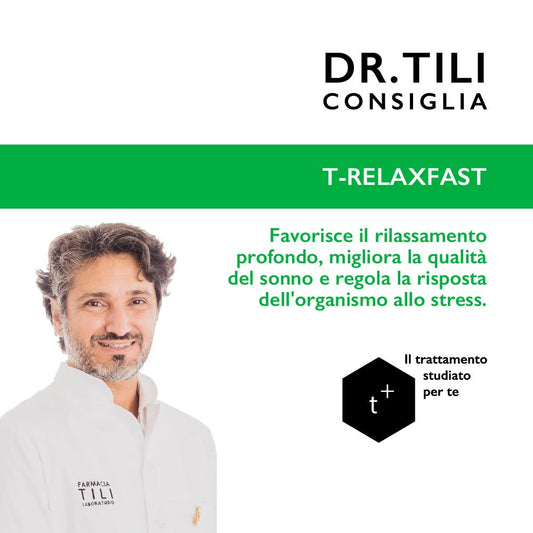
T - Relaxfast Sleep Supplement 60 Capsules Dr.Tili
Vendor:TilpharmaRegular price €24,50Regular priceUnit price per€24,50Sale price €24,50 -
Face Serum C5 Vitamin C 30ml Dr.Tili Skinlab
Vendor:TilabRegular price €62,50Regular priceUnit price per€62,50Sale price €62,50 -
Dr.Tili Skinlab E15 Vitamin E Face Serum 30ml
Vendor:TilabRegular price €32,50Regular priceUnit price per€32,50Sale price €32,50 -
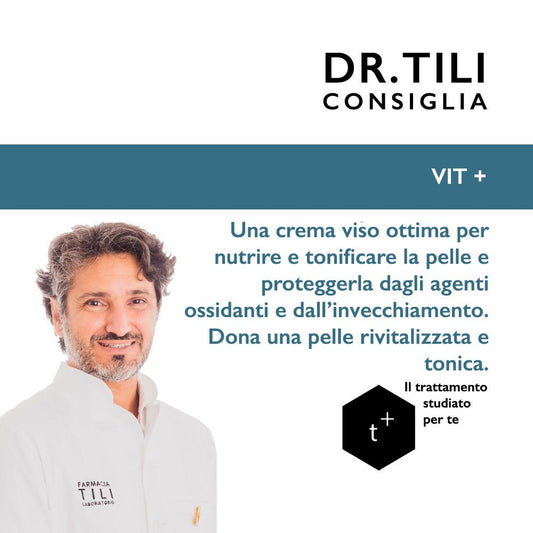
Vit+ Face Vitamin Cream 50ml Dr.Tili Skinlab
Vendor:TilabRegular price €34,00Regular priceUnit price per€34,00Sale price €34,00 -
Anti-aging Facial Treatment Hyaluronic Acid IAL B3 30ml Dr.Tili Skinlab
Vendor:TilabRegular price €46,00Regular priceUnit price per€46,00Sale price €46,00 -
Body Milk Hydra Milk 200Ml. Dr.Tili Skinlab
Vendor:TilabRegular price €16,90Regular priceUnit price per€16,90Sale price €16,90 -
Facial Cleansing Milk 150ml Dr.Tili Skinlab
Vendor:TilabRegular price €18,90Regular priceUnit price per€18,90Sale price €18,90 -
Soothing Facial Toner 125ml Dr.Tili Skinlab
Vendor:TilabRegular price €14,50Regular priceUnit price per€14,50Sale price €14,50 -
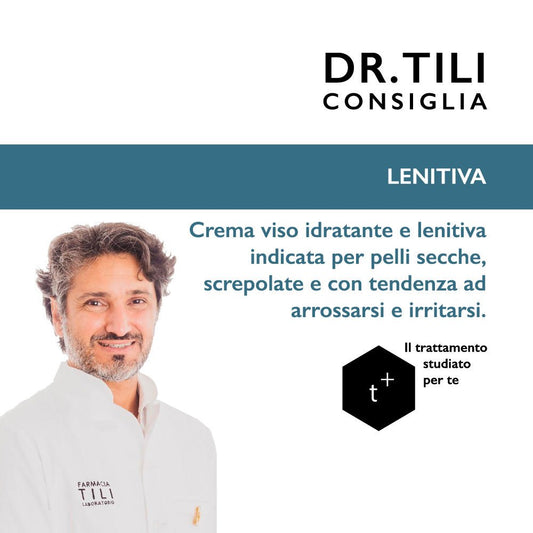
Soothing Face Cream 50ml Dr.Tili Skinlab
Vendor:TilabRegular price €19,50Regular priceUnit price per€19,50Sale price €19,50









-

ASSISTANCE - TELEPHONE ORDERS
-

SHIPPING
Shipping to Italy 24/48H
Delivery also on Saturday and Sunday
Free over €49.90
Shipping to Europe 24/72H
Free over €80 -

SAFETY
The security of your data is important to us!
We strictly comply with the European GDPR regarding
Privacy and processing of personal data
The payments you make on our site are 100% safe and guaranteed -

RETURNS
Fast returns via DIY portal and 14 days to change your mind.
Immediate and free replacements for incorrect or non-compliant products delivered.


