

Johnson & Johnson
Reactine 5 mg + 120 mg 6 prolonged release tablets
Reactine 5 mg + 120 mg 6 prolonged release tablets

Reactine 5 mg + 120 mg is an antihistamine + decongestant indicated for the short-term treatment of seasonal and perennial allergic rhinitis . The prolonged-release tablets provide rapid and long-lasting relief from nasal congestion , sneezing , nasal and eye itching , and watery eyes , improving breathing and daily comfort.
Couldn't load pickup availability

NET WEIGHT OF THE PRODUCT
NET WEIGHT OF THE PRODUCT
EAN
EAN
032800043
MINSAN
MINSAN
032800043
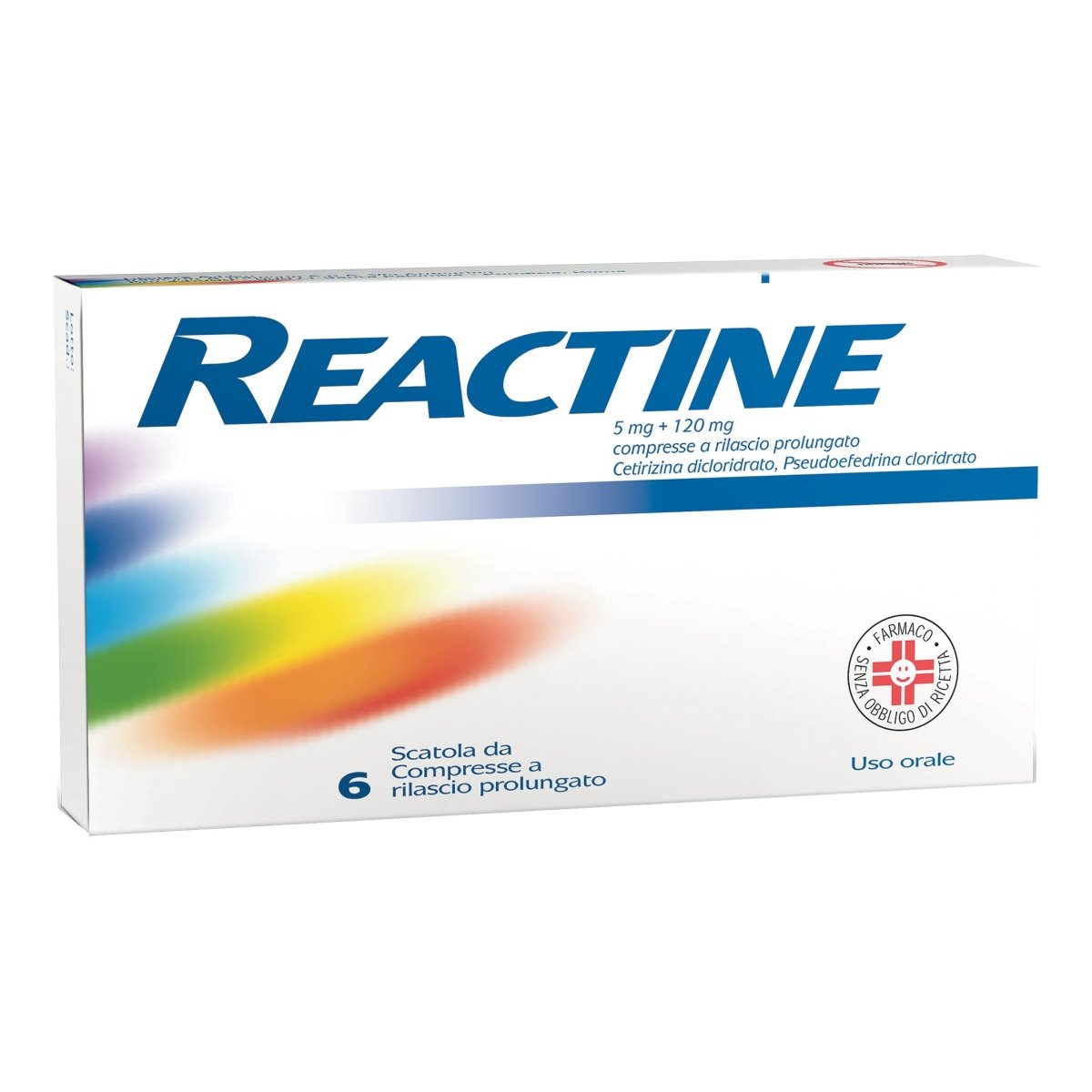
Reactine 5 mg + 120 mg 6 prolonged-release tablets is a combination drug based on cetirizine dihydrochloride (5 mg) and pseudoephedrine hydrochloride (120 mg) per tablet, designed to offer effective and rapid symptomatic treatment of seasonal and perennial allergic rhinitis . Thanks to its prolonged-release formulation, Reactine acts in a targeted and continuous manner, ensuring long-lasting relief from the main allergic symptoms such as nasal congestion, nasal hypersecretion, nasal and ocular itching, sneezing and tearing .
The presence of cetirizine , a powerful antihistamine , helps to quickly reduce the typical symptoms of allergies, while pseudoephedrine performs an effective nasal decongestant action, clearing the airways and improving breathing. This combination makes Reactine particularly suitable for those who suffer from seasonal allergies (such as pollen rhinitis) or perennial allergies (for example, from mites or dust), offering a short-term symptomatic treatment that acts on multiple fronts.
The extended-release tablets are convenient to take and ensure constant coverage of symptoms throughout the day, reducing the need for frequent dosages. Reactine 5 mg + 120 mg is the ideal solution for those looking for a complete remedy against nasal congestion, sneezing, itching and tearing related to allergies, improving the quality of life even during periods of greater exposure to allergens.
The pack contains 6 tablets in blister packs, suitable for a short-term symptomatic treatment cycle, according to the instructions of your doctor or pharmacist. Choose Reactine for rapid and long-lasting control of allergy symptoms and to return to breathing freely every day.
ACTIVE INGREDIENTS
Active ingredients contained in Reactine 5 mg + 120 mg 6 prolonged release tablets - What is the active ingredient of Reactine 5 mg + 120 mg 6 prolonged release tablets?
One tablet contains: • active ingredient: - cetirizine dihydrochloride 5 mg; - pseudoephedrine hydrochloride 120 mg. • excipient with known effect: lactose, sodium. For the full list of excipients, see section 6.1.EXCIPIENTS
Composition of Reactine 5 mg + 120 mg 6 prolonged release tablets - What does Reactine 5 mg + 120 mg 6 prolonged release tablets contain?
Excipients of the first layer Hypromellose, microcrystalline cellulose, colloidal anhydrous silica, magnesium stearate. Excipients of the second layer Lactose, microcrystalline cellulose, sodium crosscaramel, colloidal anhydrous silica, magnesium stearate. Excipients of the coating Opadry Y-1-7000 white (methocel E5, premium (hypromellose) (E 464), titanium dioxide (E 171), macrogol 400).DIRECTIONS
Therapeutic indications Reactine 5 mg + 120 mg 6 prolonged release tablets - Why is Reactine 5 mg + 120 mg 6 prolonged release tablets used? What is it used for?
REACTINE is indicated in the short-term symptomatic treatment of seasonal and/or perennial allergic rhinitis with nasal congestion and hypersecretion, nasal and/or ocular itching, sneezing and tearing.CONTRAINDICATIONS AND SIDE EFFECTS
Contraindications Reactine 5 mg + 120 mg 6 prolonged release tablets - When should Reactine 5 mg + 120 mg 6 prolonged release tablets not be used?
REACTINE is contraindicated in the following cases: • hypersensitivity to the active substances, to any of the excipients listed in paragraph 6.1, to hydroxyzine or piperazine derivatives; • severe renal insufficiency (patients with creatinine clearance less than 10 ml/min); • severe hypertension; • severe coronary disorders; • pheochromocytoma; • history of stroke; • high risk of developing haemorrhagic stroke; • severe arrhythmia; • uncontrolled hyperthyroidism; • patients who are being treated or who have been treated in the previous two weeks with monoamine oxidase inhibitors (see paragraph 4.5); • patients who are being treated with dihydroergotamine; • increased intraocular pressure; • urinary retention; • children under 12 years of age; • pregnancy and breastfeeding (see paragraph 4.6).DOSAGE
Quantity and method of taking Reactine 5 mg + 120 mg 6 prolonged release tablets - How do you take Reactine 5 mg + 120 mg 6 prolonged release tablets?
Dosage Adults and children aged 12 years and over : one tablet 2 times a day, one in the morning and one in the evening, to be taken without chewing during or between meals. The duration of treatment should not exceed the period of acute symptoms and in any case should not be prolonged beyond 7 days. After 7 days of therapy, continue treatment with cetirizine alone. Special populations Elderly patients The dose should be halved in elderly patients. Patients with renal impairment The dose should be halved in patients with renal insufficiency. Patients with hepatic impairment The dose should be halved in patients with hepatic insufficiency. Paediatric population REACTINE is contraindicated in children under 12 years of age (see section 4.3). Method of administration Oral use. The tablets should be taken with a little water and should not be divided, chewed or crushed.CONSERVATION
Storage Reactine 5 mg + 120 mg 6 prolonged release tablets - How do you store Reactine 5 mg + 120 mg 6 prolonged release tablets?
No special storage precautions.WARNINGS
Warnings Reactine 5 mg + 120 mg 6 prolonged release tablets - About Reactine 5 mg + 120 mg 6 prolonged release tablets it is important to know that:
REACTINE is intended for short-term treatment only. Reactine must be used under medical supervision in diabetic patients and in subjects with thyroid problems, prostatic hypertrophy, liver failure or reduced kidney function, history of bronchospasm, as well as in elderly subjects. This medicine must be used under medical supervision in patients with pre-existing cardiovascular problems, including those with a history of myocardial infarction, coronary heart disease, hypertension, tachycardia and arrhythmia. Caution must also be exercised in subjects being treated with sympathomimetics (decongestants, appetite suppressants, psychostimulants) such as amphetamines, antihypertensive drugs, tricyclic antidepressants and digitalis or following the intake of higher quantities of alcohol or other substances with a depressant action on the central nervous system (CNS). Although no clinically significant interactions with alcohol have been demonstrated at therapeutic doses of cetirizine (for a blood alcohol level of 0.5 g/l), caution is recommended when alcohol is consumed concomitantly. Caution should also be exercised in patients with risk factors that may increase the risk of haemorrhagic stroke (such as concomitant use of vasoconstrictors such as bromocriptine, pergolide, lisuride, cabergoline, ergotamine) or any other medicinal product with decongestant activity (e.g. phenylpropanolamine, phenylephrine, ephedrine), used orally or nasally, due to the risk of vasoconstriction and increased blood pressure (see section 4.5). An increase in ectopic pacemaker activity may occur when pseudoephedrine is used concomitantly with cardiac glycosides, such as digoxin or digitoxin; The use of the combination of cetirizine and pseudoephedrine should therefore be avoided in patients treated with cardiac glycosides (see section 4.5). Pseudoephedrine is associated with the risk of abuse. High doses may eventually induce toxicity. Prolonged use may induce addiction with an increased risk of overdose. Rapid discontinuation may induce depression. Use caution in patients with predisposing factors for urinary retention (e.g. spinal cord injury, prostatic hyperplasia), as cetirizine may increase the risk of urinary retention. Caution is recommended in patients at risk of hypercoagulation such as in inflammatory bowel disease, due to the vasoconstrictive effect of pseudoephedrine. Isolated cases of ischaemic colitis have been reported in association with pseudoephedrine. The product should be discontinued in case of sudden abdominal pain, rectal bleeding or other symptoms of ischaemic colitis. Caution is advised in hypertensive patients receiving concomitant treatment with nonsteroidal anti-inflammatory drugs (NSAIDs) as both pseudoephedrine and NSAIDs may increase blood pressure (see section 4.5). Severe skin reactions such as acute generalized exanthematous pustulosis (AGEP) may occur with pseudoephedrine-containing medicinal products. This acute pustular eruption may occur within the first 2 days of treatment, with fever, and numerous small pustules, mostly non-follicular, arising from a widespread oedematous erythema and located mainly on the skin folds, trunk and upper limbs. Patients should be carefully monitored. If signs and symptoms such as pyrexia, erythema or numerous small pustules are observed, administration of Reactine should be discontinued and appropriate measures taken if necessary. The medicinal product may act as a cerebral stimulant and give rise to episodes of insomnia, nervousness, hyperpyrexia, tremor and epileptic-like convulsions. During treatment with indirect sympathomimetic agents, acute postoperative hypertension may occur if volatile halogenated anaesthetics are used. Therefore, if surgery is planned, it is advisable to discontinue treatment 24 hours before anaesthesia. Ischemic optic neuropathy Cases of ischemic optic neuropathy have been reported with pseudoephedrine. Pseudoephedrine should be discontinued if sudden loss of vision or reduction in visual acuity occurs, for example in the case of scotoma. Allergy skin tests are inhibited by antihistamines and therefore a washout period (3 days) is necessary before performing them. Athletes should be informed that treatment with pseudoephedrine may lead to a positive result in a doping test. If symptoms persist or worsen, or if new symptoms occur, discontinue use and consult a physician. Paediatric population The combination of cetirizine and pseudoephedrine is contraindicated in children under 12 years of age (see sections 4.2 and 4.3) due to the presence of pseudoephedrine and because this combination has not been studied in this age group . Excipient with known effect The medicinal product contains lactose: patients with rare hereditary problems of galactose intolerance, the Lapp lactase deficiency or glucose-galactose malabsorption should not take this medicine. This medicinal product contains less than 1 mmol sodium (23 mg) per single dose, therefore it can be considered essentially sodium-free.INTERACTIONS
Interactions Reactine 5 mg + 120 mg 6 prolonged release tablets - Which medicines or foods can modify the effect of Reactine 5 mg + 120 mg 6 prolonged release tablets?
Due to the pharmacokinetic, pharmacodynamic and tolerability profile of cetirizine, no interactions are expected with this antihistamine. In fact, no pharmacodynamic or significant pharmacokinetic interactions have been reported in drug-drug interaction studies performed, in particular, with pseudoephedrine or theophylline (400 mg/day). The activity of sympathomimetic amines such as pseudoephedrine contained in this medicinal product is increased by the concomitant administration of monoamine oxidase inhibitors and β-blockers. Due to the long duration of action of monoamine oxidase inhibitors, the activity of sympathomimetic amines can be observed even 15 days after suspension of administration (see section 4.3). Sympathomimetic amines reduce the antihypertensive effects of β-blockers, methyldopa, guanethidine and reserpine. Antacids increase the absorption of pseudoephedrine while it is reduced by the concomitant intake of kaolin. Concomitant administration of linezolid and pseudoephedrine may cause an increase in blood pressure in normotensive patients. Caution is also required in patients taking: - sympathomimetic drugs such as decongestants (e.g. phenylpropanolamine, phenylephrine, ephedrine), anorectics, psychostimulants such as amphetamines (combined effects on the cardiovascular system), - antihypertensive drugs (reduction of antihypertensive effects), - bromocriptine, pergolide, lisuride, cabergoline, ergotamine (risk of vasoconstriction and increase in blood pressure (see section 4.4), - tricyclic antidepressants, - alcohol or other substances with a depressant action on the central nervous system (CNS) (possible intensification of the depressant action on the CNS and deterioration of performance), - cardiac glycosides such as digoxin or digitoxin (risk of cardiac arrhythmia) (see section 4.4), - nonsteroidal anti-inflammatory drugs (NSAIDs) (both pseudoephedrine and NSAIDs may increase blood pressure) (see section 4.4). paragraph 4.4). The extent of absorption of cetirizine is not reduced by food intake, although the rate of absorption is decreased.SIDE EFFECTS
Like all medicines, Reactine 5 mg + 120 mg 6 prolonged-release tablets can cause side effects - What are the side effects of Reactine 5 mg + 120 mg 6 prolonged-release tablets?
Clinical studies have shown that cetirizine at a dose of 10 mg has minor undesirable effects on the central nervous system, including somnolence, fatigue, dizziness and headache. In some cases, paradoxical CNS stimulation has been reported. The following adverse reactions have been reported by ≥ 1% of adult subjects in randomized, placebo-controlled studies with cetirizine alone: somnolence, nervousness, fatigue, dry mouth, dizziness, headache, nausea, pharyngitis, abdominal pain. Somnolence was mild to moderate in the majority of cases, although statistically more common than with placebo. Additional studies in which objective evidence was obtained have shown that usual daily activities are not impaired at the recommended daily dose in healthy young volunteers. Although cetirizine is a selective antagonist of peripheral H 1 -receptors and is relatively free of anticholinergic activity, cases of dysuria, accommodation disorder and dry mouth have been reported. Cases of abnormal liver function with elevated liver enzymes accompanied by elevated bilirubin have been reported. This mostly resolves with discontinuation of cetirizine dihydrochloride. Isolated cases of stroke and ischemic colitis associated with the use of pseudoephedrine have been described in the literature. The following adverse reactions have been reported by ≥ 1% of subjects in randomized, placebo-controlled studies with pseudoephedrine alone: dry mouth, nausea, dizziness, insomnia, and nervousness. Clinical studies The safety of the combination of cetirizine and pseudoephedrine from clinical studies is based on data from 3 randomized, double-blind, placebo-controlled studies for the treatment of seasonal allergic rhinitis. Table 1 includes adverse reactions that occurred in patients in whom more than one event was reported, and the incidence was greater than placebo and in 1% or more of patients. Table 1: Adverse reactions reported by > 1% of adult subjects treated with the combination of cetirizine and pseudoephedrine in 3 randomized, placebo-controlled clinical studies.| Classification by Systems and Organs | Cetirizine 5 mg/Pseudoephedrine 120 mg Multi-dose (N =840) | Placebo(N =831) |
| Preferred Term | % (frequency) | % (frequency) |
| Systemic disorders and conditions related to the administration site | ||
| Asthenia | 2.0 (Common) | 0.7 (Uncommon) |
| Gastrointestinal disorders | ||
| Dry mouth | 3.3 (Common) | 0.4 (Uncommon) |
| Nervous system disorders | ||
| Dizziness | 1.1 (Common) | 0.1 (Uncommon) |
| Insomnia | 3.8 (Common) | 0.5 (Uncommon) |
| Drowsiness | 2.5 (Common) | 0.2 (Uncommon) |
| Table 2. Adverse reactions identified during post-marketing experience with cetirizine, pseudoephedrine or the combination of cetirizine and pseudoephedrine by frequency category estimated from spontaneous reports * | |
| SOC Frequency | Adverse reaction |
| Pathologies of the haemolymphopoietic system : | |
| Very rare | thrombocytopenia |
| Immune system disorders : | |
| Rare | Hypersensitivity (including anaphylactic shock) |
| Metabolism and nutrition disorders : | |
| Not known | increased appetite |
| Psychiatric disorders : | |
| Common | nervousness |
| Uncommon | anxiety |
| Uncommon | agitation |
| Rare | hallucinations |
| Rare | psychotic disorder |
| Rare | aggression |
| Rare | state of confusion |
| Rare | depression |
| Rare | insomnia |
| Very rare | tic |
| Not known | euphoric behavior |
| Very rare | visual hallucination |
| Not known | suicidal behavior |
| Nervous system disorders : | |
| Common | dizziness |
| Common | headache |
| Common | drowsiness |
| Uncommon | restlessness |
| Uncommon | paresthesia |
| Rare | convulsion |
| Very rare | dysgeusia |
| Very rare | syncope |
| Very rare | tremor |
| Very rare | dystonia |
| Very rare | dyskinesia |
| Very rare | cerebrovascular accidents (strokes)† |
| Not known | amnesia |
| Not known | memory impairment |
| Eye pathologies : | |
| Very rare | accommodation disorder |
| Very rare | blurred vision |
| Very rare | oculogyric crisis |
| Very rare | eye swelling |
| Not known | mydriasis |
| Not known | eye pain |
| Not known | vision impairment |
| Not known | photophobia |
| Not known | Ischemic optic neuropathy |
| Ear and labyrinth pathologies : | |
| Not known | vertigo |
| Heart disease : | |
| Uncommon | palpitations |
| Rare | arrhythmia |
| Rare | tachycardia |
| Not known | myocardial infarction† |
| Vascular pathologies : | |
| Rare | pallor |
| Rare | hypertension |
| Very rare | circulatory collapse |
| Very rare | hypotension |
| Respiratory , thoracic and mediastinal pathologies: | |
| Very rare | cough |
| Uncommon | dyspnea |
| Gastrointestinal disorders : | |
| Common | dry mouth |
| Common | nausea |
| Uncommon | diarrhea |
| Rare | vomit |
| Very rare | Ischemic colitis; Abdominal discomfort |
| Hepatobiliary pathologies : | |
| Rare | abnormal liver function (increased transaminases, increased alkaline phosphatase, increased gamma GT, increased blood bilirubin) |
| Skin and subcutaneous tissue disorders : | |
| Uncommon | itching |
| Uncommon | rash |
| Rare | dry skin |
| Rare | hyperhidrosis |
| Rare | urticaria |
| Very rare | fixed drug eruption |
| Very rare | angioedema |
| Very rare | skin disease |
| Very rare | acute generalized exanthematous pustulosis |
| Musculoskeletal and connective tissue disorders | |
| Not known | arthralgia |
| Kidney and urinary disorders : | |
| Very rare | enuresis |
| Very rare | dysuria |
| Not known | urinary retention |
| Systemic pathologies and conditions related to the administration site : | |
| Common | weakness |
| Uncommon | asthenia |
| Uncommon | malaise |
| Rare | edema |
| Not known | itching after discontinuation |
| Metabolism and nutrition disorders : | |
| Rare | weight gain |
| Reproductive system and breast disorders : | |
| Not known | erectile dysfunction |
OVERDOSE
Overdose Reactine 5 mg + 120 mg 6 prolonged release tablets - What are the risks of Reactine 5 mg + 120 mg 6 prolonged release tablets in case of overdose?
Symptoms In case of overdose, the following may be observed: tachycardia, arrhythmias, hypertension, depressant or stimulating effects on the CNS (sedation, apnea, collapse, insomnia, hallucinations, tremors, convulsions). These effects may be fatal. The symptoms observed after cetirizine overdose are mainly associated with effects on the CNS or with effects that could suggest an anticholinergic effect. Adverse events reported after taking at least 5 times the 10 mg dose of cetirizine are: confusion, diarrhea, dizziness, fatigue, headache, malaise, mydriasis, pruritus, restlessness, sedation, drowsiness, stupor, tachycardia, tremor and urinary retention. In case of pseudoephedrine overdose, nausea, vomiting, mydriasis, anxiety, agitation, palpitations and reflex bradycardia may occur. Other possible effects are dysrhythmia, hypertensive crisis, intracerebral hemorrhage, myocardial infarction, psychosis, rhabdomyolysis, hypokalemia, and ischemic infarction of the intestine. In case of overdose in children, drowsiness has been reported. Keep out of reach of children. In case of overdose, seek medical help or contact a poison control center immediately. Treatment Treatment, which should preferably take place in a hospital setting, should be symptomatic. If vomiting does not occur spontaneously, it should be induced. Gastric lavage is recommended. There are no known antidotes. It is important to avoid the use of sympathomimetics. Hypertension can be controlled with α-blockers, any tachycardia with β-blockers, convulsions with diazepam iv (or with diazepam administered rectally in the case of children). There is no specific antidote for cetirizine. If overdose occurs, symptomatic or supportive treatment is recommended. Following recent ingestion, gastric lavage is recommended. Cetirizine is not effectively removed by dialysis.PREGNANCY AND BREASTFEEDING
If you are pregnant or breast-feeding, think you may be pregnant or are planning to have a baby, ask your doctor for advice before taking Reactine 5 mg + 120 mg 6 prolonged-release tablets.
REACTINE is contraindicated during pregnancy and breastfeeding. Pregnancy For cetirizine, very limited clinical data on exposed pregnancies are available. Animal studies do not indicate direct or indirect harmful effects with respect to pregnancy, embryonal/foetal development, parturition or postnatal development. Breastfeeding Both cetirizine and pseudoephedrine are excreted in breast milk, therefore REACTINE should not be taken during breastfeeding. Cetirizine is excreted in breast milk at concentrations representing 25% to 90% of those measured in plasma, depending on the sampling time after administration.DRIVING AND USE OF MACHINERY
Taking Reactine 5 mg + 120 mg 6 prolonged-release tablets before driving or using machines - Does Reactine 5 mg + 120 mg 6 prolonged-release tablets affect driving or using machines?
Cetirizine at recommended doses does not affect cognitive and motor functions; no effect on these abilities has been demonstrated with pseudoephedrine. However, due to its potential sedative action, caution should be exercised when driving or using machinery. Objective measurements of driving ability, sleep latency and assembly line performance have not demonstrated any clinically relevant effect at a dose of 10 mg cetirizine. Patients intending to drive, engage in potentially hazardous activities or operate machinery should not exceed the 10 mg dose of cetirizine and take into account their response to the medicinal product. Patients should not drive, engage in potentially hazardous activities or operate machinery if they experience drowsiness or dizziness. In sensitive patients, concomitant use with alcohol or other CNS depressants may cause further reductions in alertness and impairment of performance.OUR PRODUCTS FOR THIS SEASON
-
Curial βeta Dry eye supplement 30 capsules Dr.Tili
Vendor:TilpharmaRegular price €22,50Regular priceUnit price per€22,50Sale price €22,50 -
T - Relaxfast Sleep Supplement 60 Capsules Dr.Tili
Vendor:TilpharmaRegular price €24,50Regular priceUnit price per€24,50Sale price €24,50 -
Face Serum C5 Vitamin C 30ml Dr.Tili Skinlab
Vendor:TilabRegular price €62,50Regular priceUnit price per€62,50Sale price €62,50 -
Dr.Tili Skinlab E15 Vitamin E Face Serum 30ml
Vendor:TilabRegular price €32,50Regular priceUnit price per€32,50Sale price €32,50 -
Vit+ Face Vitamin Cream 50ml Dr.Tili Skinlab
Vendor:TilabRegular price €34,00Regular priceUnit price per€34,00Sale price €34,00 -
Anti-aging Facial Treatment Hyaluronic Acid IAL B3 30ml Dr.Tili Skinlab
Vendor:TilabRegular price €46,00Regular priceUnit price per€46,00Sale price €46,00 -
Body Milk Hydra Milk 200Ml. Dr.Tili Skinlab
Vendor:TilabRegular price €16,90Regular priceUnit price per€16,90Sale price €16,90 -
Facial Cleansing Milk 150ml Dr.Tili Skinlab
Vendor:TilabRegular price €18,90Regular priceUnit price per€18,90Sale price €18,90 -
Soothing Facial Toner 125ml Dr.Tili Skinlab
Vendor:TilabRegular price €14,50Regular priceUnit price per€14,50Sale price €14,50 -
Soothing Face Cream 50ml Dr.Tili Skinlab
Vendor:TilabRegular price €19,50Regular priceUnit price per€19,50Sale price €19,50
















-

ASSISTANCE - TELEPHONE ORDERS
-

SHIPPING
Shipping to Italy 24/48H
Delivery also on Saturday and Sunday
Free over €49.90
Shipping to Europe 24/72H
Free over €80 -

SAFETY
The security of your data is important to us!
We strictly comply with the European GDPR regarding
Privacy and processing of personal data
The payments you make on our site are 100% safe and guaranteed -

RETURNS
Fast returns via DIY portal and 14 days to change your mind.
Immediate and free replacements for incorrect or non-compliant products delivered.


