

Karo Healthcare
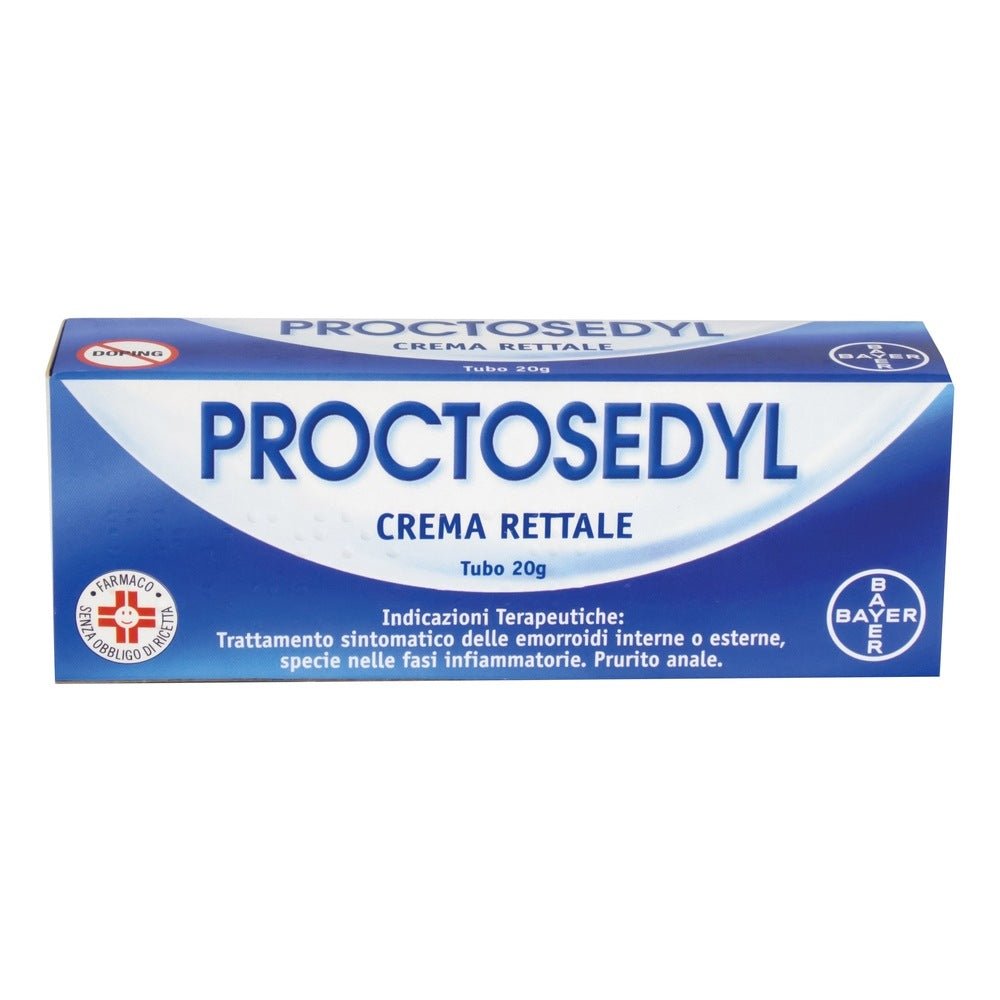
Proctosedyl rectal cream 20g
Proctosedyl rectal cream 20g
Couldn't load pickup availability

NET WEIGHT OF THE PRODUCT
NET WEIGHT OF THE PRODUCT
20g
EAN
EAN
013868031
MINSAN
MINSAN
013868031
In ottemperanza all'articolo 118 “autorizzazione della pubblicità presso il pubblico” del decreto legislativo 24 aprile 2006, numero 219
INDICATIONS
Symptomatic treatment of hemorrhoids, internal or external, especially in the inflammatory phases. Anal itching.
ACTIVE INGREDIENTS
Proctosedyl rectal cream: 100 g of rectal cream contains: hydrocortisone acetate 1 g, amylein 1 g, benzocaine 1 g, aesculin 1 g, benzalkonium chloride 5 mg. Excipients with known effect: Propylene glycol. For the full list of excipients, see section 6.1. Proctosedyl suppositories: Each suppository contains: hydrocortisone acetate 5 mg, benzocaine 50 mg, esculin 10 mg, benzalkonium chloride 0.1 mg. For the full list of excipients, see section 6.1.
EXCIPIENTS
Rectal cream: cholesterin, liquid paraffin, macrogol 300, macrogol 1540, macrogol 4000, polysorbate 80, propylene glycol, talc, white petrolatum, purified water. Suppositories: medium chain glycerides, solid semisitetic glycerides (Witepsol E85, Witepsol H15).
CONTRAINDICATIONS AND SIDE EFFECTS
Hypersensitivity to the active ingredients or to any of the excipients and in particular to benzocaine (and other anesthetics with a similar chemical structure) and to substances containing the para group (sulphonamides, promethazine, etc.); tuberculous and viral infections in the area to be treated.
DOSAGE
Rectal cream: For endorectal and perianal applications. Apply the ointment 2 times a day in acute forms; subsequently space out the applications, depending on the evolution of the symptoms.Suppositories: 1-2 suppositories per day. Use only for short treatment periods.
CONSERVATION
Rectal cream: do not store above 25°C. Suppositories: this medicine does not require any special storage conditions.
WARNINGS
Use the minimum effective dosage. Clinical cases suggest that the administration of products containing benzocaine may cause methemoglobinemia attributable to excessive absorption of benzocaine, particularly in children and the elderly. Symptoms such as cyanosis (pallor, greyish or bluish discoloration of the skin, lips and nail beds), headache, dizziness, dyspnoea (shortness of breath), fatigue and tachycardia occurring during treatment may indicate potentially life-threatening methaemoglobinaemia and require immediate medical attention (see section 4.9). Topical application of corticosteroids in excessive doses and for prolonged periods can give rise to generalized reactions due to systemic absorption (Cushing's syndrome, inhibition of the pituitary-adrenal axis). Therefore, once a favorable clinical effect has been obtained, it is necessary to reduce the frequency of application and dosage to a minimum, discontinuing the product as soon as possible. It is in any case necessary to limit the use of topical steroids to short periods of time. Furthermore, use with appropriate caution in subjects with damaged mucous membranes which could cause excessive absorption of the active ingredients. Corticosteroids can be applied to infected areas only if preceded or accompanied by suitable antibacterial or antifungal therapy. In case of failure of the therapy it is necessary to suspend the treatment and adequately treat the infection with other measures. Rectal cream : This medicine contains 5 mg of benzalkonium chloride per 100 g of rectal cream. Benzalkonium chloride may cause local irritation. This medicine contains 2.4 g of propylene glycol per 20 g of rectal cream. May cause skin irritation. Do not use this medicine in children younger than 4 weeks of age with open wounds or large areas of damaged skin (such as burns) without talking to their doctor or pharmacist. Suppositories : Benzalkonium chloride may cause local irritation. Visual disturbances : Visual disturbances may be reported with the use of systemic and topical corticosteroids. If a patient presents with symptoms such as blurred vision or other visual disturbances, referral to an ophthalmologist should be considered for evaluation of possible causes, which may include cataracts, glaucoma, or rare diseases such as central serous chorioretinopathy (CSCR), which have been reported after the use of systemic and topical corticosteroids.
INTERACTIONS
No interaction studies have been performed. Concomitant treatment with CYP3A inhibitors, including cobicistat-containing medicinal products, is thought to increase the risk of systemic side effects. The combination should be avoided unless the benefit outweighs the increased risk of systemic side effects due to corticosteroids; in this case it is necessary to monitor patients to verify the absence of systemic side effects due to corticosteroids.
SIDE EFFECTS
Undesirable effects are classified according to MedDRA System Organ Terminology. Systemic disorders and conditions relating to the administration site: Hypersensitivity reactions with edema, redness, itching may occur locally. Eye pathologies. Frequency not known (frequency cannot be estimated from the available data) : vision, blurred (see also section 4.4) Reporting of suspected adverse reactions. Reporting suspected adverse reactions that occur after authorization of the medicinal product is important, as it allows continuous monitoring of the benefit/risk balance of the medicinal product. Healthcare professionals are asked to report any suspected adverse reactions via the national reporting system of the Italian Medicines Agency at: https://www.aifa.gov.it/content/segnalazioni-reazioni-avverse.
OVERDOSE
The phenomena caused by excess corticosteroids are characterized by asthenia, adynamia, arterial hypertension, edema, cardiac rhythm disorders, hypokalemia, metabolic alkalosis. Case reports suggest that administration of benzocaine-containing products may cause methemoglobinemia. Symptoms such as cyanosis (pallor, greyish or bluish discoloration of the skin, lips and nail beds), headache, dizziness, dyspnea (shortness of breath), fatigue and tachycardia that occur during treatment may indicate potentially life-threatening methemoglobinemia and require immediate medical attention. The recommended treatment includes, in addition to supportive therapy, intravenous infusion of methylene blue.
PREGNANCY AND BREASTFEEDING
During pregnancy and/or breastfeeding the medicine must be used only if necessary, after evaluating the expected benefit for the mother in relation to the possible risk for the fetus.
EFFECTS ON DRIVING ABILITY
Proctosedyl does not affect the ability to drive or use machines.
OUR PRODUCTS FOR THIS SEASON
-
Curial βeta Dry eye supplement 30 capsules Dr.Tili
Vendor:TilpharmaRegular price €22,50Regular priceUnit price per€22,50Sale price €22,50 -
T - Relaxfast Sleep Supplement 60 Capsules Dr.Tili
Vendor:TilpharmaRegular price €24,50Regular priceUnit price per€24,50Sale price €24,50 -
Face Serum C5 Vitamin C 30ml Dr.Tili Skinlab
Vendor:TilabRegular price €62,50Regular priceUnit price per€62,50Sale price €62,50 -
Dr.Tili Skinlab E15 Vitamin E Face Serum 30ml
Vendor:TilabRegular price €32,50Regular priceUnit price per€32,50Sale price €32,50 -
Vit+ Face Vitamin Cream 50ml Dr.Tili Skinlab
Vendor:TilabRegular price €34,00Regular priceUnit price per€34,00Sale price €34,00 -
Anti-aging Facial Treatment Hyaluronic Acid IAL B3 30ml Dr.Tili Skinlab
Vendor:TilabRegular price €46,00Regular priceUnit price per€46,00Sale price €46,00 -
Body Milk Hydra Milk 200Ml. Dr.Tili Skinlab
Vendor:TilabRegular price €16,90Regular priceUnit price per€16,90Sale price €16,90 -
Facial Cleansing Milk 150ml Dr.Tili Skinlab
Vendor:TilabRegular price €18,90Regular priceUnit price per€18,90Sale price €18,90 -
Soothing Facial Toner 125ml Dr.Tili Skinlab
Vendor:TilabRegular price €14,50Regular priceUnit price per€14,50Sale price €14,50 -
Soothing Face Cream 50ml Dr.Tili Skinlab
Vendor:TilabRegular price €19,50Regular priceUnit price per€19,50Sale price €19,50















-

ASSISTANCE - TELEPHONE ORDERS
-

SHIPPING
Shipping to Italy 24/48H
Delivery also on Saturday and Sunday
Free over €49.90
Shipping to Europe 24/72H
Free over €80 -

SAFETY
The security of your data is important to us!
We strictly comply with the European GDPR regarding
Privacy and processing of personal data
The payments you make on our site are 100% safe and guaranteed -

RETURNS
Fast returns via DIY portal and 14 days to change your mind.
Immediate and free replacements for incorrect or non-compliant products delivered.


