

Zambon
Anauran 25 ml ear drops solution
Anauran 25 ml ear drops solution
Couldn't load pickup availability

NET WEIGHT OF THE PRODUCT
NET WEIGHT OF THE PRODUCT
25ml
EAN
EAN
014302032
MINSAN
MINSAN
014302032
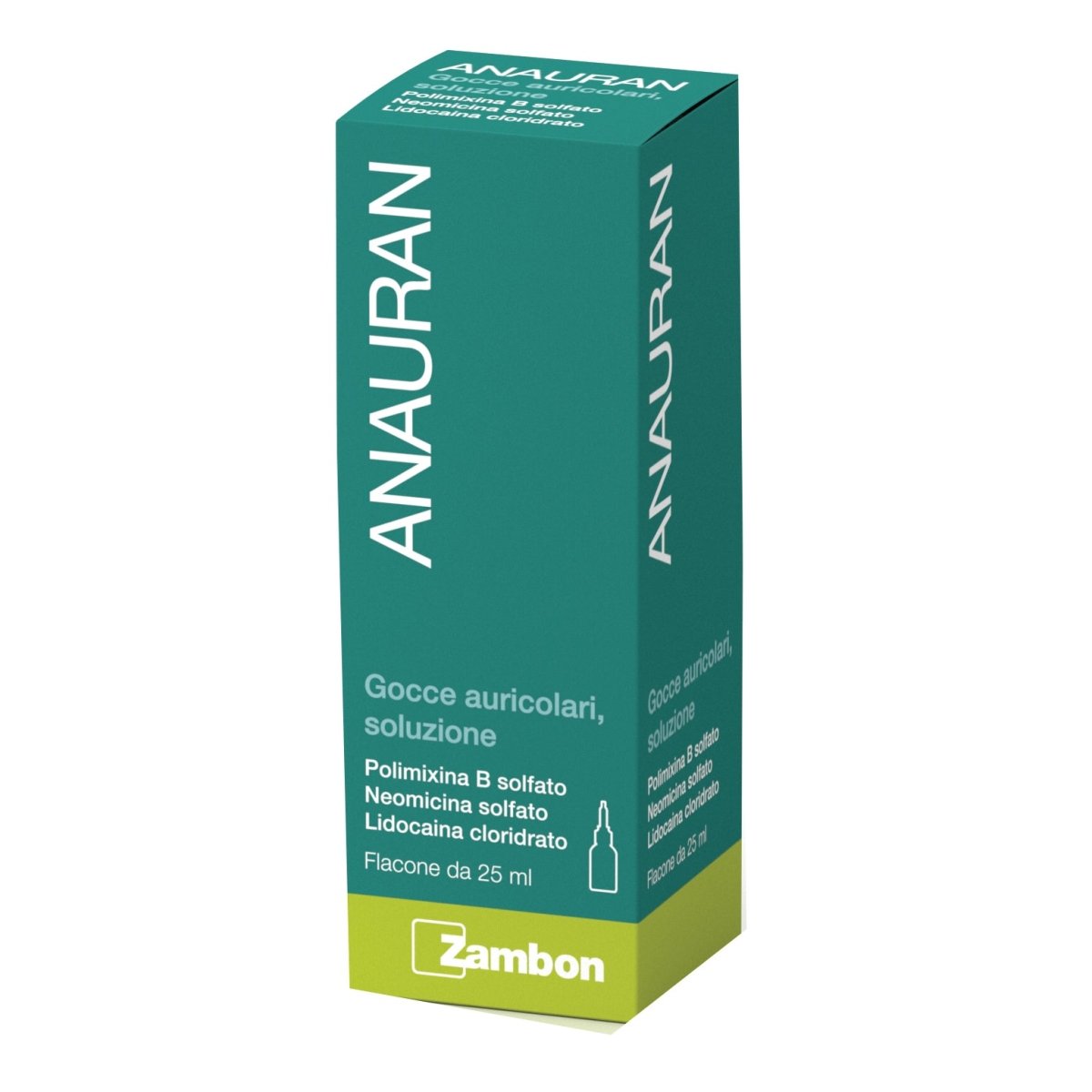
In compliance with article 118 "authorization of advertising to the public" of the legislative decree of 24 April 2006, number 219
INDICATIONS
Acute and chronic ear infections.
CONTRAINDICATIONS
ANAURAN is contraindicated: - in patients who have hypersensitivity to Polymyxin B sulphate, Neomycin sulphate and Lidocaine hydrochloride and to compounds closely related from a chemical point of view or to any of the excipients; - in patients with perforated tympanic membrane, due to the risk of ototoxicity.
WARNINGS AND PRECAUTIONS FOR USE
The use of topical products, especially if prolonged, can give rise to sensitization phenomena. In this case, stop treatment and consult your doctor to institute suitable therapy. In the presence of deep or resistant infections it is advisable to integrate the local medication with appropriate general antibiotic treatments. As with other antibiotic preparations, prolonged treatments can give rise to superinfections with resistant germs. Neomycin can induce permanent sensorineural hearing loss following damage to the cochlea, especially with the destruction of the hair cells of the organ of Corti. The risk of ototoxicity is greater in case of prolonged use, therefore a duration of therapy limited to 10 consecutive days is recommended. Cross allergy and cross resistance may occur with other aminoglycoside derivatives. ANAURAN must be used exclusively in otological settings; applications elsewhere are inappropriate. Important information about some excipients: The medicine contains 0.001 mg benzalkonium chloride in each drop, which may irritate the skin. The medicine contains 11.6 mg of propylene glycol in each drop which may cause skin irritation.
INTERACTIONS
There are no known interaction studies with the active ingredients present in the medicinal specialty.
SIDE EFFECTS
The following adverse reactions have been reported following administration of Anauran. The frequency cannot be estimated from the available data.
Classification by systems and organs | Adverse reactions
Skin and subcutaneous tissue disorders | Allergic dermatitis, itching
Systemic disorders and conditions relating to the administration site | Irritation at the application site
Injury, poisoning and procedural complications | Ototoxicity (see section 4.4)
Reporting of suspected adverse reactions. Reporting suspected adverse reactions that occur after authorization of the medicine is important, as it allows continuous monitoring of the benefit/risk balance of the medicine. Healthcare professionals are asked to report any suspected adverse reactions via the national reporting system https://www.aifa.gov.it/content/segnalazioni-reazioni-avverse.
OUR PRODUCTS FOR THIS SEASON
-
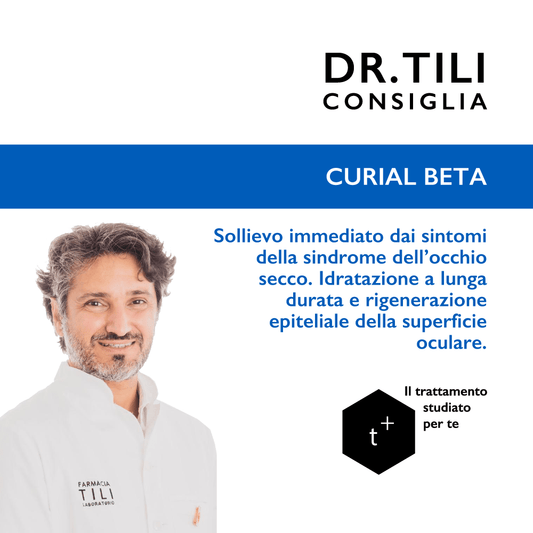
Curial βeta Dry eye supplement 30 capsules Dr.Tili
Vendor:TilpharmaRegular price €22,50Regular priceUnit price per€22,50Sale price €22,50 -
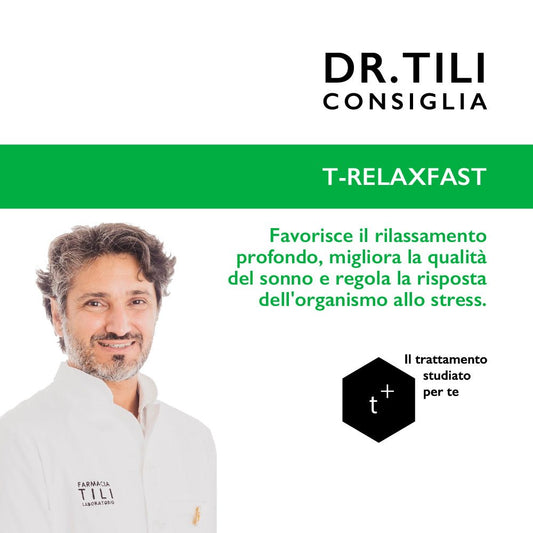
T - Relaxfast Sleep Supplement 60 Capsules Dr.Tili
Vendor:TilpharmaRegular price €24,50Regular priceUnit price per€24,50Sale price €24,50 -
Face Serum C5 Vitamin C 30ml Dr.Tili Skinlab
Vendor:TilabRegular price €62,50Regular priceUnit price per€62,50Sale price €62,50 -
Dr.Tili Skinlab E15 Vitamin E Face Serum 30ml
Vendor:TilabRegular price €32,50Regular priceUnit price per€32,50Sale price €32,50 -
Vit+ Face Vitamin Cream 50ml Dr.Tili Skinlab
Vendor:TilabRegular price €34,00Regular priceUnit price per€34,00Sale price €34,00 -
Anti-aging Facial Treatment Hyaluronic Acid IAL B3 30ml Dr.Tili Skinlab
Vendor:TilabRegular price €46,00Regular priceUnit price per€46,00Sale price €46,00 -
Body Milk Hydra Milk 200Ml. Dr.Tili Skinlab
Vendor:TilabRegular price €16,90Regular priceUnit price per€16,90Sale price €16,90 -
Facial Cleansing Milk 150ml Dr.Tili Skinlab
Vendor:TilabRegular price €18,90Regular priceUnit price per€18,90Sale price €18,90 -
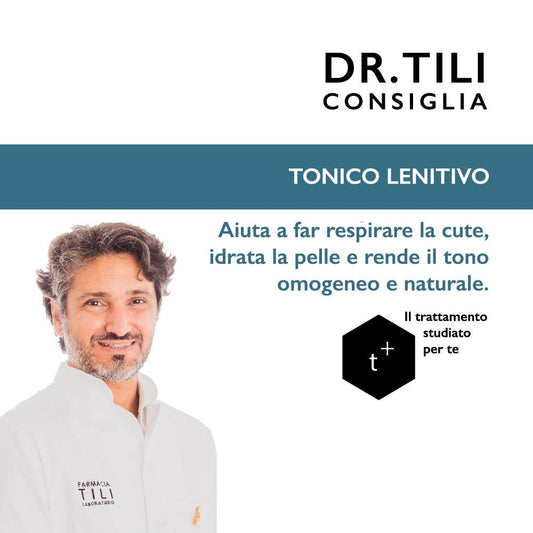
Soothing Facial Toner 125ml Dr.Tili Skinlab
Vendor:TilabRegular price €14,50Regular priceUnit price per€14,50Sale price €14,50 -
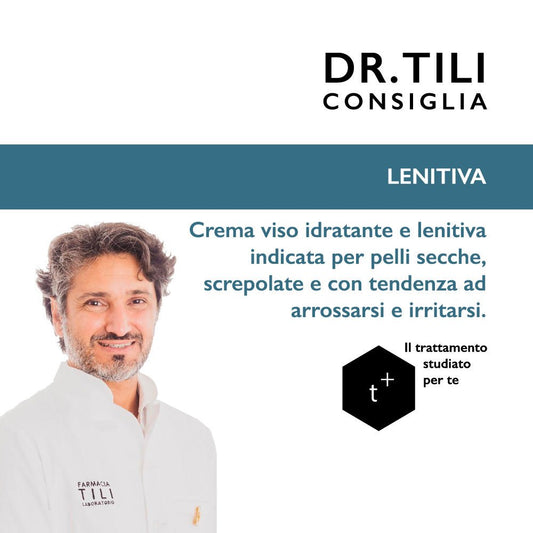
Soothing Face Cream 50ml Dr.Tili Skinlab
Vendor:TilabRegular price €19,50Regular priceUnit price per€19,50Sale price €19,50









-

ASSISTANCE - TELEPHONE ORDERS
-

SHIPPING
Shipping to Italy 24/48H
Delivery also on Saturday and Sunday
Free over €49.90
Shipping to Europe 24/72H
Free over €80 -

SAFETY
The security of your data is important to us!
We strictly comply with the European GDPR regarding
Privacy and processing of personal data
The payments you make on our site are 100% safe and guaranteed -

RETURNS
Fast returns via DIY portal and 14 days to change your mind.
Immediate and free replacements for incorrect or non-compliant products delivered.


