

Viatris Healthcare
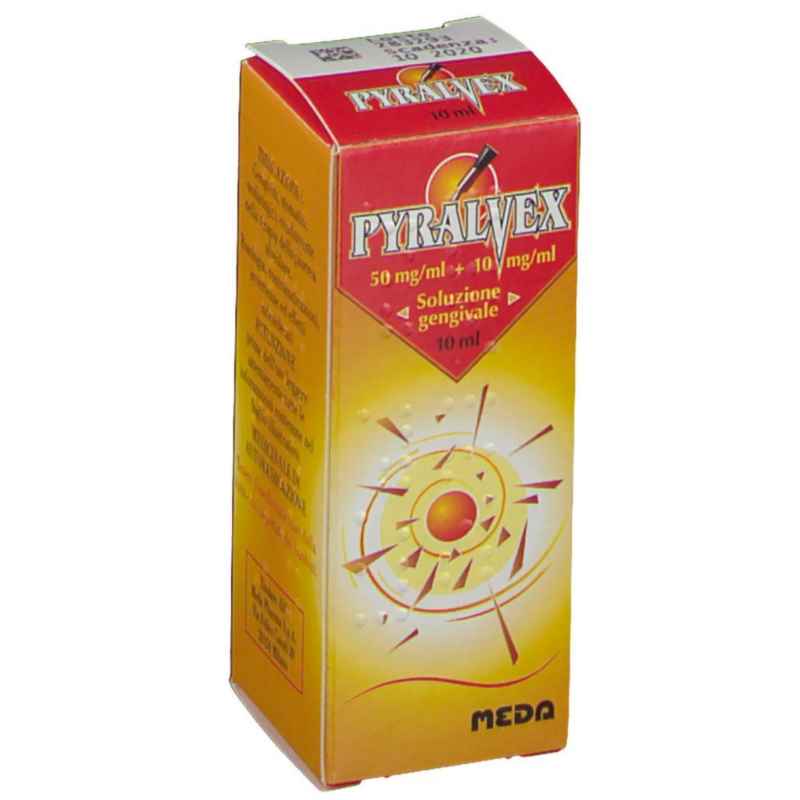
Pyralvex 50mg/ml + 10mg/ml gingival solution 10ml
Pyralvex 50mg/ml + 10mg/ml gingival solution 10ml
Couldn't load pickup availability

NET WEIGHT OF THE PRODUCT
NET WEIGHT OF THE PRODUCT
10ml
EAN
EAN
005268038
MINSAN
MINSAN
005268038
In ottemperanza all'articolo 118 “autorizzazione della pubblicità presso il pubblico” del decreto legislativo 24 aprile 2006, numero 219
INDICATIONS
Gingivitis, stomatitis, oropharyngitis, adjuvant in the treatment of alveolar pyorrhea.
ACTIVE INGREDIENTS
10 ml contain: • Active ingredients - Glucosidic rhubarb extract 500 mg (0.5 g) (corresponding to 0.43-0.53% m/v of anthraquinone derivatives) - Salicylic acid 100 mg (0.1 g) Excipient with known effects: - Ethanol 59.5% v/v For the complete list of excipients, see paragraph 6.1
EXCIPIENTS
Ethanol, purified water
CONTRAINDICATIONS AND SIDE EFFECTS
Hypersensitivity to the active substances or to any of the excipients listed in paragraph 6.1. Not to be used in children under 12 years of age. With the topical application of salicylic acid there is a hypothetical risk of inducing Reye's syndrome. Reye's syndrome has been observed after oral administration of higher doses of salicylic acid or acetylsalicylic acid in children. There have been no confirmed cases of Reye's Syndrome associated with the use of Pyralvex. Due to the ethanol content the medicine is not suitable for patients with alcoholism.
DOSAGE
Do not exceed the recommended doses. Adults and children aged 12 and over: apply locally by brushing (after removing any dentures) on the affected area up to 3-4 times a day. Do not rinse your mouth, eat or drink immediately after application. The patient should contact the doctor if symptoms do not improve. The maximum duration of treatment is 14 days. Children under 12 years old: contraindicated in children under 12 years of age (see section 4.3).
CONSERVATION
This medicinal product does not require any special storage conditions.
WARNINGS
Do not exceed the recommended application frequency. Salicylate toxicity may occur if the suggested frequency of application is exceeded. Coloring of teeth, dentures and dentures (see section 4.8). Products for topical use, especially if applied for repeated and prolonged periods of time, can give rise to hypersensitivity phenomena. In this case, stop treatment and consult your doctor in order to establish suitable therapy. After a short period of treatment without appreciable results, consult your doctor. Information on excipients This medicine contains 476 mg of ethanol alcohol (alcohol) in each ml, which is equivalent to 59.5% v/v. May cause burning sensation on damaged skin. PYRALVEX is flammable.
INTERACTIONS
Salicylates are highly bound to plasma proteins and can displace other drugs from binding sites. Clinically important interactions may occur with heparin and oral anticoagulants, but these are primarily due to an effect on platelet function, rather than on pharmacokinetic parameters.
SIDE EFFECTS
In the system organ class, undesirable effects are listed in order of frequency (number of patients expected to experience the reaction), using the following convention: Very common (≥1/10); Common (≥1/100, <1/10); Uncommon (≥1/1,000, <1/100); Rare (≥1/10,000, <1/1,000); Very Rare (<1/10,000); Not known (frequency cannot be estimated from the available data). Immune system disorders. Not known: Allergic reactions. Gastrointestinal disorders. Common: Temporary discoloration of the teeth or oral mucosa. Disorders of the skin and subcutaneous tissue. Not known: skin rash and urticaria. Systemic pathologies and conditions relating to the administration site. Very common: Transient local burning sensation at the application site. Reporting of suspected adverse reactions Reporting suspected adverse reactions that occur after authorization of the medicine is important, as it allows continuous monitoring of the benefit/risk balance of the medicine. Healthcare professionals are asked to report any suspected adverse reactions via the national reporting system at www.aifa.gov.it/content/segnalazioni-reazioni-avverse.
OVERDOSE
Salicylate toxicity may occur if the frequency of application is exceeded. Overdose associated with local applications is unlikely, although the extent of systemic absorption of salicylic acid and anthraquinone derivatives is not known. A systemic overdose following ingestion could lead to abdominal cramps, diarrhea and possible salicylism (which presents with hyperventilation, tinnitus, deafness, vasodilation, sweating).
PREGNANCY AND BREASTFEEDING
Animal studies are not sufficient to demonstrate effects on pregnancy and/or embryonic/foetal development. The potential risks for humans are unknown. Caution should be exercised when prescribing the medicine to pregnant women. Inhibition of prostaglandin synthesis could negatively influence pregnancy and/or embryo/foetal development. Therefore, PIRALVEX should only be used in the first and second trimester of pregnancy after carefully evaluating the risk-benefit ratio. If PYRALVEX is used by a woman trying to conceive, or during the first or second trimester of pregnancy, the dose should be kept low and the duration of treatment as short as possible. The use of PYRALVEX should be avoided in the third trimester of pregnancy. During the last three months of pregnancy, the mechanism of action of these medicines may involve suppression of labor, prolongation of gestation and prolonged labor. Furthermore, it can cause cardiovascular diseases (with premature closure of the ductus arteriosus and pulmonary hypertension) and renal toxicity (with oliguresis and oligoamnios) in the newborn, increased tendency to bleeding in the mother and newborn as well as the risk of edema formation in the mother. Anthraquinone glucosides derived from rhubarb may be excreted in breast milk. However, at therapeutic doses of PYRALVEX, it is not known whether these or salicylic acid are excreted in breast milk. A decision should be made whether to continue breastfeeding or to continue PYRALVEX therapy taking into account the benefit of breastfeeding for the child and the benefit of PYRALVEX therapy for the woman.
EFFECTS ON DRIVING ABILITY
PYRALVEX does not affect the ability to drive or use machines.
OUR PRODUCTS FOR THIS SEASON
-
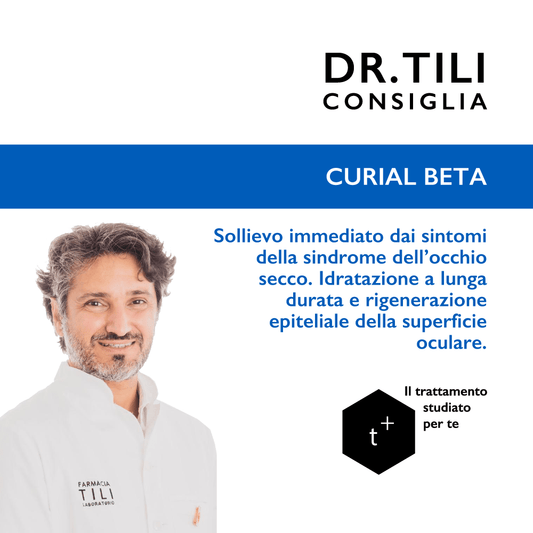
Curial βeta Dry eye supplement 30 capsules Dr.Tili
Vendor:TilpharmaRegular price €22,50Regular priceUnit price per€22,50Sale price €22,50 -
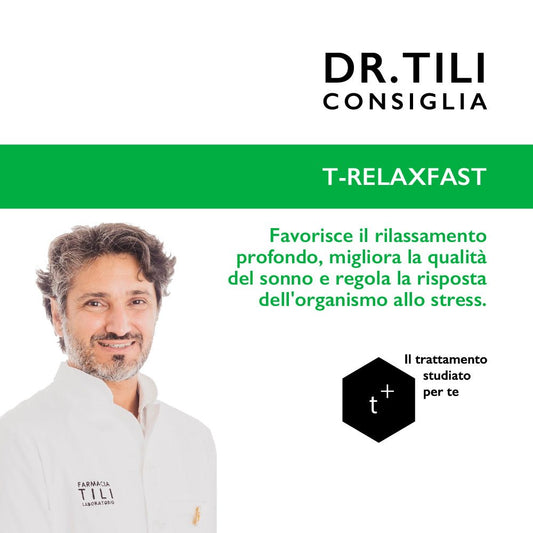
T - Relaxfast Sleep Supplement 60 Capsules Dr.Tili
Vendor:TilpharmaRegular price €24,50Regular priceUnit price per€24,50Sale price €24,50 -
Face Serum C5 Vitamin C 30ml Dr.Tili Skinlab
Vendor:TilabRegular price €62,50Regular priceUnit price per€62,50Sale price €62,50 -
Dr.Tili Skinlab E15 Vitamin E Face Serum 30ml
Vendor:TilabRegular price €32,50Regular priceUnit price per€32,50Sale price €32,50 -
Vit+ Face Vitamin Cream 50ml Dr.Tili Skinlab
Vendor:TilabRegular price €34,00Regular priceUnit price per€34,00Sale price €34,00 -
Anti-aging Facial Treatment Hyaluronic Acid IAL B3 30ml Dr.Tili Skinlab
Vendor:TilabRegular price €46,00Regular priceUnit price per€46,00Sale price €46,00 -
Body Milk Hydra Milk 200Ml. Dr.Tili Skinlab
Vendor:TilabRegular price €16,90Regular priceUnit price per€16,90Sale price €16,90 -
Facial Cleansing Milk 150ml Dr.Tili Skinlab
Vendor:TilabRegular price €18,90Regular priceUnit price per€18,90Sale price €18,90 -
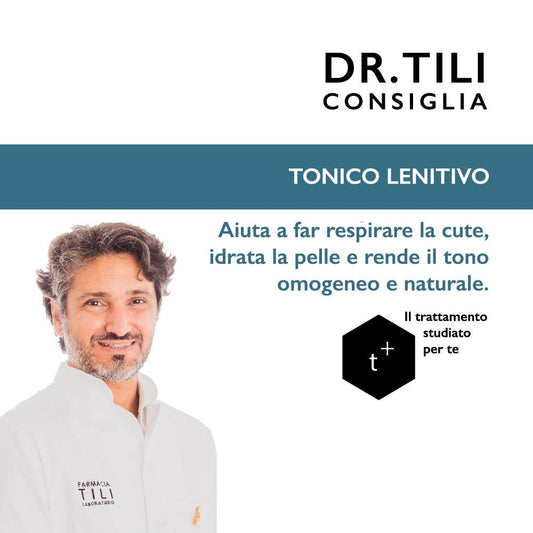
Soothing Facial Toner 125ml Dr.Tili Skinlab
Vendor:TilabRegular price €14,50Regular priceUnit price per€14,50Sale price €14,50 -
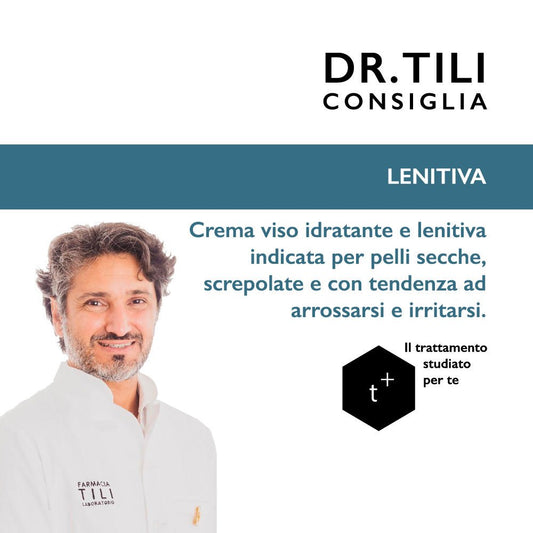
Soothing Face Cream 50ml Dr.Tili Skinlab
Vendor:TilabRegular price €19,50Regular priceUnit price per€19,50Sale price €19,50









-

ASSISTANCE - TELEPHONE ORDERS
-

SHIPPING
Shipping to Italy 24/48H
Delivery also on Saturday and Sunday
Free over €49.90
Shipping to Europe 24/72H
Free over €80 -

SAFETY
The security of your data is important to us!
We strictly comply with the European GDPR regarding
Privacy and processing of personal data
The payments you make on our site are 100% safe and guaranteed -

RETURNS
Fast returns via DIY portal and 14 days to change your mind.
Immediate and free replacements for incorrect or non-compliant products delivered.


