

Viatris Healthcare
Betadine 10% 30g gel
Betadine 10% 30g gel
Couldn't load pickup availability

NET WEIGHT OF THE PRODUCT
NET WEIGHT OF THE PRODUCT
30g
EAN
EAN
023907126
MINSAN
MINSAN
023907126

In compliance with article 118 "authorization of advertising to the public" of the legislative decree of 24 April 2006, number 219
INDICATIONS
Betadine 10% Cutaneous solution, alcoholic: Disinfection and cleaning of damaged skin (small superficial wounds, bedsores with limited involvement of the epidermis). The medicine can be used to disinfect the skin before surgery. Betadine 1% Mouthwash: Disinfection of the oral mucosa. Betadine 10% Gel: Disinfection of damaged skin (small superficial wounds, bedsores with involvement limited to the epidermis). Betadine 10% Impregnated gauzes: Disinfection of damaged skin (small superficial wounds, bedsores with involvement limited to the epidermis).
CONTRAINDICATIONS
• Hypersensitivity to the active substance or to any of the excipients listed in paragraph 6.1. • Hyperthyroidism • Do not use in children under 6 months of age. • Mouthwash should not be used in children under 6 years of age.
WARNINGS AND PRECAUTIONS FOR USE
For external use only. The product must not be applied to severely damaged skin and large surfaces. Do not use for prolonged treatments: use, especially if prolonged, may give rise to sensitization phenomena. In this case, treatment should be discontinued and a clinical evaluation performed. Particular caution should be used in patients with pre-existing renal insufficiency who require regular applications of Betadine on damaged skin (see section 5.2). Patients with goiter, thyroid nodules, or other acute and non-acute thyroid conditions are at risk of developing thyroid hyperfunction (hyperthyroidism) following administration of large amounts of iodine. In this patient population, povidone iodine solution should not be used for a prolonged period of time and on large body surfaces. Even after the end of treatment, it is necessary to look for early symptoms of possible hyperthyroidism and monitor thyroid function. Do not use at least 10 days before performing a scan or after a radioactive iodine scan or in the treatment of thyroid cancer with radioactive iodine. The pediatric population is at greater risk of developing hypothyroidism following applications of high doses of iodine. Due to the permeability of the skin and their high sensitivity to iodine, the use of povidone iodine should be reduced to the bare minimum in children. A check of the child's thyroid function (for example, T4 and TSH levels) may be necessary. Any oral ingestion of povidone iodine by the child should be avoided. In pediatric age use only under strict supervision and in cases of actual need. Accidental ingestion or inhalation of some disinfectants can have serious, sometimes fatal, consequences. Avoid contact with eyes. Betadine 10% cutaneous solution, alcoholic: The alcohol solution is highly flammable: it must dry completely before any device (especially high-frequency surgical devices) is applied. In pre-operative preparation, avoid accumulation under the patient, as chemical burns to the skin may occur. Prolonged exposure to solution-related moist conditions may cause irritation or, rarely, severe skin reactions. If skin irritation, contact dermatitis or hypersensitivity occurs, discontinue use. Do not heat before application. Betadine 1% mouthwash: Care should be taken in case of oropharyngeal use to avoid inhalation of Betadine 1% mouthwash through the respiratory tract as it may cause complications such as pneumonia. This may particularly occur in intubated patients. Long-term use of povidone iodine for gargling should be avoided in pregnant women, breastfeeding mothers and people with a high risk of developing thyroid dysfunction due to excessive iodine intake (see sections 4.6 and 5.2). Important information about some excipients Betadine 1% Mouthwash contains less than 1 mmol (23 mg) sodium per 20 ml of mouthwash, i.e. essentially 'sodium-free'. Betadine 1% Mouthwash contains 681.88 mg of alcohol (ethanol) in 20 ml of mouthwash. The amount in 20ml of this medicine is equivalent to less than 18ml of beer or 8ml of wine. The small amount of alcohol in this medicine will not produce any relevant effects.
INTERACTIONS
Avoid the simultaneous use of other antiseptics and detergents. The polyvinylpyrrolidone-iodine complex is effective and stable at pH values between 2.0 and 7.0. It is possible that the complex reacts with proteins or other unsaturated organic compounds, and this leads to a reduction in its effectiveness. The concomitant use of preparations with enzymatic components for the treatment of wounds leads to a weakening of the effects of both substances. Povidone iodine should not be used simultaneously with products containing mercury salts or benzonium compounds, carbonates, tannic acid, alkali, hydrogen peroxide, taurolidine and silver. The use of povidone iodine-containing products concomitantly with other octedin-containing antiseptics in the same or adjacent sites may cause temporary dark discoloration of the affected areas. The oxidative effect of povidone iodine preparations can cause false positive results of some laboratory diagnostic tests (for example tests with toluidine or guaiac gum for the determination of hemoglobin or glucose in feces or urine). Avoid routine use in patients receiving concomitant treatment with lithium. Absorption of iodine from povidone iodine solution may reduce thyroid iodine uptake. This may interfere with various tests (thyroid scan, determination of iodine-binding proteins, radioactive iodine diagnostics) and may make planned treatment of the thyroid with iodine (radioactive iodine therapy) impossible. After the end of treatment, an adequate period of time must pass before performing a new scan.
SIDE EFFECTS
Undesirable effects are classified according to their frequency: Very common (≥ 1/10) Common (> 1/100 to < 1/10) Uncommon (≥ 1/1,000 to < 1/100) Rare (≥ 1/10,000 to < 1/1,000) Very rare (< 1/10,000) Not known (frequency cannot be estimated from the data available) Immune system disorders Rare Hypersensitivity Very rare Anaphylactic reaction Endocrine disorders Very rare Hyperthyroidism * (sometimes with symptoms such as tachycardia or agitation) Not known Hypothyroidism *** Metabolism and nutrition disorders Not known Electrolyte imbalance **, Metabolic acidosis ** Respiratory, thoracic and mediastinal disorders Not known Pneumonia ***** (only when using Betadine 1% mouthwash) Pathologies of the skin and subcutaneous tissue Rare Contact dermatitis (with symptoms such as erythema, microvesicles and itching) Very rare Angioedema Not known Exfoliative dermatitis, Dry skin ^^ (only in case of use of Betadine 10% cutaneous solution, alcoholic) Renal and urinary disorders Not known Acute renal failure **, Abnormal blood osmolarity ** Injury, poisoning and procedural complications Not known Chemical skin burn ****, Thermal burn ^ (only in case of use of Betadine 10% cutaneous solution, alcoholic) *In patients with a history of thyroid pathologies (see paragraph Warnings and special precautions for use) following high iodine uptake, for example after long-term use of povidone-iodine solution for the treatment of wounds and burns on large skin areas. **May occur as a result of uptake of high quantities of povidone iodine (e.g. in the treatment of burns) ***Hypothyroidism following prolonged or extensive use of povidone iodine **** As a result of “accumulation” behind the patient during pre-operative preparation *****Complications due to inhalation - see section 4.4 ^Due to the high flammability, the alcoholic povidone iodine solution must dry completely before devices (particularly high-pressure surgical devices) can be used high frequency) ^^May occur after repeated applications due to the high alcohol content in the solution; the risk is greater for the genital area (for example for the scrotum) Reporting of suspected adverse reactions Reporting suspected adverse reactions that occur after authorization of the medicinal product is important, as it allows continuous monitoring of the benefit/risk balance of the medicinal product. Healthcare professionals are asked to report any suspected adverse reactions via the national reporting system at: www.aifa.gov.it/content/segnalazioni-reazioni-avverse
OUR PRODUCTS FOR THIS SEASON
-
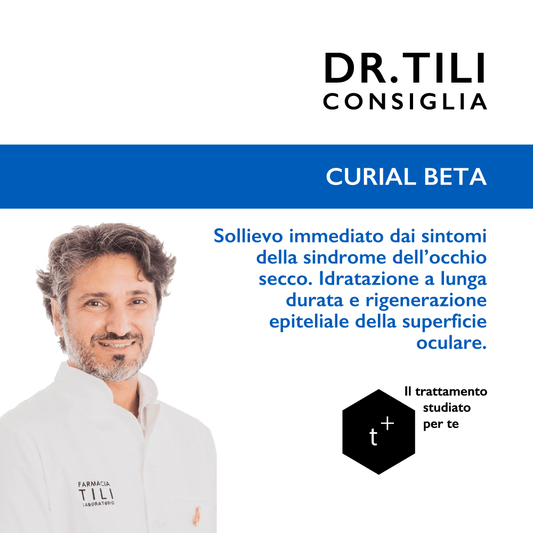
Curial βeta Dry eye supplement 30 capsules Dr.Tili
Vendor:TilpharmaRegular price €22,50Regular priceUnit price per€22,50Sale price €22,50 -
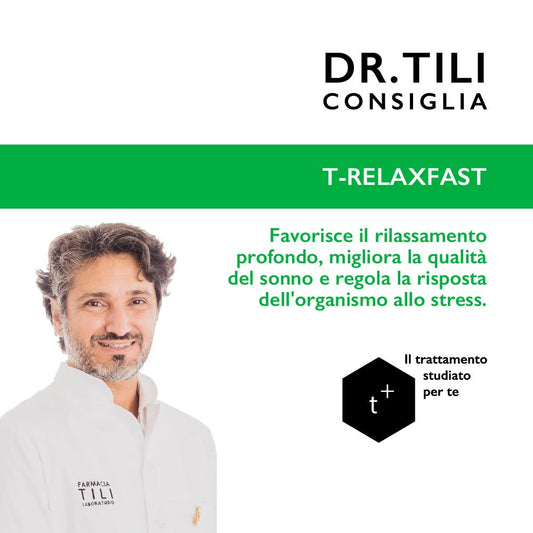
T - Relaxfast Sleep Supplement 60 Capsules Dr.Tili
Vendor:TilpharmaRegular price €24,50Regular priceUnit price per€24,50Sale price €24,50 -
Face Serum C5 Vitamin C 30ml Dr.Tili Skinlab
Vendor:TilabRegular price €62,50Regular priceUnit price per€62,50Sale price €62,50 -
Dr.Tili Skinlab E15 Vitamin E Face Serum 30ml
Vendor:TilabRegular price €32,50Regular priceUnit price per€32,50Sale price €32,50 -
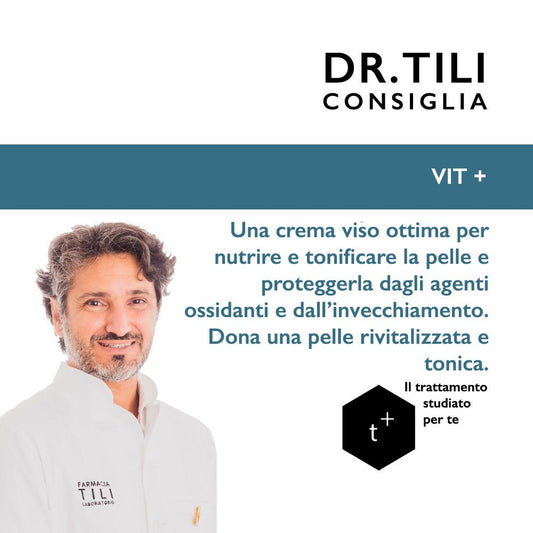
Vit+ Face Vitamin Cream 50ml Dr.Tili Skinlab
Vendor:TilabRegular price €34,00Regular priceUnit price per€34,00Sale price €34,00 -
Anti-aging Facial Treatment Hyaluronic Acid IAL B3 30ml Dr.Tili Skinlab
Vendor:TilabRegular price €46,00Regular priceUnit price per€46,00Sale price €46,00 -
Body Milk Hydra Milk 200Ml. Dr.Tili Skinlab
Vendor:TilabRegular price €16,90Regular priceUnit price per€16,90Sale price €16,90 -
Facial Cleansing Milk 150ml Dr.Tili Skinlab
Vendor:TilabRegular price €18,90Regular priceUnit price per€18,90Sale price €18,90 -
Soothing Facial Toner 125ml Dr.Tili Skinlab
Vendor:TilabRegular price €14,50Regular priceUnit price per€14,50Sale price €14,50 -
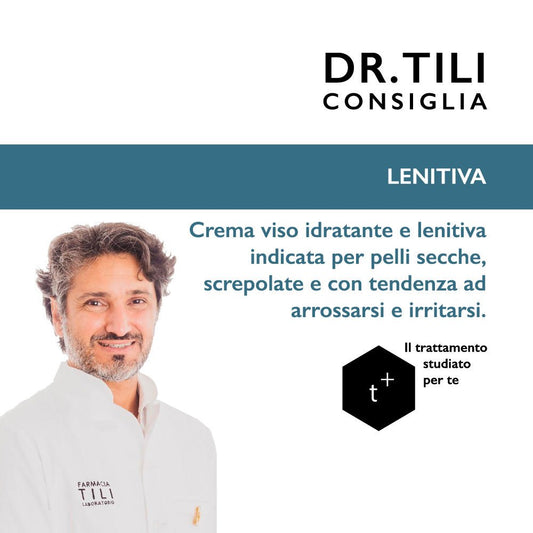
Soothing Face Cream 50ml Dr.Tili Skinlab
Vendor:TilabRegular price €19,50Regular priceUnit price per€19,50Sale price €19,50









-

ASSISTANCE - TELEPHONE ORDERS
-

SHIPPING
Shipping to Italy 24/48H
Delivery also on Saturday and Sunday
Free over €49.90
Shipping to Europe 24/72H
Free over €80 -

SAFETY
The security of your data is important to us!
We strictly comply with the European GDPR regarding
Privacy and processing of personal data
The payments you make on our site are 100% safe and guaranteed -

RETURNS
Fast returns via DIY portal and 14 days to change your mind.
Immediate and free replacements for incorrect or non-compliant products delivered.


