

Dompé
Xamamina Travel Sickness 50mg 6 softgels
Xamamina Travel Sickness 50mg 6 softgels
Couldn't load pickup availability

NET WEIGHT OF THE PRODUCT
NET WEIGHT OF THE PRODUCT
6ct
EAN
EAN
002955060
MINSAN
MINSAN
002955060

In ottemperanza all'articolo 118 “autorizzazione della pubblicità presso il pubblico” del decreto legislativo 24 aprile 2006, numero 219
INDICATIONS
Seasickness, plane sickness, car sickness and train sickness.
ACTIVE INGREDIENTS
XAMAMINA TRAVEL SICKNESS 50 mg soft capsules One soft capsule contains: active ingredient: dimenhydrinate 50 mg Excipients: sorbitol, parabens XAMAMINA TRAVEL SICKNESS Children 25 mg soft capsules One soft capsule contains: active substance: dimenhydrinate 25 mg Excipients: sorbitol, parabens For the complete list of excipients, see section 6.1
EXCIPIENTS
XAMAMINA TRAVEL SICK 50 mg soft capsules and XAMAMINA TRAVEL SICK Children 25 mg soft capsules macrogol 400. Shell: gelatin; partially dehydrated liquid sorbitol; sodium-ethyl parahydroxybenzoate (E215); sodium propyl parahydroxybenzoate (E 217).
CONTRAINDICATIONS AND SIDE EFFECTS
Hypersensitivity to the active substance, to other antihistamines or to any of the excipients. Contraindicated in children under 2 years of age. Contraindicated during pregnancy and breastfeeding.
DOSAGE
XAMAMINA TRAVEL SICKNESS 50 mg soft capsules In adults 1 soft capsule half an hour before travel; if necessary repeat the dose after 3-4 hours, up to a maximum of 4 soft capsules in 24 hours. XAMAMINA TRAVEL SICKNESS Children 25 mg soft capsules In children aged between 2-6 years 1 soft capsule of Xamamine Travel Sickness Children half an hour before travel up to a maximum of 3 times in 24 hours. In children aged between 7-12 years 1-2 soft capsules of Xamamine Travel Sickness Children half an hour before travel, up to a maximum of 2-3 times in 24 hours. Do not exceed the recommended doses.
CONSERVATION
Store at a temperature not exceeding 25°C
WARNINGS
The product must be administered with caution in subjects suffering from closed-angle glaucoma, prostatic hypertrophy, urinary retention, slowed intestinal transit, bronchial asthma, epilepsy, porphyria. The product can mask the symptoms of ototoxicity and therefore must be administered with caution in patients receiving ototoxic drugs. The soft capsules contain sorbitol: Patients suffering from rare hereditary problems of fructose intolerance should not take this medicine. The soft capsules contain parabens which can cause allergic reactions (even delayed).
INTERACTIONS
The product may increase the effects of other Central Nervous System depressants, such as alcohol, barbiturates, other hypnotics, sedatives or tranquilizers. In case of concomitant intake of these substances, care must be taken to avoid additive sedation phenomena. The product may enhance the effects of other anticholinergic drugs, including antidepressants. If administered concomitantly with aminoglycoside antibiotics or other ototoxic drugs, dimenhydrinate can mask the first symptoms of ototoxicity, which can only be detected when the damage is irreversible (see also par. 4.4).
SIDE EFFECTS
The following side effects have been reported following treatment with Xamamine Travel Mal:
Metabolism and nutrition disorders - Frequent side effects: Anorexia.
Psychiatric disorders - Less frequent side effects: Insomnia (especially in children) Euphoria.
Nervous system disorders - Most frequent side effects: Sedation Drowsiness. Frequent side effects: Headache. Less frequent side effects: Dizziness Tremors Convulsions (especially in children).
Vision disorders - Frequent side effects: Accommodation disorders.
Cardiac disorders - Less frequent side effects: Tachycardia.
Vascular disorders - Less frequent side effects: Hypotension.
Gastrointestinal disorders - Frequent side effects: Dry mouth Nausea.
Skin and subcutaneous tissue disorders - Frequent side effects: Photosensitivity Allergic skin reaction.
Kidney and urinary disorders - Frequent side effects: Micturition disorders.
General disorders and administration site conditions - Less frequent side effects: Asthenia.
"Reporting suspected adverse reactions Reporting suspected adverse reactions that occur after authorization of the medicinal product is important, as it allows continuous monitoring of the benefit/risk balance of the medicinal product. Healthcare professionals are asked to report any suspected adverse reactions via the national reporting system at https://www.aifa.gov.it/content/segnalazioni-reazioni-avverse.
OVERDOSE
In case of overdose, consult your doctor immediately. Drowsiness is the most usual symptom of overdose. Toxic doses can produce: convulsion, coma and respiratory depression. If necessary, implement symptomatic therapy. When necessary, respiratory assistance.
PREGNANCY AND BREASTFEEDING
Pregnancy. In reproduction studies in rats and rabbits, doses 20-25 times higher than those normally used in human therapy did not show any teratogenic effects or reduction in fertility. However, no data are available on the use of the product in pregnant women. Therefore, although the teratogenicity of the product appears unlikely, the use of dimenhydrinate during pregnancy is contraindicated. Breastfeeding. Small amounts of dimenhydrinate pass into breast milk. Given the possible adverse events of the product in newborns, the use of dimenhydrinate during breastfeeding is contraindicated.
EFFECTS ON DRIVING ABILITY
Since the most frequent side effect of antihistamines is sedation which can manifest itself as drowsiness, this must be taken into account by those who carry out operations requiring an intact level of vigilance (driving motor vehicles, operating machinery).
OUR PRODUCTS FOR THIS SEASON
-
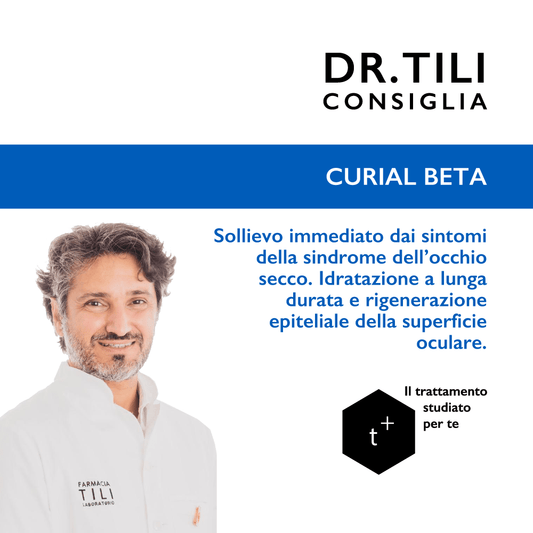
Curial βeta Dry eye supplement 30 capsules Dr.Tili
Vendor:TilpharmaRegular price €22,50Regular priceUnit price per€22,50Sale price €22,50 -
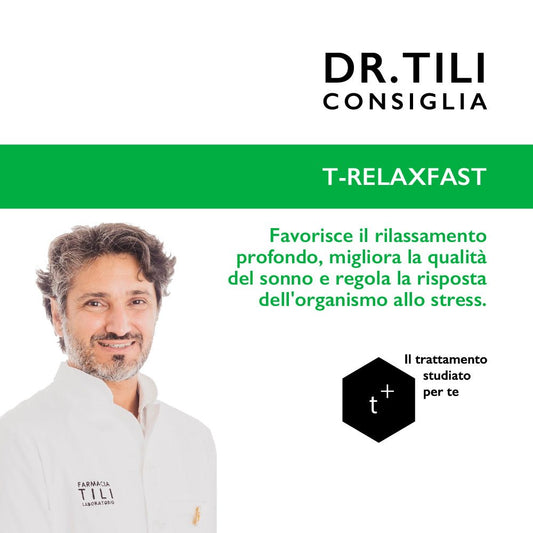
T - Relaxfast Sleep Supplement 60 Capsules Dr.Tili
Vendor:TilpharmaRegular price €24,50Regular priceUnit price per€24,50Sale price €24,50 -
Face Serum C5 Vitamin C 30ml Dr.Tili Skinlab
Vendor:TilabRegular price €62,50Regular priceUnit price per€62,50Sale price €62,50 -
Dr.Tili Skinlab E15 Vitamin E Face Serum 30ml
Vendor:TilabRegular price €32,50Regular priceUnit price per€32,50Sale price €32,50 -
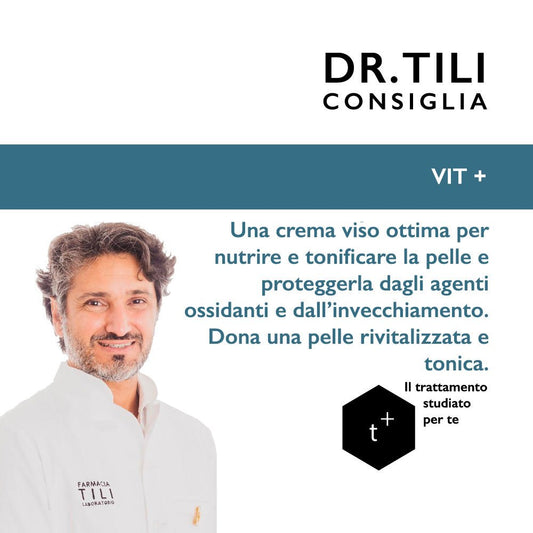
Vit+ Face Vitamin Cream 50ml Dr.Tili Skinlab
Vendor:TilabRegular price €34,00Regular priceUnit price per€34,00Sale price €34,00 -
Anti-aging Facial Treatment Hyaluronic Acid IAL B3 30ml Dr.Tili Skinlab
Vendor:TilabRegular price €46,00Regular priceUnit price per€46,00Sale price €46,00 -
Body Milk Hydra Milk 200Ml. Dr.Tili Skinlab
Vendor:TilabRegular price €16,90Regular priceUnit price per€16,90Sale price €16,90 -
Facial Cleansing Milk 150ml Dr.Tili Skinlab
Vendor:TilabRegular price €18,90Regular priceUnit price per€18,90Sale price €18,90 -
Soothing Facial Toner 125ml Dr.Tili Skinlab
Vendor:TilabRegular price €14,50Regular priceUnit price per€14,50Sale price €14,50 -
Soothing Face Cream 50ml Dr.Tili Skinlab
Vendor:TilabRegular price €19,50Regular priceUnit price per€19,50Sale price €19,50











-

ASSISTANCE - TELEPHONE ORDERS
-

SHIPPING
Shipping to Italy 24/48H
Delivery also on Saturday and Sunday
Free over €49.90
Shipping to Europe 24/72H
Free over €80 -

SAFETY
The security of your data is important to us!
We strictly comply with the European GDPR regarding
Privacy and processing of personal data
The payments you make on our site are 100% safe and guaranteed -

RETURNS
Fast returns via DIY portal and 14 days to change your mind.
Immediate and free replacements for incorrect or non-compliant products delivered.


