

Haleon
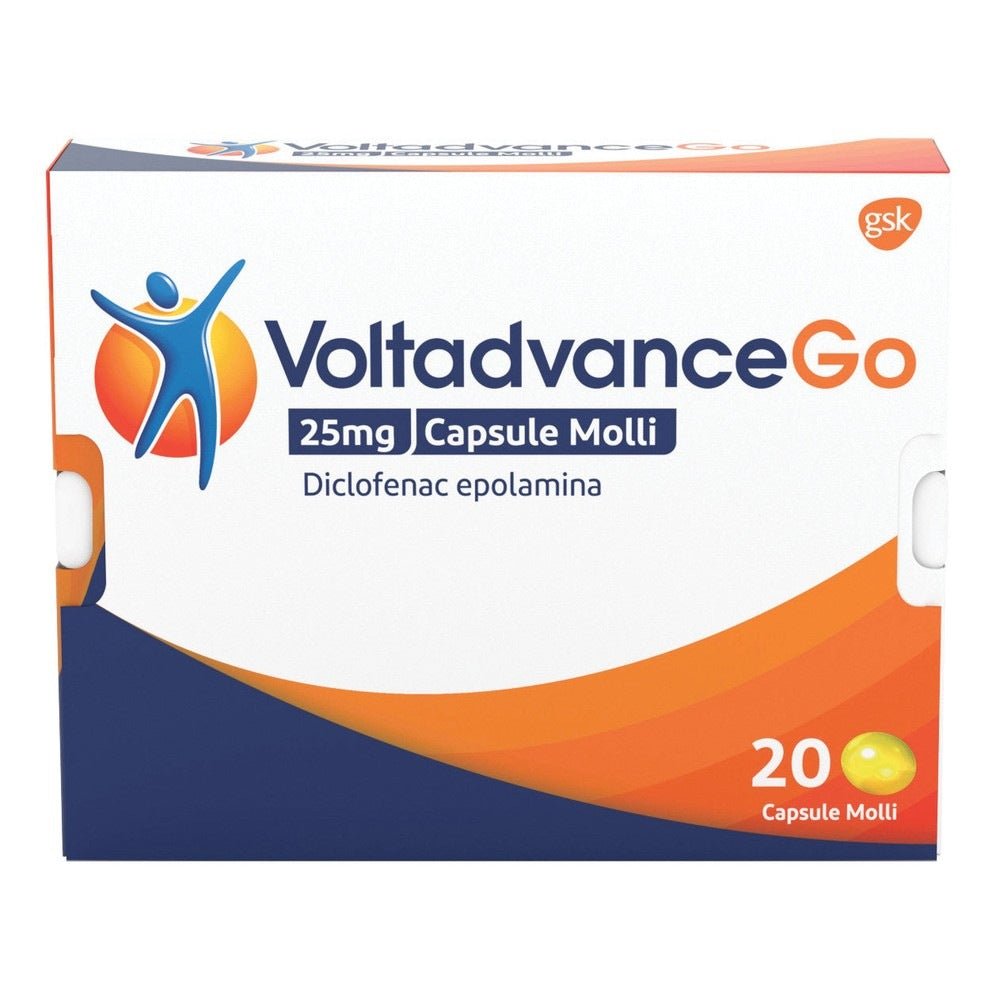
VoltadvanceGo 25mg 20 softgels
VoltadvanceGo 25mg 20 softgels

VoltadvanceGo 25mg 20 soft capsules is a anti-inflammatory based on diclofenac indicated for the short-term symptomatic treatment of mild to moderate pain how headache, toothache, menstrual pain, rheumatic e muscles. Le soft capsules they ensure a rapid absorption for a fast and effective relief from occasional pain, ideal for those looking for prompt and practical action.
Couldn't load pickup availability

NET WEIGHT OF THE PRODUCT
NET WEIGHT OF THE PRODUCT
20ct
EAN
EAN
047665068
MINSAN
MINSAN
047665068
ACTIVE INGREDIENTS
Active ingredients contained in VoltadvanceGo 25mg 20 soft capsules - What is the active ingredient in VoltadvanceGo 25mg 20 soft capsules?
For VoltadvanceGo 12.5 mg Each soft capsule contains diclofenac as 15.38 mg diclofenac epolamine equivalent to 12.5 mg diclofenac potassium. For VoltadvanceGo 25 mg Each soft capsule contains diclofenac as 30.76 mg diclofenac epolamine equivalent to 25 mg diclofenac potassium. Excipient(s) with known effect: For VoltadvanceGo 12.5 mg Sorbitol (E420) maximum 8.02 mg For VoltadvanceGo 25 mg Sorbitol (E420) maximum 10.07 mg For the full list of excipients, see section 6.1.EXCIPIENTS
Composition of VoltadvanceGo 25mg 20 soft capsules - What does VoltadvanceGo 25mg 20 soft capsules contain?
Capsule contents: Macrogol 600, Anhydrous glycerol, Purified water. Capsule: Gelatin, Anhydrous glycerol, Sorbitol liquid, partially dehydrated (E420), Purified water, Hydroxypropylbetadex, Sodium hydroxide.DIRECTIONS
Therapeutic indications VoltadvanceGo 25mg 20 soft capsules - Why is VoltadvanceGo 25mg 20 soft capsules used? What is it used for?
For the short-term symptomatic treatment of: - mild to moderate pain (such as headache, toothache, menstrual pain, rheumatic pain and muscle pain)CONTRAINDICATIONS SIDE EFFECTS
Contraindications VoltadvanceGo 25mg 20 softgels - When should VoltadvanceGo 25mg 20 softgels not be used?
• Hypersensitivity to the active substance or to any of the excipients listed in section 6.1; • Active gastric or intestinal ulcer, bleeding or perforation; • Unknown haematopoiesis disorders; • History of gastrointestinal bleeding or perforation, related to previous NSAID therapy; • History of recurrent peptic ulcer/haemorrhage (two or more distinct episodes of ulceration or confirmed bleeding); • Established congestive heart failure (NYHA class II-IV), ischaemic heart disease, peripheral arterial disease and/or cerebrovascular disease; • Last trimester of pregnancy (see section 4.6); • Severe hepatic, renal or cardiac insufficiency (see section 4.4); • Like other non-steroidal anti-inflammatory drugs (NSAIDs), diclofenac is also contraindicated in patients in whom acetylsalicylic acid or other NSAIDs trigger attacks of bronchospasm, asthma, urticaria or acute rhinitis.DOSAGE
Quantity and method of taking VoltadvanceGo 25mg 20 softgels - How to take VoltadvanceGo 25mg 20 softgels?
Posology Undesirable effects may be minimised by using the lowest effective dose for the shortest duration necessary to control symptoms (see section 4.4 Special warnings and precautions for use). For VoltadvanceGo 12.5 mg Unless otherwise prescribed, adults and adolescents over 14 years of age should start with 1 or 2 soft capsules and then continue with 1 or 2 soft capsules every 4 - 6 hours as needed. In any case, no more than 6 soft capsules (equivalent to 75 mg diclofenac potassium) should be taken in any 24-hour period. For VoltadvanceGo 25 mg Unless otherwise prescribed, adults and adolescents over 14 years of age should start with 1 soft capsule and then continue with 1 soft capsule every 4 - 6 hours as needed. In any case, no more than 3 soft capsules (equivalent to 75 mg diclofenac potassium) should be taken in a 24-hour period. VoltadvanceGo should be taken for a short period of time. The duration of treatment should be 3 days. If symptoms persist or worsen, consult a doctor. Paediatric population The use of VoltadvanceGo is not recommended in children and adolescents under 14 years of age. Elderly No special dosage adjustment is necessary. In view of the possible adverse effect profile, the elderly should be monitored with particular care (see section 4.4). Renal impairment Diclofenac is contraindicated in patients with severe renal impairment (see section 4.3). No dose reduction is necessary in patients with mild to moderate renal impairment. Caution is advised when administering diclofenac to patients with mild to moderate renal impairment (see section 4.4). Hepatic impairment Diclofenac is contraindicated in patients with severe hepatic impairment (see section 4.3). No dose reduction is necessary in patients with mild to moderate hepatic function. Caution is advised when administering diclofenac to patients with mild to moderate hepatic impairment (see section 4.4). Method of administration The soft capsules should be swallowed whole with a drink of water. The rate of absorption of diclofenac is reduced when VoltadvanceGo is taken with food. It is therefore recommended not to take the soft capsules during or immediately after meals.CONSERVATION
Storage VoltadvanceGo 25mg 20 softgels - How to store VoltadvanceGo 25mg 20 softgels?
Store below 25°C. Store in the original package to protect from light and moisture.WARNINGS
Warnings VoltadvanceGo 25mg 20 softgels - About VoltadvanceGo 25mg 20 softgels it is important to know that:
General Undesirable effects may be minimised by using the lowest effective dose for the shortest duration necessary to control symptoms (see section 4.2 and the sections below on gastrointestinal and cardiovascular effects). The concomitant use of VoltadvanceGo with other NSAIDs, including cyclooxygenase-2 (COX-2) selective inhibitors, should be avoided due to the lack of any evidence demonstrating synergistic benefits and the potential for additive undesirable effects (see section 4.5). On a basic medical level, caution is advised in the elderly. In particular, in frail elderly patients or those with a low body weight, the use of the lowest effective dose is recommended. As with other NSAIDs, with diclofenac, in rare cases, allergic reactions, including anaphylactic/anaphylactoid reactions, may occur even without previous exposure to the medicinal product. Hypersensitivity reactions may also develop into Kounis syndrome, a serious allergic reaction which can lead to myocardial infarction. Actual symptoms of these reactions may include chest pain occurring in association with an allergic reaction to diclofenac. Like other NSAIDs, diclofenac may mask the signs and symptoms of infection due to its pharmacodynamic properties. Gastrointestinal effects Gastrointestinal bleeding, ulceration or perforation, which may be fatal, has been reported with all NSAIDs, including diclofenac, and may occur at any time during treatment. They generally have more serious consequences in the elderly. If gastrointestinal bleeding or ulceration occurs in patients receiving diclofenac, the medicinal product should be withdrawn. As with all NSAIDs, including diclofenac, close medical supervision is imperative and particular caution should be exercised when prescribing diclofenac to patients with symptoms indicative of gastrointestinal (GI) disorders or with a history suggestive of gastric or intestinal ulceration, bleeding or perforation (see section 4.8). The risk of GI bleeding is higher with increasing doses of NSAIDs and in patients with a history of ulcer, particularly if complicated with haemorrhage or perforation. The elderly have an increased frequency of adverse reactions to NSAIDs especially gastrointestinal bleeding and perforation which may be fatal. To reduce the risk of GI toxicity in patients with a history of ulcer, particularly if complicated with haemorrhage or perforation, and in the elderly, treatment should be initiated and maintained at the lowest effective dose. Concomitant use of protective agents (e.g. proton pump inhibitors or misoprostol) should be considered for these patients and also for patients who require concomitant use of medicinal products containing low dose acetylsalicylic acid (ASA) or other drugs likely to increase gastrointestinal risk (see section 4.5). Patients with a history of GI toxicity, particularly if elderly, should report any unusual abdominal symptoms (especially GI bleeding). Caution is advised in patients receiving concomitant medications which could increase the risk of ulceration or bleeding, such as systemic corticosteroids, anticoagulants, anti-platelet agents or selective serotonin reuptake inhibitors (see section 4.5). Close medical surveillance and caution should also be exercised in patients with ulcerative colitis or Crohn's disease as these conditions may be exacerbated (see section 4.8). NSAIDs, including diclofenac, may be associated with an increased risk of gastrointestinal anastomotic leakage. Close medical surveillance and caution are advised when using diclofenac following gastrointestinal surgery. Hepatic effects Close medical surveillance is necessary when prescribing diclofenac to patients with hepatic insufficiency as their condition may be exacerbated. As with other NSAIDs, including diclofenac, values of one or more liver enzymes may increase. During prolonged treatment with diclofenac, regular monitoring of liver function is indicated as a precautionary measure. If abnormal liver function tests persist or worsen, if clinical signs or symptoms consistent with liver disease develop, or if other manifestations occur (e.g. eosinophilia, rash), treatment with diclofenac should be discontinued. Hepatitis with diclofenac use may occur without prodromal symptoms. Particular caution should be exercised when using diclofenac in patients with hepatic porphyria, as it may trigger an attack. Renal effects Since fluid retention and oedema have been reported in association with NSAID therapy, including diclofenac, particular caution is called for in patients with cardiac or renal insufficiency, history of hypertension, the elderly, patients receiving concomitant treatment with diuretics or medicinal products that can significantly impact renal function, and those patients with substantial extracellular volume depletion from any cause, e.g. before or after major surgery (see section 4.3). In such cases, monitoring of renal function is recommended as a precaution when diclofenac is administered. Discontinuation of therapy is usually followed by recovery to the pre-treatment state. Skin effects Serious skin reactions, some of them fatal, including exfoliative dermatitis, Stevens-Johnson syndrome, and toxic epidermal necrolysis, have been reported very rarely in association with the use of NSAIDs (see section 4.8). Patients appear to be at highest risk for these reactions early in the course of therapy, with the onset of the reaction occurring in the majority of cases within the first month of treatment. VoltadvanceGo should be discontinued at the first appearance of skin rash, mucosal lesions, or any other sign of hypersensitivity. SLE and mixed connective tissue disease There may be an increased risk of aseptic meningitis in patients with systemic lupus erythematosus (SLE) and mixed connective tissue disorders (see section 4.8). Cardiovascular and cerebrovascular effects Appropriate monitoring and advice are required for patients with a history of hypertension and/or mild congestive heart failure (NYHA class I) since fluid retention and oedema have been reported in association with NSAID therapy. Clinical trial and epidemiological data consistently point to a small increased risk of arterial thrombotic events (for example, myocardial infarction or stroke) associated with the use of diclofenac, particularly at high doses (150 mg/day) and in long term treatment. Patients with significant risk factors for cardiovascular events (for example, hypertension, hyperlipidaemia, diabetes mellitus, smoking) should be treated with diclofenac only after careful consideration. As the cardiovascular risks of diclofenac may increase with dose and duration of exposure, the lowest effective daily dose for the shortest duration practicable should be used. The patient's response to therapy and the need for symptomatic relief should be re-evaluated periodically. Pre-existing asthma In patients with asthma, seasonal allergic rhinitis, swelling of the nasal mucosa (i.e. nasal polyps), chronic obstructive pulmonary disease or chronic respiratory tract infections (especially if associated with allergic rhinitis-like symptoms), reactions to NSAIDs such as asthma exacerbations (so-called analgesic intolerance/analgesic asthma), Quincke's edema or urticaria are more frequent than in other patients. Therefore, special caution is recommended in such patients (prepare for emergency). This also applies to patients allergic to other substances, e.g. with skin reactions, pruritus or urticaria. Like other drugs inhibiting the activity of prostaglandin synthase, diclofenac epolamine and other NSAIDs may precipitate bronchospasm, if administered to patients suffering from it or with a previous history of bronchial asthma. Haematological effects VoltadvanceGo is intended for short-term use. During prolonged treatment with diclofenac, as with other NSAIDs, monitoring of blood counts is recommended. Like other NSAIDs, diclofenac may temporarily inhibit platelet aggregation. Patients with haemostatic defects, bleeding diathesis or haematological abnormalities should be carefully monitored (see section 4.5). Other information This medicinal product contains a maximum of 8.02 mg and 10.07 mg sorbitol in each 12.5 mg and 25 mg capsule, respectively. Sorbitol is a source of fructose. Patients with rare hereditary problems of fructose intolerance should not take this medicine. This medicinal product contains less than 1 mmol sodium (23 mg) per dosage unit, that is to say essentially 'sodium-free'.INTERACTIONS
Interactions VoltadvanceGo 25mg 20 soft capsules - Which medicines or foods can modify the effect of VoltadvanceGo 25mg 20 soft capsules?
The following interactions include those observed with other pharmaceutical forms of diclofenac. Digoxin, phenytoin, lithium: Concomitant use of VoltadvanceGo and digoxin, phenytoin or lithium may increase the concentration of these medicinal products in the blood. Serum lithium concentrations should be monitored. Monitoring of serum digoxin and phenytoin concentrations is recommended. Diuretics and antihypertensive agents: As with other NSAIDs, concomitant use of diclofenac with diuretics or antihypertensives (e.g. beta-blockers, angiotensin converting enzyme [ACE] inhibitors) may cause a reduction in their antihypertensive effect. Therefore, the combination should be administered with caution and blood pressure should be monitored periodically in patients, especially the elderly. Patients should be adequately hydrated and consideration should be given to monitoring renal function after initiation of concomitant therapy and periodically thereafter, particularly for diuretics and ACE inhibitors, due to the increased risk of nephrotoxicity (see section 4.4). Concomitant treatment with potassium-sparing drugs may be associated with an increase in serum potassium, which should therefore be monitored frequently. Other NSAIDs including cyclooxygenase-2 selective inhibitors and corticosteroids: Concomitant administration of diclofenac and other systemic NSAIDs or corticosteroids may increase the frequency of gastrointestinal adverse effects such as gastrointestinal ulcers or bleeding (see section 4.4). Anticoagulants and antiplatelet agents: Caution is recommended as concomitant administration may increase the risk of bleeding (see section 4.4). Although clinical investigations do not seem to indicate that diclofenac affects the action of anticoagulants, there have been reports of an increased risk of haemorrhage in patients treated with diclofenac concomitantly with anticoagulants. Careful monitoring of such patients is therefore recommended. Selective serotonin reuptake inhibitors (SSRIs): Concomitant administration of systemic NSAIDs, including diclofenac, and SSRIs may increase the risk of gastrointestinal bleeding (see section 4.4). Antidiabetics: Clinical studies have shown that diclofenac can be administered together with oral antidiabetics without influencing their clinical effect. However, isolated cases of hypoglycaemic and hyperglycaemic effects requiring dosage changes of antidiabetics during treatment with diclofenac have been reported. For this reason, monitoring of blood glucose is recommended as a precautionary measure during concomitant therapy. Methotrexate: Diclofenac may inhibit the renal tubular clearance of methotrexate, thereby increasing methotrexate levels. Caution is advised when NSAIDs, including diclofenac, are administered less than 24 hours before or after treatment with methotrexate, as blood concentrations of methotrexate and toxicity of this substance may increase. Tacrolimus: Nonsteroidal anti-inflammatory drugs (such as diclofenac) may increase the renal toxicity of tacrolimus. Ciclosporin: Diclofenac, like other NSAIDs, may increase the nephrotoxicity of ciclosporin due to its effect on renal prostaglandins. Therefore, it should be administered at lower doses than would be used in patients not receiving ciclosporin. Quinolone antibacterials: Isolated cases of convulsions have been reported, which may be due to the concomitant use of quinolones and NSAIDs. Colestipol and cholestyramine : These drugs may induce a delay or decrease in the absorption of diclofenac. Therefore, it is recommended to administer diclofenac at least one hour before or 4-6 hours after the administration of colestipol/cholestyramine. Cardiac glycosides: Concomitant use of cardiac glycosides and NSAIDs in patients may exacerbate heart failure, reduce renal glomerular filtration rate and increase plasma glycoside levels. Mifepristone: NSAIDs should not be used for 8-12 days after mifepristone administration because they may reduce its effect. Potent CYP2C9 inhibitors: Caution is advised when prescribing diclofenac concomitantly with potent CYP2C9 inhibitors (such as probenecid, sulfinpyrazone and voriconazole) which may significantly increase peak plasma concentration and exposure to diclofenac, due to inhibition of its metabolism.SIDE EFFECTS
Like all medicines, VoltadvanceGo 25mg 20 soft capsules can cause side effects - What are the side effects of VoltadvanceGo 25mg 20 soft capsules?
The most commonly observed adverse events involve the gastrointestinal tract. Peptic ulcers, perforation or GI bleeding, sometimes fatal, particularly in the elderly, may occur (see section 4.4). Adverse reactions (Table 1) are ranked in order of frequency, the most frequent first, using the following convention: very common: (≥1/10); common (≥1/100, <1/10); uncommon (≥1/1,000, <1/100); rare (≥1/10,000, <1/1,000); very rare (<1/10,000); not known: frequency cannot be estimated from the available data. Table 1. Tabulated list of adverse reactions| Pathologies of the haemolymphopoietic system | |
| Very rare | Thrombocytopenia, leukopenia, pancytopenia, anemia (including haemolytic and aplastic anemia), agranulocytosis |
| Immune system disorders | |
| Rare | Hypersensitivity, anaphylactic and anaphylactoid reactions (including hypotension and shock) Angioneurotic oedema (including facial oedema) |
| Psychiatric disorders | |
| Very rare | Disorientation, depression, insomnia, nightmares, irritability, psychotic reactions |
| Nervous system disorders | |
| Common | Headache, dizziness |
| Rare | Drowsiness |
| Very rare | Paraesthesia, memory impairment, convulsions, anxiety, tremors, aseptic meningitis, taste disturbances, cerebrovascular accidents |
| Eye pathologies | |
| Very rare | Vision disturbances, blurred vision, diplopia |
| Ear and labyrinth pathologies | |
| Common | Dizziness |
| Very rare | Tinnitus, worsening of hearing |
| Heart disease | |
| Very rare | Palpitations, chest pain, heart failure, myocardial infarction |
| Not known | Kounis Syndrome |
| Vascular pathologies | |
| Very rare | Hypertension, vasculitis |
| Respiratory, thoracic and mediastinal pathologies | |
| Rare | Asthma (including dyspnea) |
| Very rare | Pneumonia |
| Gastrointestinal disorders | |
| Common | Nausea, vomiting, diarrhoea, dyspepsia, abdominal pain, flatulence, anorexia |
| Rare | Gastritis, gastrointestinal haemorrhage, haematemesis, haemorrhagic diarrhoea, melaena, gastrointestinal ulcer (with or without bleeding or perforation) |
| Very rare | Colitis (including haemorrhagic colitis and exacerbation of ulcerative colitis or Crohn's disease), constipation, stomatitis (including ulcerative stomatitis), glossitis, esophageal disorder, diaphragm-like intestinal stenosis, pancreatitis |
| Not known | Ischemic colitis |
| Hepatobiliary pathologies | |
| Uncommon | Increased transaminases |
| Rare | Hepatitis, jaundice |
| Very rare | Liver failure |
| Skin and subcutaneous tissue disorders | |
| Common | Skin rash, itching |
| Rare | Urticaria |
| Very rare | Bullous eruptions, eczema, erythema, erythema multiforme, Stevens-Johnson syndrome, toxic epidermal necrolysis (Lyell's syndrome), exfoliative dermatitis, alopecia, photosensitivity reaction, purpura, allergic purpura |
| Kidney and urinary disorders | |
| Very rare | Acute renal failure, hematuria, proteinuria, nephrotic syndrome, interstitial nephritis, renal papillary necrosis. |
| Systemic disorders and conditions related to the administration site | |
| Rare | Edema |
OVERDOSE
VoltadvanceGo 25mg 20 softgels Overdose - What are the risks of VoltadvanceGo 25mg 20 softgels in case of overdose?
Symptoms There is no typical clinical picture following diclofenac overdose. Overdose may cause symptoms such as nausea, vomiting, gastrointestinal bleeding, diarrhoea, headache, dizziness, drowsiness, tinnitus, unconsciousness or convulsions. In cases of significant poisoning, acute renal failure and liver damage are possible. Hypotension, respiratory depression and cyanosis may also occur. Therapeutic measures Management of acute poisoning with NSAIDs, including diclofenac, consists primarily of supportive measures and symptomatic treatment, which should be adopted for complications such as hypotension, renal failure, convulsions, gastrointestinal disturbance and respiratory depression. Specific therapies, such as forced diuresis, dialysis or haemoperfusion are unlikely to be helpful in eliminating NSAIDs, including diclofenac, because of their high plasma protein binding and extensive metabolism. After ingestion of a potentially toxic overdose, activated charcoal may be considered, and after ingestion of a potentially life-threatening overdose, gastric emptying (e.g., vomiting, gastric lavage) may be considered.PREGNANCY AND BREASTFEEDING
If you are pregnant or breast-feeding, think you may be pregnant or are planning to have a baby, ask your doctor for advice before taking VoltadvanceGo 25mg 20 soft capsules.
Pregnancy Inhibition of prostaglandin synthesis may cause adverse effects on pregnancy and/or embryo/foetal development. Data from epidemiological studies suggest an increased risk of miscarriage and of cardiac malformation and gastroschisis after use of a prostaglandin synthesis inhibitor in early pregnancy. The absolute risk of cardiovascular malformation increased from less than 1%, up to a maximum of approximately 1.5%. The risk is believed to increase with dose and duration of therapy. In animals, administration of a prostaglandin synthesis inhibitor has been shown to result in increased pre- and post-implantation loss and embryo-foetal mortality. In addition, an increased incidence of various malformations, including cardiovascular malformations, has been reported in animals treated with a prostaglandin synthesis inhibitor during the period of organogenesis. From the 20th week of pregnancy onwards, the use of diclofenac may cause oligohydramnios resulting from fetal renal dysfunction. This condition may be encountered soon after initiation of treatment and is usually reversible upon discontinuation of treatment. In addition, cases of constriction of the ductus arteriosus have been reported following treatment in the second trimester of pregnancy, most of which disappeared after discontinuation of treatment. Therefore, during the first and second trimester of pregnancy, diclofenac should not be given unless clearly necessary. If diclofenac is used by a woman attempting to conceive or during the first and second trimester of pregnancy, the dose should be kept as low and duration of treatment as short as possible. Following exposure to diclofenac for several days from the 20th week of gestation onwards, antenatal monitoring for oligohydramnios and constriction of the ductus arteriosus should be considered. In case of oligohydramnios or constriction of the ductus arteriosus, treatment with diclofenac should be discontinued. During the third trimester of pregnancy, all prostaglandin synthesis inhibitors may expose: the fetus to: • cardiopulmonary toxicity (premature constriction/closure of the ductus arteriosus and pulmonary hypertension), • renal dysfunction, which may progress to renal failure with oligo-hydroamnios (see above); the mother and the neonate , at the end of pregnancy, to: • possible prolongation of bleeding time and an anti-aggregating effect which may occur even at very low doses, • inhibition of uterine contractions resulting in delayed or prolonged labor. Consequently, VoltadvanceGo is contraindicated during the third trimester of pregnancy (see sections 4.3 and 5.3). Breast-feeding Like other NSAIDs, diclofenac passes into breast milk in small amounts. Therefore, diclofenac should not be administered during breast-feeding to avoid undesirable effects in the neonate. Fertility As with other NSAIDs, the use of diclofenac may impair female fertility and is not recommended in women attempting to conceive. In women who have difficulties conceiving or who are undergoing investigation of infertility, withdrawal of diclofenac should be considered.DRIVING AND USE OF MACHINERY
Taking VoltadvanceGo 25mg 20 softgels before driving or using machines - Does VoltadvanceGo 25mg 20 softgels affect driving or using machines?
There are generally no effects on the ability to drive and use machines with the low recommended dose and short duration of treatment. Patients who experience visual disturbances, dizziness, vertigo, drowsiness or other central nervous system disturbances while using diclofenac should refrain from driving and using machines.OUR PRODUCTS FOR THIS SEASON
-
Curial βeta Dry eye supplement 30 capsules Dr.Tili
Vendor:TilpharmaRegular price €22,50Regular priceUnit price per€22,50Sale price €22,50 -
T - Relaxfast Sleep Supplement 60 Capsules Dr.Tili
Vendor:TilpharmaRegular price €24,50Regular priceUnit price per€24,50Sale price €24,50 -
Face Serum C5 Vitamin C 30ml Dr.Tili Skinlab
Vendor:TilabRegular price €62,50Regular priceUnit price per€62,50Sale price €62,50 -
Dr.Tili Skinlab E15 Vitamin E Face Serum 30ml
Vendor:TilabRegular price €32,50Regular priceUnit price per€32,50Sale price €32,50 -
Vit+ Face Vitamin Cream 50ml Dr.Tili Skinlab
Vendor:TilabRegular price €34,00Regular priceUnit price per€34,00Sale price €34,00 -
Anti-aging Facial Treatment Hyaluronic Acid IAL B3 30ml Dr.Tili Skinlab
Vendor:TilabRegular price €46,00Regular priceUnit price per€46,00Sale price €46,00 -
Body Milk Hydra Milk 200Ml. Dr.Tili Skinlab
Vendor:TilabRegular price €16,90Regular priceUnit price per€16,90Sale price €16,90 -
Facial Cleansing Milk 150ml Dr.Tili Skinlab
Vendor:TilabRegular price €18,90Regular priceUnit price per€18,90Sale price €18,90 -
Soothing Facial Toner 125ml Dr.Tili Skinlab
Vendor:TilabRegular price €14,50Regular priceUnit price per€14,50Sale price €14,50 -
Soothing Face Cream 50ml Dr.Tili Skinlab
Vendor:TilabRegular price €19,50Regular priceUnit price per€19,50Sale price €19,50

















-

ASSISTANCE - TELEPHONE ORDERS
-

SHIPPING
Shipping to Italy 24/48H
Delivery also on Saturday and Sunday
Free over €49.90
Shipping to Europe 24/72H
Free over €80 -

SAFETY
The security of your data is important to us!
We strictly comply with the European GDPR regarding
Privacy and processing of personal data
The payments you make on our site are 100% safe and guaranteed -

RETURNS
Fast returns via DIY portal and 14 days to change your mind.
Immediate and free replacements for incorrect or non-compliant products delivered.


