

Menarini
Vivinduo fever and nasal congestion 500 mg + 60 mg 10 sachets granules for oral solution
Vivinduo fever and nasal congestion 500 mg + 60 mg 10 sachets granules for oral solution
Vivinduo fever and nasal congestion 500 mg + 60 mg is an OTC medicine in granules for oral solution sachets indicated for the treatment of cold and flu symptoms , such as fever , nasal congestion , headache , and muscle aches . Thanks to paracetamol and pseudoephedrine, it offers rapid relief and comprehensive action for adults and children over 12 years of age.
Couldn't load pickup availability

NET WEIGHT OF THE PRODUCT
NET WEIGHT OF THE PRODUCT
EAN
EAN
044921029
MINSAN
MINSAN
044921029
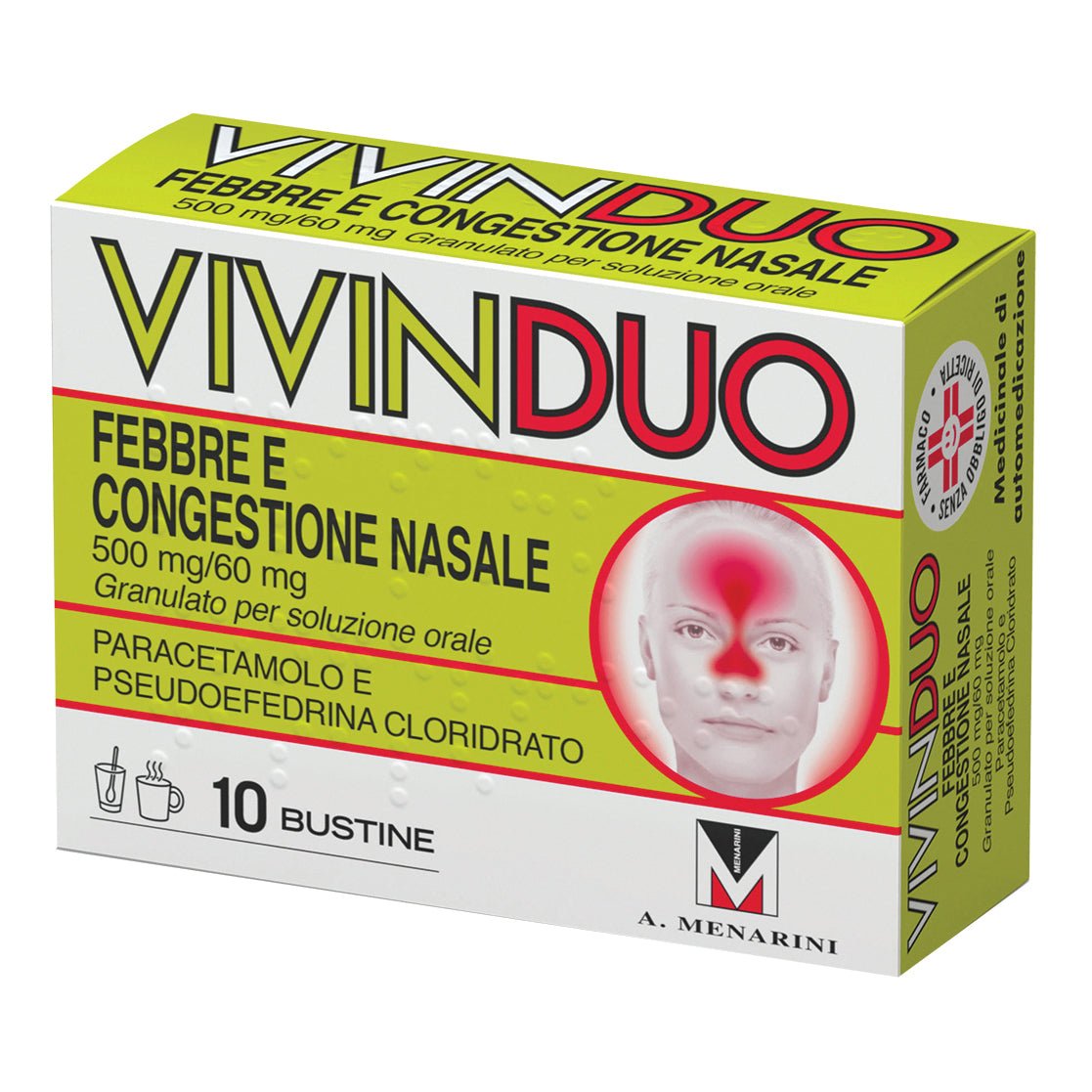
Vivinduo fever and nasal congestion 500 mg + 60 mg 10 sachets granules for oral solution is an OTC (without a prescription) medicine specifically formulated for the rapid and targeted treatment of flu and cold symptoms , such as fever, nasal congestion, headache and muscle pain . Each sachet contains paracetamol 500 mg , known for its analgesic and antipyretic action, and pseudoephedrine hydrochloride 60 mg , an effective nasal decongestant that helps clear the airways and reduce the sensation of a blocked nose.
The granules for oral solution dissolve easily in water, offering a practical and fast solution for adults and children over 12 years old. Vivinduo is indicated for those seeking rapid relief from the symptoms of colds and flu , acting on both fever and nasal congestion and flu-like pain . The pack of 10 sachets is ideal for dealing with the entire symptomatic period, ensuring a prolonged effect and effective management of seasonal disorders.
Thanks to the combination of paracetamol and pseudoephedrine , Vivinduo represents a complete solution for the treatment of cold and flu symptoms , offering well-being and comfort even in moments of greatest discomfort. The product is not recommended for children under 12 years of age. Choose Vivinduo for effective and safe treatment of flu symptoms directly at home.
ACTIVE INGREDIENTS
Active ingredients contained in Vivinduo fever and nasal congestion 500 mg + 60 mg 10 sachets granules for oral solution - What is the active ingredient of Vivinduo fever and nasal congestion 500 mg + 60 mg 10 sachets granules for oral solution?
One 1.5 g sachet contains: Active ingredients: Paracetamol 500 mg; Pseudoephedrine hydrochloride 60 mg (equivalent to 49.15 mg of pseudoephedrine). Excipients with known effect: Sorbitol (E420): 95.2 mg; Sucrose: 418.7 mg. For the full list of excipients, see section 6.1.EXCIPIENTS
Composition of Vivinduo fever and nasal congestion 500 mg + 60 mg 10 sachets granules for oral solution - What does Vivinduo fever and nasal congestion 500 mg + 60 mg 10 sachets granules for oral solution contain?
Sucrose, lemon flavouring, anhydrous citric acid, sorbitol, sucralose, polysorbate 20, beetroot red colouring, riboflavin sodium phosphate colouring.DIRECTIONS
Therapeutic indications Vivinduo fever and nasal congestion 500 mg + 60 mg 10 sachets granules for oral solution - Why is Vivinduo fever and nasal congestion 500 mg + 60 mg 10 sachets granules for oral solution used? What is it used for?
Treating cold and flu symptoms.CONTRAINDICATIONS AND SIDE EFFECTS
Contraindications Vivinduo fever and nasal congestion 500 mg + 60 mg 10 sachets granules for oral solution - When should Vivinduo fever and nasal congestion 500 mg + 60 mg 10 sachets granules for oral solution not be used?
- Hypersensitivity to the active substances or to any of the excipients listed in section 6.1. - Pregnancy and breast-feeding. - Children under 12 years of age. - Patients with manifest glucose-6-phosphate dehydrogenase insufficiency. - Subjects suffering from a severe form of the following diseases: • coronary heart disease (angina, previous heart attack); • hypertension; • arrhythmias; • liver failure; • renal failure; • hyperthyroidism; • asthma; • diabetes; • urination disorders caused by prostatic hypertrophy or other diseases; • glaucoma; • haemolytic anaemia. Subjects who are being treated with dihydroergotamine or with monoamine oxidase inhibitors (MAOIs) or who have stopped this treatment less than two weeks ago (see section 4.5).DOSAGE
Quantity and method of taking Vivinduo fever and nasal congestion 500 mg + 60 mg 10 sachets granules for oral solution - How is Vivinduo fever and nasal congestion 500 mg + 60 mg 10 sachets granules for oral solution taken?
Dosage Adults and children over 12 years of age: 2-3 sachets per day, dissolved in a glass of water. Children: not recommended for children under 12 years of age (see section 4.3). Use the minimum effective dose. That is, start treatment at the minimum recommended dose, increasing the dose only if symptoms are not sufficiently controlled. The maximum dose (both for a single administration and for the total daily dose) must never be exceeded. In adolescents, the elderly or subjects with impaired liver or kidney function, it may be necessary to reduce the dosage in relation to the clinical conditions of the patient; in these cases, the patient must be advised to consult the doctor before using VIVINDUO FEVER AND NASAL CONGESTION. The medicine must be used: maximum 5 days of therapy for the adult population; maximum 3 days of therapy for the paediatric population (12-18 years). Method of administration Dissolve the granules in a glass of water and drink the solution obtained immediately. Warm water can also be used.CONSERVATION
Storage Vivinduo fever and nasal congestion 500 mg + 60 mg 10 sachets granules for oral solution - How is Vivinduo fever and nasal congestion 500 mg + 60 mg 10 sachets granules for oral solution stored?
This medicinal product does not require any special storage conditions.WARNINGS
Warnings Vivinduo fever and nasal congestion 500 mg + 60 mg 10 sachets granules for oral solution - About Vivinduo fever and nasal congestion 500 mg + 60 mg 10 sachets granules for oral solution it is important to know that:
During treatment with paracetamol, before taking any other medicine, check that it does not contain the same active ingredient, since if paracetamol is taken in high doses, serious adverse reactions may occur. This medicine must be used correctly, respecting the instructions for use and in particular the authorised posology. Hepatotoxicity may occur with paracetamol even at therapeutic doses, after short-term treatment and in patients without pre-existing liver dysfunction (see section 4.8). Caution is recommended in patients with a history of sensitivity to aspirin and/or nonsteroidal anti-inflammatory drugs (NSAIDs). Caution is advised if paracetamol is administered concomitantly with flucloxacillin due to the increased risk of high anion gap metabolic acidosis (HAGMA), particularly in patients with severe renal impairment, sepsis, malnutrition and other sources of glutathione deficiency (e.g. chronic alcoholism), as well as in those using maximum daily doses of paracetamol. Careful monitoring, including measurement of urinary 5-oxoproline, is recommended. The risk of serious adverse effects is also increased when paracetamol is taken with other antipyretic analgesics; concomitant use of these types of medicinal products should therefore be avoided. This medicinal product may cause adverse effects, including serious ones (see section 4.8); the patient should be advised to discontinue the medicinal product and seek medical advice immediately if a serious adverse effect is suspected. Serious skin reactions: Life-threatening reactions such as Stevens-Johnson syndrome (SJS), toxic epidermal necrolysis (TEN) and acute generalized exanthematous pustulosis have been reported with the use of paracetamol. Patients should be informed of the signs and symptoms and monitored closely for skin reactions. If symptoms or signs of Stevens-Johnson syndrome, toxic epidermal necrolysis or acute generalized exanthematous pustulosis (e.g. progressive skin rash with blisters or mucosal lesions) occur, the patient should immediately stop treatment with paracetamol and consult a doctor. The use of the medicinal product requires a careful risk/benefit assessment in the elderly and in subjects with mild/moderate forms of the following diseases: - coronary heart disease (angina, previous heart attack); - hypertension; - arrhythmias; - hepatic insufficiency; - renal insufficiency; - hyperthyroidism; - asthma; - diabetes; - urination disorders caused by prostatic hypertrophy or other pathologies; - glaucoma; - haemolytic anaemia; - glucose-6-phosphate dehydrogenase deficiency. Patients taking paracetamol should avoid the use of alcoholic beverages because alcohol increases the risk of liver damage. Heavy alcohol consumers should consult their doctor before taking a medicine containing paracetamol. During the use of VIVINDUO FEBBRE E CONGESTIONE NASALE, it is necessary to avoid drinking bitter orange juice (see section 4.5). During therapy with oral anticoagulants, the administration of paracetamol may increase the effect of the anticoagulants, making it necessary to monitor the anticoagulant therapy more closely; furthermore, potentially harmful interactions are also possible with various other drugs (see section 4.5). In these cases VIVINDUO FEBBRE E CONGESTIONE NASALE can only be used under strict medical supervision. The patient must be warned of the need to consult the doctor if he is already being treated with other drugs. Ischemic colitis Cases of ischemic colitis have been reported with pseudoephedrine-containing medicinal products. Pseudoephedrine should be discontinued and a doctor should be consulted if abdominal pain, rectal bleeding or other symptoms of ischemic colitis occur suddenly. Ischemic optic neuropathy Cases of ischemic optic neuropathy have been reported with pseudoephedrine. Pseudoephedrine should be discontinued if sudden loss of vision or reduction in visual acuity occurs, such as scotoma. Important information about some of the ingredients This medicinal product contains: Sorbitol: the additive effect of co-administration of sorbitol (or fructose)-containing medicinal products and daily dietary intake of sorbitol (or fructose) should be taken into account. The sorbitol content of oral medicinal products may alter the bioavailability of other concomitantly administered oral medicinal products. Patients with hereditary fructose intolerance should not be given this medicinal product. Sucrose : Patients with rare hereditary problems of fructose intolerance, glucose-galactose malabsorption or sucrase-isomaltase insufficiency should not take this medicine. Sodium: This medicine contains less than 1 mmol sodium (23 mg) per sachet, i.e. essentially “sodium-free”.INTERACTIONS
Interactions Vivinduo fever and nasal congestion 500 mg + 60 mg 10 sachets granules for oral solution - Which medicines or foods can modify the effect of Vivinduo fever and nasal congestion 500 mg + 60 mg 10 sachets granules for oral solution?
Interactions related to paracetamol Use with extreme caution and under close monitoring during chronic treatment with drugs that can determine the induction of hepatic monooxygenases or in case of exposure to substances that can have this effect (for example cimetidine and ranitidine). The risk of toxicity from paracetamol may be increased in patients taking other potentially hepatotoxic drugs or drugs that induce hepatic microsomal enzymes, such as some antiepileptics (such as glutethimide, phenobarbital, phenytoin, carbamazepine, topiramate), rifampicin and alcohol. The administration of paracetamol may interfere with the determination of uricemia (by the phosphotungstic acid method) and with that of glycemia (by the glucose-oxidase-peroxidase method). Anticoagulants : Paracetamol may increase the risk of bleeding in patients taking warfarin and other vitamin K antagonists. Patients taking paracetamol and vitamin K antagonists should be monitored for appropriate coagulation and occurrence of bleeding. Flucloxacillin : Caution should be exercised when paracetamol is used concomitantly with flucloxacillin as the concomitant intake has been associated with high anion gap metabolic acidosis, especially in patients with risk factors (see section 4.4). Cytotoxics : Possible inhibition of the metabolism of intravenous busulfan (caution is recommended within 72 hours following paracetamol use). Domperidone : Increased absorption of paracetamol. Lipid-lowering drugs : Reduced absorption of paracetamol with cholestyramine. Metoclopramide : Increased absorption of paracetamol (increased effect). Interactions related to pseudoephedrine Due to the possibility of serious reactions, concomitant administration of pseudoephedrine and the following is contraindicated: monoamine oxidase inhibitors (MAOIs) (see section 4.3). Monoamine oxidase inhibitors are used in therapy as: - antiparkinsonian drugs (such as selegiline or rasagiline); - antidepressants (such as isocarboxazid, nialamide, phenelzine, tranylcypromine, iproniazid, iproclozide, moclobemide and toloxatone); - antineoplastic agents (such as procarbazine). The concomitant use of pseudoephedrine and MAOIs can trigger a serious hypertensive crisis (hypertension, hyperpyrexia, headache). The use of pseudoephedrine is also contraindicated in patients who have stopped treatment with MAOIs less than two weeks ago. - dihydroergotamine: the combination of the two drugs can cause a dangerous increase in blood pressure. Due to the possible effects caused by their interaction, the association of pseudoephedrine with some medicines is possible only under strict medical supervision who will evaluate the risk/benefit ratio in each individual case. Use VIVINDUO FEBBRE E CONGESTIONE NASALE only under strict medical supervision when you are already undergoing therapy with one of these medicines: - linezolid : the association of the two medicines can cause an increase in blood pressure; - methyldopa : reduction of the antihypertensive effect of methyldopa; - midodrine : increase of the hypertensive effect of midodrine. Due to the presence of pseudoephedrine, avoid the association with other sympathomimetics (risk of hypertensive episodes) or with guanethidine (cancellation of the antihypertensive effect). Bitter orange : bitter orange (also called bitter orange) can trigger a serious hypertensive crisis (hypertension, hyperpyrexia, headache) in patients taking pseudoephedrine.SIDE EFFECTS
Like all medicines, Vivinduo fever and nasal congestion 500 mg + 60 mg 10 sachets granules for oral solution can cause side effects - What are the side effects of Vivinduo fever and nasal congestion 500 mg + 60 mg 10 sachets granules for oral solution?
Undesirable effects due to paracetamol - Blood and lymphatic system disorders: thrombocytopenia, neutropenia, leukopenia; agranulocytosis, haemolytic anaemia in patients with basic glucose-6-phosphate dehydrogenase deficiency. - Nervous system disorders: dizziness. - Immune system disorders: hypersensitivity reactions such as angioedema, laryngeal edema, anaphylactic shock. - Cardiac disorders: Kounis syndrome. - Respiratory, thoracic and mediastinal disorders: bronchospasm, pneumonia. - Gastrointestinal disorders: gastrointestinal haemorrhage; gastrointestinal reactions. - Renal and urinary disorders: nephrotoxicity; renal alterations (acute renal failure, interstitial nephritis, haematuria, anuria). - Skin and subcutaneous tissue disorders: erythema, urticaria, rash, fixed drug eruption. Very rare cases of severe skin reactions such as erythema multiforme, toxic epidermal necrolysis (TEN), Stevens-Johnson syndrome (SJS) and acute generalized exanthematous pustulosis have been reported (see section 4.4). - Hepatobiliary disorders: hepatotoxicity; impaired liver function and hepatitis; cytolytic hepatitis which may lead to acute liver failure. In case of overdose, paracetamol may cause hepatic cytolysis which may evolve into massive and irreversible necrosis. Undesirable effects due to pseudoephedrine - Cardiac disorders: myocardial infarction, atrial fibrillation, tachyarrhythmia, hypertension, hypotension, ventricular extrasystoles, precordial pain, palpitations. - Nervous system disorders: convulsions, insomnia, tremors, ataxia, vertigo, headache. - Eye disorders: mydriasis, ischemic optic neuropathy (frequency not known). - Gastrointestinal disorders: ischemic colitis (frequency not known), taste disturbances, nausea, vomiting, dry mouth. - Skin and subcutaneous tissue disorders: eczema, fixed erythema, pseudo-scarlet fever. - Metabolism and nutrition disorders: hyperthermia, thirst, sweating. - Psychiatric disorders: anxiety, agitation, nervousness, irritability, confusion, hallucinations. - Difficulty urinating: urinary retention may occur in patients with prostatic hypertrophy. Reporting of suspected adverse reactions Reporting suspected adverse reactions that occur after authorisation of the medicinal product is important. It allows continued monitoring of the benefit/risk balance of the medicinal product. Healthcare professionals are asked to report any suspected adverse reactions via the national reporting system at www.aifa.gov.it/content/segnalazioni-reazioni-avverse.OVERDOSE
Overdose Vivinduo fever and nasal congestion 500 mg + 60 mg 10 sachets granules for oral solution - What are the risks of Vivinduo fever and nasal congestion 500 mg + 60 mg 10 sachets granules for oral solution in case of overdose?
Paracetamol In case of accidental ingestion of very high doses of paracetamol, acute intoxication manifests itself with pallor, nausea, vomiting, anorexia and abdominal pain that generally appear within the first 24 hours of overdose with paracetamol. In adults, the maximum daily dosage of paracetamol is 3 g; above this limit there is a risk of dose-dependent hepatotoxicity. Nausea and vomiting, the only early signs of intoxication, usually disappear within 24 hours. Persistence beyond this time, often associated with subcostal pain on the right flank or hyperesthesia, may indicate the development of hepatic necrosis. Liver damage is maximum 3-4 days after ingestion and a paracetamol overdose can cause hepatic cytolysis that can lead to hepatocellular insufficiency, metabolic acidosis, encephalopathy, hemorrhage, hypoglycemia, cerebral edema, coma and death. Therefore, despite the lack of significant early symptoms, patients who have taken paracetamol overdose should be transferred to hospital urgently. Increased levels of hepatic transaminases, lactate dehydrogenase and bilirubin with a reduction in prothrombin levels may occur 12 to 48 hours after acute overdose. Overdose may also lead to pancreatitis, acute renal failure and pancytopenia. A dose of 10-15 g (20-30 tablets) or 150 mg/kg of paracetamol taken within 24 hours may cause severe hepatocellular necrosis and, much less frequently, renal tubular necrosis. Administration of activated charcoal should be considered if it is thought that paracetamol in excess of 150 mg/kg or 12 g (the lower limit) has been taken within the last hour. Acetylcysteine protects the liver if administered by infusion within 24 hours of paracetamol ingestion. Pseudoephedrine The most common signs/symptoms of pseudoephedrine overdose include: mydriasis, tachycardia, hypertension, agitation/anxiety, sinus arrhythmia, hallucinations, tremors/hyperreflexia, vomiting; less frequently observed are: hyperglycemia, rhabdomyolysis, acute renal failure. Most patients require only a short period of observation in hospital; pharmacological treatment is required in more severe cases (eg arrhythmias, hypertensive crisis, convulsions).PREGNANCY AND BREASTFEEDING
If you are pregnant or breast-feeding, think you may be pregnant or are planning to have a baby, ask your doctor for advice before taking Vivinduo fever and nasal congestion 500 mg + 60 mg 10 sachets granules for oral solution.
VIVINDUO FEVER AND NASAL CONGESTION is contraindicated during pregnancy, confirmed or suspected, and during breastfeeding.DRIVING AND USE OF MACHINERY
Taking Vivinduo fever and nasal congestion 500 mg + 60 mg 10 sachets granules for oral solution before driving or using machines - Does Vivinduo fever and nasal congestion 500 mg + 60 mg 10 sachets granules for oral solution affect driving or using machines?
VIVINDUO FEVER AND NASAL CONGESTION does not alter the ability to drive vehicles or use machinery.OUR PRODUCTS FOR THIS SEASON
-
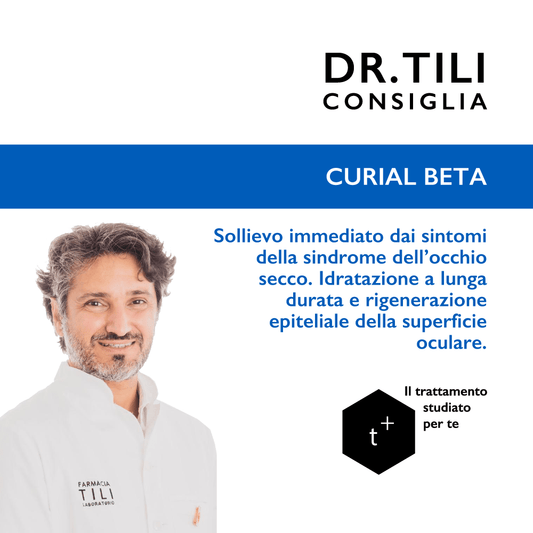
Curial βeta Dry eye supplement 30 capsules Dr.Tili
Vendor:TilpharmaRegular price €22,50Regular priceUnit price per€22,50Sale price €22,50 -
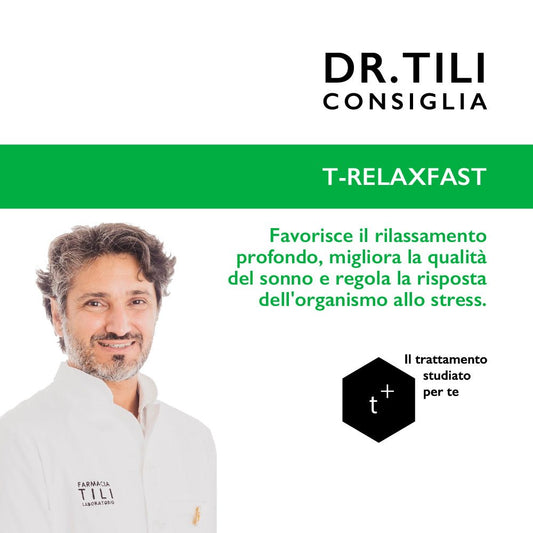
T - Relaxfast Sleep Supplement 60 Capsules Dr.Tili
Vendor:TilpharmaRegular price €24,50Regular priceUnit price per€24,50Sale price €24,50 -
Face Serum C5 Vitamin C 30ml Dr.Tili Skinlab
Vendor:TilabRegular price €62,50Regular priceUnit price per€62,50Sale price €62,50 -
Dr.Tili Skinlab E15 Vitamin E Face Serum 30ml
Vendor:TilabRegular price €32,50Regular priceUnit price per€32,50Sale price €32,50 -
Vit+ Face Vitamin Cream 50ml Dr.Tili Skinlab
Vendor:TilabRegular price €34,00Regular priceUnit price per€34,00Sale price €34,00 -
Anti-aging Facial Treatment Hyaluronic Acid IAL B3 30ml Dr.Tili Skinlab
Vendor:TilabRegular price €46,00Regular priceUnit price per€46,00Sale price €46,00 -
Body Milk Hydra Milk 200Ml. Dr.Tili Skinlab
Vendor:TilabRegular price €16,90Regular priceUnit price per€16,90Sale price €16,90 -
Facial Cleansing Milk 150ml Dr.Tili Skinlab
Vendor:TilabRegular price €18,90Regular priceUnit price per€18,90Sale price €18,90 -
Soothing Facial Toner 125ml Dr.Tili Skinlab
Vendor:TilabRegular price €14,50Regular priceUnit price per€14,50Sale price €14,50 -
Soothing Face Cream 50ml Dr.Tili Skinlab
Vendor:TilabRegular price €19,50Regular priceUnit price per€19,50Sale price €19,50









-

ASSISTANCE - TELEPHONE ORDERS
-

SHIPPING
Shipping to Italy 24/48H
Delivery also on Saturday and Sunday
Free over €49.90
Shipping to Europe 24/72H
Free over €80 -

SAFETY
The security of your data is important to us!
We strictly comply with the European GDPR regarding
Privacy and processing of personal data
The payments you make on our site are 100% safe and guaranteed -

RETURNS
Fast returns via DIY portal and 14 days to change your mind.
Immediate and free replacements for incorrect or non-compliant products delivered.


