

PIETRASANTA PHARMA SpA
Vegetalumina Antipain 10% 50 g gel
Vegetalumina Antipain 10% 50 g gel

Vegetallumina Antidolore 10% gel is a topical pain reliever based on ibuprofen lysine salt for the local treatment of muscle and joint pain . Indicated for bruises, sprains, muscle strains, myalgia, and stiff neck , it offers rapid absorption and targeted relief without greasing. With lavender essence and a practical 50 g format, it is ideal for home and sports use.
Couldn't load pickup availability

NET WEIGHT OF THE PRODUCT
NET WEIGHT OF THE PRODUCT
EAN
EAN
041734017
MINSAN
MINSAN
041734017
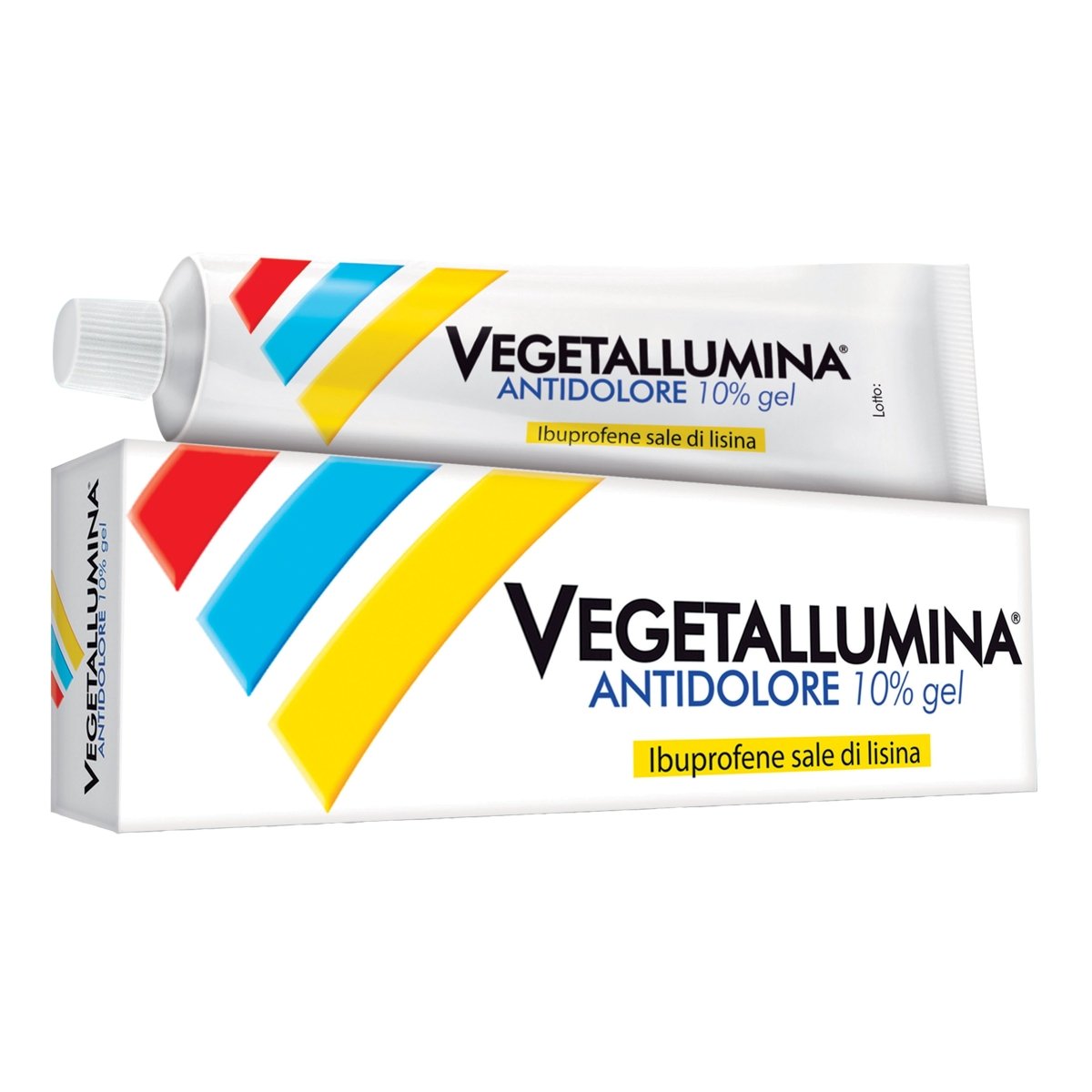
Vegetallumina Antidolore 10% 50 g gel is a pain-relieving gel based on ibuprofen lysine salt , an active ingredient belonging to the category of NSAIDs (nonsteroidal anti-inflammatory drugs) . Formulated for topical use , this product is indicated for the local treatment of muscle and joint pain , such as bruises, sprains, muscle tears, myalgia and stiff neck . Its 10% concentration guarantees a targeted and rapid action, ideal for relieving pain and reducing inflammation directly on the affected area.
The gel texture of Vegetallumina Antidolore allows for rapid absorption without greasing, offering a feeling of immediate relief. Thanks to the presence of lavender essence , the product is also pleasant to smell. The 50 g format is practical and easily transportable, perfect for use both at home and away. Ideal for those who practice sports or for those who need local treatment of pain in the case of minor trauma, Vegetallumina Antidolore is the effective solution for muscle and joint well-being .
ACTIVE INGREDIENTS
Active ingredients contained in Vegetallumina Antidolore 10% 50 g gel - What is the active ingredient of Vegetallumina Antidolore 10% 50 g gel?
100 g of gel contain: Active ingredient: Ibuprofen lysine salt 10 g Excipients with known effect: sodium methyl parahydroxybenzoate and sodium ethyl parahydroxybenzoate, lavender essence (containing allergens). For the full list of excipients, see section 6.1.EXCIPIENTS
Composition of Vegetallumina Antidolore 10% 50 g gel - What does Vegetallumina Antidolore 10% 50 g gel contain?
Isopropanol, hydroxyethylcellulose, sodium methyl parahydroxybenzoate, sodium ethyl parahydroxybenzoate, glycerol, lavender essence, purified water.DIRECTIONS
Therapeutic indications Vegetallumina Antidolore 10 % 50 g gel - Why is Vegetallumina Antidolore 10 % 50 g gel used? What is it used for?
Local treatment of bruises, sprains, myalgia, muscle tears, stiff neck.CONTRAINDICATIONS AND SIDE EFFECTS
Contraindications Vegetallumina Antidolore 10% 50 g gel - When should Vegetallumina Antidolore 10% 50 g gel not be used?
- Hypersensitivity to the active substance or to any of the excipients listed in section 6.1. Due to the possibility of cross-sensitization, the medicinal product must not be administered to patients in whom acetylsalicylic acid or other nonsteroidal anti-inflammatory drugs have caused asthma, rhinitis, urticaria or other allergic manifestations. - Pregnancy. - Breast-feeding. - Children and adolescents under 14 years of age.DOSAGE
Quantity and method of taking Vegetallumina Antidolore 10% 50 g gel - How do you take Vegetallumina Antidolore 10% 50 g gel?
Dosage 2-4 applications per day on the painful area. Elderly patients should adhere to the minimum dosages indicated above. Paediatric population There are no data available. Method of administration Apply a thin layer of gel on the area to be treated with a light massage. Use the medicine for the shortest possible period. Wash your hands thoroughly and for a long time after application.CONSERVATION
Storage Vegetallumina Antidolore 10% 50 g gel - How is Vegetallumina Antidolore 10% 50 g gel stored?
No special instructions.WARNINGS
Warnings Vegetallumina Antidolore 10% 50 g gel - About Vegetallumina Antidolore 10% 50 g gel it is important to know that:
It is advisable to avoid applying VEGETALLUMINA Antidolore to open wounds or skin lesions. The use of VEGETALLUMINA Antidolore, as with any drug that inhibits the synthesis of prostaglandins and cyclooxygenase, is not recommended in women who intend to become pregnant. The administration of VEGETALLUMINA Antidolore must be suspended in women who have fertility problems or who are undergoing fertility investigations. The use of VEGETALLUMINA Antidolore, especially if prolonged, may give rise to local sensitization phenomena: at the first appearance of skin rash, mucosal lesions or any other sign of hypersensitivity, stop treatment and adopt adequate therapeutic measures. To avoid more serious hypersensitivity or photosensitivity phenomena, the patient must not expose himself to direct sunlight, including solarium, during treatment and in the two weeks following. In case of allergic reactions or more serious adverse reactions (skin reactions, some of which are fatal, such as exfoliative dermatitis, Stevens-Johnson syndrome and toxic epidermal necrolysis) it is necessary to immediately discontinue therapy at the first appearance of skin rash, mucosal lesions or any other sign of hypersensitivity (see section 4.8). Patients appear to be at higher risk in the early stages of therapy: the onset of skin reactions occurs in most cases within the first month of treatment. Do not use VEGETALLUMINA Antidolore together with another NSAID or, in any case, do not use more than one NSAID at a time. Important information about some of the excipients of VEGETALLUMINA Antidolore Vegetallumina antidolore contains lavender essence which in turn contains citral, citronellol, coumarin, eugenol, evernia furfuracea extract, evernia prunastri extract, geraniol, limonene, linalool. Citral, citronellol, coumarin, eugenol, geraniol, limonene, linalool may cause allergic reactions. This medicinal product contains sodium methyl parahydroxybenzoate and sodium ethyl parahydroxybenzoate. Sodium methyl hydroxy benzoate and sodium ethyl hydroxy benzoate may cause allergic reactions (possibly delayed).INTERACTIONS
Interactions Vegetallumina Antidolore 10% 50 g gel - Which medicines or foods can modify the effect of Vegetallumina Antidolore 10% 50 g gel?
The paucity of data and the uncertainties regarding their application to the clinical situation do not allow definitive conclusions to be drawn on possible interactions with other drugs for the continuous use of ibuprofen; no clinically relevant interactions have been found with the occasional use of ibuprofen. It should be noted, in any case, that Ibuprofen may increase the effects of anticoagulants such as warfarin. Paediatric population There are no data available.SIDE EFFECTS
Like all medicines, Vegetallumina Antidolore 10 % 50 g gel can cause side effects - What are the side effects of Vegetallumina Antidolore 10 % 50 g gel?
Undesirable effects may be minimised by using the lowest effective dose for the shortest duration necessary to control symptoms. Skin reactions with erythema, itching, irritation, sensation of heat or burning and contact dermatitis have been reported with some propionic acid derivatives of nonsteroidal anti-inflammatory drugs for local or transdermal use. Some cases of bullous eruptions of varying severity, including Stevens Johnson syndrome, toxic epidermal necrolysis (very rare) and photosensitivity reactions (frequency not known) have also been reported. Paediatric population No data are available. Reporting of suspected adverse reactions Reporting suspected adverse reactions that occur after authorisation of the medicinal product is important. It allows continued monitoring of the benefit/risk balance of the medicinal product. Healthcare professionals are asked to report any suspected adverse reactions via the national reporting system of the Italian Medicines Agency at: http://www.aifa.gov.it/content/come-segnalare-una-sospetta-reazione-avversa.OVERDOSE
Overdose Vegetallumina Antidolore 10% 50 g gel - What are the risks of Vegetallumina Antidolore 10% 50 g gel in case of overdose?
Toxicity Signs and symptoms of toxicity have not generally been observed at doses below 100 mg/kg in children or adults. However, in some cases supportive treatment may be necessary. Children have been observed to exhibit signs and symptoms of toxicity following ingestion of ibuprofen at doses of 400 mg/kg or greater. Symptoms Most patients who have ingested significant quantities of ibuprofen will exhibit symptoms within 4 to 6 hours. The most commonly reported symptoms of overdose include nausea, vomiting, abdominal pain, lethargy and somnolence. Central nervous system (CNS) effects include headache, tinnitus, dizziness, convulsions and loss of consciousness. Nystagmus, metabolic acidosis, hypothermia, renal effects, gastrointestinal bleeding, coma, apnoea, diarrhoea and CNS and respiratory depression have also been reported rarely. Disorientation, excitement, fainting and cardiovascular toxicity including hypotension, bradycardia and tachycardia have been reported. Renal failure and liver damage are possible in cases of significant overdose. Treatment There is no specific antidote for ibuprofen overdose. Symptomatic and supportive treatment is indicated in cases of overdose. Particular attention should be paid to monitoring blood pressure, acid-base balance and gastrointestinal bleeding. Administration of activated charcoal should be considered within one hour of ingestion of a potentially toxic amount. Alternatively, gastric lavage should be considered in adults within one hour of ingestion of a potentially life-threatening overdose. Adequate diuresis should be ensured and renal and hepatic function should be closely monitored. The patient should remain under observation for at least four hours following ingestion of a potentially toxic amount. If frequent or prolonged convulsions occur, they should be treated with intravenous diazepam. Other supportive measures may be necessary depending on the patient's clinical condition. Contact your local poison control center for more information.PREGNANCY AND BREASTFEEDING
If you are pregnant or breast-feeding, think you may be pregnant or are planning to have a baby, ask your doctor for advice before taking Vegetallumina Antidolore 10% 50 g gel.
The use of VEGETALLUMINA Antidolore is contraindicated during pregnancy and breastfeeding. Pregnancy Inhibition of prostaglandin synthesis may adversely affect pregnancy and/or embryo/fetal development. Results of epidemiological studies suggest an increased risk of miscarriage and cardiac malformation and gastroschisis after use of a prostaglandin synthesis inhibitor in early pregnancy. The absolute risk of cardiac malformations increased from less than 1% up to approximately 1.5%. The risk was believed to increase with dose and duration of therapy. In animals, administration of prostaglandin synthesis inhibitors has been shown to result in increased pre- and post-implantation loss and embryo/fetal mortality. In addition, an increased incidence of various malformations, including cardiovascular, has been reported in animals administered prostaglandin synthesis inhibitors during the organogenetic period. During the third trimester of pregnancy, all prostaglandin synthesis inhibitors may expose • the fetus to: - cardiopulmonary toxicity (with premature closure of the ductus arteriosus and pulmonary hypertension); - renal dysfunction, which may progress to renal failure with oligo-hydroamniosis; • the mother and the neonate, at the end of pregnancy, to: - possible prolongation of bleeding time, and anti-aggregating effect which may occur even at very low doses; - inhibition of uterine contractions resulting in delayed or prolonged labor.DRIVING AND USE OF MACHINERY
Taking Vegetallumina Antidolore 10% 50 g gel before driving or using machinery - Does Vegetallumina Antidolore 10% 50 g gel affect driving or using machinery?
VEGETALLUMINA Antidolore does not alter the ability to drive vehicles or use machinery.OUR PRODUCTS FOR THIS SEASON
-
T - Immuno Mix Extracts Immune Defenses 60 Capsules Dr.Tili
Vendor:TILAB SrlRegular price €19,20Regular priceUnit price per€24,00Sale price €19,20Sale -
Dr. Tili Liposomal Vitamin D Supplement, Vegan, 2000 IU, 60 Tablets
Vendor:TILAB SrlRegular price €11,12Regular priceUnit price per€13,90Sale price €11,12Sale -
Vita D'oro Drops Vitamin D3 2000 IU 50ml Dr.Tili
Vendor:TILAB SrlRegular price €15,12Regular priceUnit price per€18,90Sale price €15,12Sale -
Supplement Acerola Echinacea vitamin C immune defenses 60 tablets Dr.Tili
Vendor:TILAB SrlRegular price €10,48Regular priceUnit price per€13,10Sale price €10,48Sale -
Echinacea Papaya Acerola Immune Defense Syrup 200ml Dr.Tili
Vendor:TILAB SrlRegular price €10,48Regular priceUnit price per€13,10Sale price €10,48Sale -
Acerola Essential Vitamin C Drops Immune Defenses 50ml Dr.Tili
Vendor:TILAB SrlRegular price €12,72Regular priceUnit price per€15,90Sale price €12,72Sale -
Supplement Echinacea Essential Immune Defenses 50 ml Dr.Tili
Vendor:TILAB SrlRegular price €12,72Regular priceUnit price per€15,90Sale price €12,72Sale -
Ribes Nigrum Essential Drops 50 ml Dr.Tili
Vendor:TILAB SrlRegular price €12,72Regular priceUnit price per€15,90Sale price €12,72Sale -
Pure Colloidal Silver 20 ppm and Propolis Spray 30ml Dr.Tili
Vendor:TILAB SrlRegular price €10,48Regular priceUnit price per€13,10Sale price €10,48Sale -
Syrup Three Actions cough and sore throat 150ml Dr.Tili
Vendor:TILAB SrlRegular price €13,52Regular priceUnit price per€16,90Sale price €13,52Sale





-

ASSISTANCE - TELEPHONE ORDERS
-

SHIPPING
Shipping to Italy 24/48H
Delivery also on Saturday and Sunday
Free over €49.90
Shipping to Europe 24/72H
Free over €80 -

SAFETY
The security of your data is important to us!
We strictly comply with the European GDPR regarding
Privacy and processing of personal data
The payments you make on our site are 100% safe and guaranteed -

RETURNS
Fast returns via DIY portal and 14 days to change your mind.
Immediate and free replacements for incorrect or non-compliant products delivered.


