

Perrigo
Bronchenolo Sedative and Fluidifying 1.5mg/ml + 10mg/ml syrup 150ml
Bronchenolo Sedative and Fluidifying 1.5mg/ml + 10mg/ml syrup 150ml
Bronchenolo Sedative and Fluidifying Syrup 150 ml is a cough medicine indicated for adults and children over 6 years old. Thanks to dextromethorphan and guaifenesin, it helps calm dry coughs and thin mucus , facilitating its expulsion and improving respiratory comfort . Useful in cases of dry and productive coughs , it should be taken according to the indicated dosage .
Couldn't load pickup availability

NET WEIGHT OF THE PRODUCT
NET WEIGHT OF THE PRODUCT
EAN
EAN
026564070
MINSAN
MINSAN
026564070
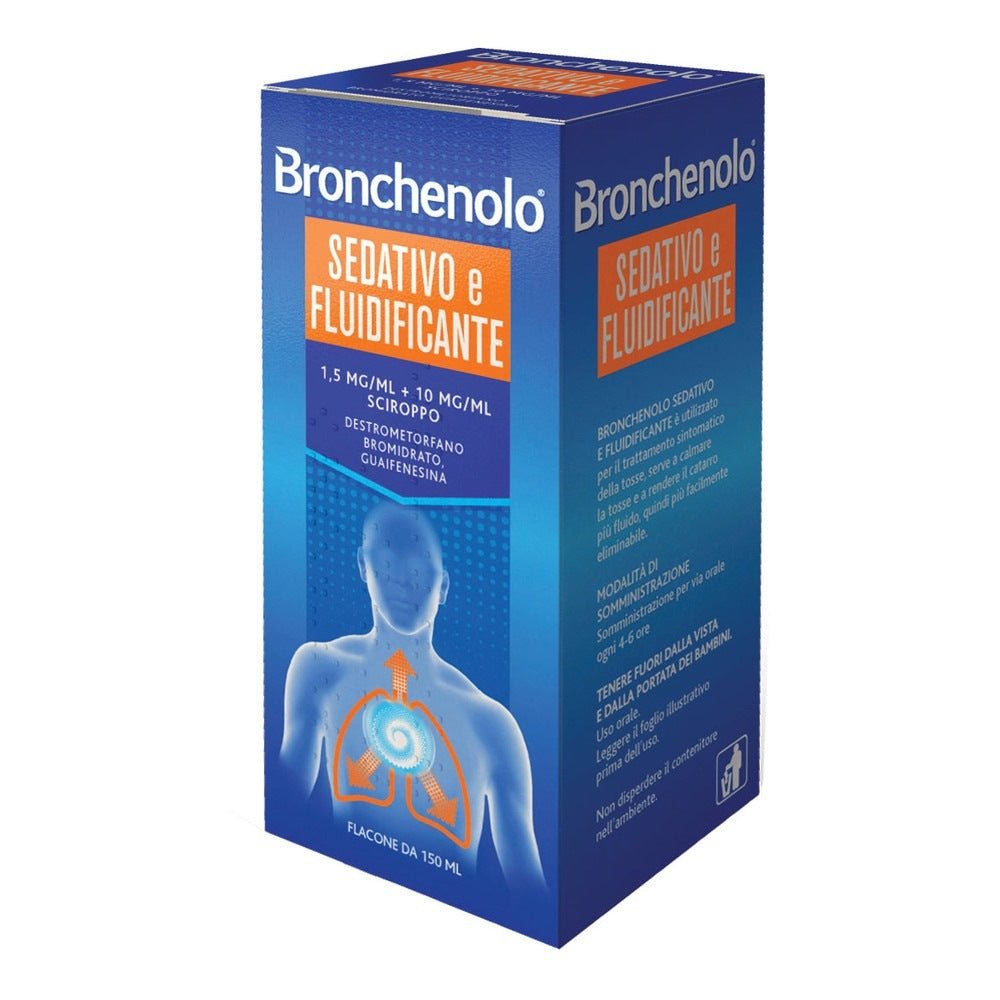
Bronchenolo Sedative and Fluidifying 1.5mg/ml + 10mg/ml syrup 150ml is a treatment formulated for the symptomatic relief of cough . This syrup combines two active ingredients: dextromethorphan hydrobromide and guaifenesin , which work synergistically to sedate cough and fluidify mucus , facilitating its expulsion. Each 100ml of syrup contains 0.15g of dextromethorphan hydrobromide and 1.00g of guaifenesin, making it effective in the treatment of dry and productive cough episodes. The formulation also includes excipients such as sucrose and ethyl alcohol , which contribute to the palatability of the product. This syrup is indicated for adults and children over 6 years of age, offering a versatile option for different age groups. With its combined action, Bronchenolo Sedative and Fluidifying represents a targeted solution to manage cough symptoms, improving respiratory comfort.
ACTIVE INGREDIENTS
Active ingredients contained in Bronchenolo Sedative and Fluidifying 1.5mg/ml + 10mg/ml syrup 150ml - What is the active ingredient of Bronchenolo Sedative and Fluidifying 1.5mg/ml + 10mg/ml syrup 150ml?
100 ml of syrup contain: • active ingredients : dextromethorphan hydrobromide 0.15 g and guaifenesin 1.00 g. Excipients with known effects : sucrose 73.50 g, propyl parahydroxybenzoate 0.025 g, methyl parahydroxybenzoate 0.075 g, ethyl alcohol 5.00 g. One tablet contains: • active ingredients : dextromethorphan hydrobromide 7.5 mg and guaifenesin 55 mg. Excipients with known effects : sucrose 2080.92 mg, aspartame (E951) 23 mg. For the full list of excipients, see section 6.1.
EXCIPIENTS
Composition of Bronchenolo Sedative and Fluidifying 1.5mg/ml + 10mg/ml syrup 150ml - What does Bronchenolo Sedative and Fluidifying 1.5mg/ml + 10mg/ml syrup 150ml contain?
BRONCHENOLO SEDATIVE AND FLUIDIFYING syrup 100 ml of syrup contain: mountain pine essential oil; citric acid monohydrate; alcohol; glycerol; sucrose; sweet orange essence; propyl parahydroxybenzoate; methyl parahydroxybenzoate; sodium saccharin; purified water. BRONCHENOLO SEDATIVE AND FLUIDIFYING mint-flavored lozenges One 2.3 g lozenge of BRONCHENOLO SEDATIVE AND FLUIDIFYING mint-flavored contains: mountain pine essential oil; magnesium trisilicate; aspartame; magnesium stearate; sucrose; mint flavor.
DIRECTIONS
Therapeutic indications Bronchenolo Sedative and Fluidifying 1.5mg/ml + 10mg/ml syrup 150ml - Why is Bronchenolo Sedative and Fluidifying 1.5mg/ml + 10mg/ml syrup 150ml used? What is it for?
Symptomatic treatment of cough.
CONTRAINDICATIONS SIDE EFFECTS
Contraindications Bronchenolo Sedative and Fluidifying 1.5mg/ml + 10mg/ml syrup 150ml - When should Bronchenolo Sedative and Fluidifying 1.5mg/ml + 10mg/ml syrup 150ml not be used?
Hypersensitivity to the active substances or to any of the excipients listed in section 6.1. Children under 6 years of age. Patients who are taking or have taken in the last two weeks monoamine oxidase inhibitor (MAOI) antidepressants (see section 4.5). Patients with respiratory insufficiency or at risk of developing respiratory insufficiency (for example, patients with chronic obstructive airways disease or pneumonia, patients with an ongoing asthma attack or asthma exacerbation).
DOSAGE
Quantity and method of taking Bronchenolo Sedative and Fluidifying 1.5mg/ml + 10mg/ml syrup 150ml - How do you take Bronchenolo Sedative and Fluidifying 1.5mg/ml + 10mg/ml syrup 150ml?
Dosage Syrup Adults (including the elderly): 2 teaspoons (10 ml) 2-4 times a day, up to a maximum of 8 teaspoons (40 ml) a day. Paediatric population Children over 12 years : 2 teaspoons (10 ml) 2-4 times a day, up to a maximum of 8 teaspoons (40 ml) a day. Children from 6 to 12 years : 1 teaspoon (5 ml) 3-4 times a day, up to a maximum of 4 teaspoons (20 ml) a day. Administer the medicine every 4-6 hours as needed. Lozenges Adults (including the elderly): 3-6 lozenges a day to dissolve in the mouth, up to a maximum of 6 lozenges a day. Paediatric population Children over 12 years : 3-6 lozenges a day to dissolve in the mouth, up to a maximum of 6 lozenges a day. Children 6 to 12 years : 2-3 lozenges per day to dissolve in the mouth, up to a maximum of 3 lozenges per day. Administer the medicine every 4-6 hours as needed. Method of administration To be administered orally only. Do not exceed the recommended doses.
CONSERVATION
Storage Bronchenolo Sedative and Fluidifying 1.5mg/ml + 10mg/ml syrup 150ml - How do you store Bronchenolo Sedative and Fluidifying 1.5mg/ml + 10mg/ml syrup 150ml?
None
WARNINGS
Warnings Bronchenolo Sedative and Fluidifying 1.5mg/ml + 10mg/ml syrup 150ml - About Bronchenolo Sedative and Fluidifying 1.5mg/ml + 10mg/ml syrup 150ml it is important to know that:
In the following cases BRONCHENOLO SEDATIVO E FLUIDIFICANTE should be used only after careful medical evaluation: - chronic or persistent cough, such as that which occurs in asthma or emphysema; - severe hepatic insufficiency; - severe renal insufficiency; - concomitant use of selective serotonin reuptake inhibitor antidepressants or tricyclic antidepressants (see section 4.5). The patient should be advised to consult a doctor if the cough persists, or if it is accompanied by high fever, skin rash or persistent headache. Do not exceed the maximum recommended dose or frequency of administration. After 5-7 days of treatment without appreciable results, a clinical evaluation is necessary. The concomitant use of other cough and cold medicines should be avoided. The concomitant use of alcohol should be avoided during therapy with BRONCHENOLO SEDATIVO E FLUIDIFICANTE. Cases of abuse and dependence of dextromethorphan have been reported. Particular caution is recommended with adolescents and young adults, as well as with patients with a history of drug or psychoactive substance abuse. Dextromethorphan is metabolised by hepatic cytochrome P450 2D6. The activity of this enzyme is genetically determined. Approximately 10% of the population is a slow metaboliser of CYP2D6. Exaggerated and/or prolonged effects of dextromethorphan may occur in poor metabolisers and patients with concomitant use of CYP2D6 inhibitors. Caution is therefore necessary in patients who are poor metabolisers of CYP2D6 or who use CYP2D6 inhibitors (see also section 4.5). Risks arising from concomitant use of sedative medicines such as benzodiazepines or related drugs. Concomitant use of BRONCHENOLO SEDATIVE AND FLUIDIFICANTE and sedative medicines such as benzodiazepines, or related drugs, may cause sedation, respiratory depression, as well as death. Because of these risks, concomitant prescribing with sedative medicinal products should be reserved for patients for whom alternative treatment options are not available. If BRONCHENOLO SEDATIVE AND FLUIDIFICANTE is prescribed concomitantly with sedative medicinal products, the lowest effective dose should be used, and the duration of treatment should be as short as possible. Patients should be carefully monitored for signs and symptoms of respiratory depression and sedation. In this respect, it is strongly recommended to inform patients and their caregivers in order to make them aware of these symptoms (see section 4.5). Serotonin syndrome Serotonergic effects, including the development of a potentially life-threatening serotonin syndrome, have been reported for dextromethorphan with concomitant administration of serotonergic agents, such as selective serotonin reuptake inhibitors (SSRIs), drugs which impair metabolism of serotonin (including monoamine oxidase inhibitors [MAOIs]) and CYP2D6 inhibitors. Serotonin syndrome may include mental status changes, autonomic instability, neuromuscular abnormalities and/or gastrointestinal symptoms. If serotonin syndrome is suspected, treatment with BRONCHENOLO SEDATIVE AND FLUIDIFICANTE should be discontinued. Paediatric population Serious adverse events, including neurological disorders, may occur in children in case of overdose. Caregivers should be advised not to exceed the recommended dose. Information on excipients with known effects BRONCHENOLO SEDATIVE AND FLUIDIFICANTE syrup contains: • sucrose. Contains 7.35 g of sucrose (sugar) per 10 ml dose. This should be taken into consideration in patients with diabetes mellitus. Patients with rare hereditary problems of fructose intolerance, glucose-galactose malabsorption or sucrase-isomaltase insufficiency should not take this medicine; • ethyl alcohol. This medicine contains 480 mg of alcohol (ethanol) in each 10 ml dose. The amount in 10 ml of this medicine is equivalent to 12 ml of beer and 5 ml of wine. May be harmful for alcoholics. To be taken into consideration in pregnant or breast-feeding women, children and high-risk groups such as people with liver disease or epilepsy. A 10ml dose of this medicine given to a child aged 12 years and weighing less than or equal to 32kg would result in an exposure of 15mg which may cause an increase in blood alcohol concentration (BAC) of approximately 2.5mg/100ml. Co-administration with medicinal products containing e.g. propylene glycol or ethanol may lead to accumulation of ethanol and induce adverse effects, particularly in young children with low or immature metabolic activity. • propyl and methyl parahydroxybenzoates, which may cause allergic reactions (possibly delayed); • Sodium. This medicine contains less than 1 mmol sodium (23mg), i.e. essentially "sodium-free". BRONCHENOLO SEDATIVE AND FLUIDIFICANTE mint flavour lozenges contain: • sucrose. Contains 2.08g sucrose per dose. Patients with rare hereditary problems of fructose intolerance, glucose-galactose malabsorption or sucrase-isomaltase insufficiency should not take this medicine; • aspartame. This medicine contains 23 mg aspartame per tablet. Aspartame is a source of phenylalanine. It may be harmful if you have phenylketonuria, a rare genetic disorder in which the amount of phenylalanine builds up because the body cannot process it properly.
INTERACTIONS
Interactions Bronchenolo Sedative and Fluidifying 1.5mg/ml + 10mg/ml syrup 150ml - Which medicines or foods can modify the effect of Bronchenolo Sedative and Fluidifying 1.5mg/ml + 10mg/ml syrup 150ml?
The medicinal product should not be used concomitantly with or within 2 weeks of treatment with monoamine oxidase inhibitor (MAOI) antidepressants, as serious adverse reactions, including serotonin syndrome, have been reported (see section 4.3). Patients should be advised to consult their doctor before taking dextromethorphan in combination with the following drugs: - concomitant use of dextromethorphan with selective serotonin reuptake inhibitor antidepressants or tricyclic antidepressants may cause serotonin syndrome with mental status changes, hypertension, agitation, myoclonus, hyperreflexia, diaphoresis, chills and tremors (see section 4.4); - concomitant use of dextromethorphan and alcohol may increase the CNS depressant effects of both substances. CYP2D6 inhibitors Dextromethorphan is metabolised by CYP2D6 and has extensive first-pass metabolism. Concomitant use of potent inhibitors of the CYP2D6 enzyme may increase dextromethorphan concentrations in the body to levels several times higher than normal. This increases the patient's risk of toxic effects of dextromethorphan (agitation, confusion, tremor, insomnia, diarrhea, and respiratory depression) and the development of serotonin syndrome. Potent inhibitors of CYP2D6 are fluoxetine, paroxetine, quinidine, and terbinafine. When used concomitantly with quinidine, plasma concentrations of dextromethorphan are increased up to 20-fold, resulting in increased adverse effects on the central nervous system of the agent. Amiodarone, flecainide and propafenone, sertraline, bupropion, methadone, cinacalcet, haloperidol, perphenazine, and thioridazine also have similar effects on the metabolism of dextromethorphan. If concomitant use of CYP2D6 inhibitors and dextromethorphan is necessary, the patient should be monitored and the dose of dextromethorphan may need to be reduced. The combination with phenylpropanolamine should be used with caution in patients with hypertension, heart disease, diabetes, peripheral vascular disease, prostatic hypertrophy and glaucoma. Treatment with guaifenesin may cause false positive urinary vanillylmandelic acid results. Sedative medicines such as benzodiazepines or related drugs Concomitant use of opioids and sedative medicines such as benzodiazepines or related drugs increases the risk of sedation, respiratory depression, coma and death because of additive CNS depressant effect. The dosage and duration of concomitant treatment should be limited (see section 4.4).
SIDE EFFECTS
Like all medicines, Bronchenolo Sedative and Fluidifying 1.5mg/ml + 10mg/ml syrup 150ml can cause side effects - What are the side effects of Bronchenolo Sedative and Fluidifying 1.5mg/ml + 10mg/ml syrup 150ml?
Data from clinical studies The adverse events reported below have been observed in clinical studies and are considered uncommon adverse reactions (i.e. occurring in ≥1/1000 to <1/100 patients). Adverse reactions are listed according to MedDRA classification. Nervous system disorders • somnolence. Ear and labyrinth disorders • vertigo. Gastrointestinal disorders • gastrointestinal disorder; • nausea; • vomiting; • abdominal discomfort. Post-marketing data The adverse reactions identified during post-marketing use are listed below. Since these reactions are reported voluntarily from a population of uncertain size, their frequency is not known, but is probably very rare (occurring in <1/10000 patients). Nervous system disorders • serotonin syndrome. Serotonin syndrome (with mental status changes, agitation, myoclonus, hyperreflexia, diaphoresis, chills, tremors and hypertension) has been reported with concomitant use of dextromethorphan with antidepressants (monoamine oxidase inhibitors or serotonin reuptake inhibitors) (see sections 4.3 and 4.5). Immune system disorders • hypersensitivity (e.g. rash, urticaria, angioedema). Reporting of suspected adverse reactions Reporting suspected adverse reactions that occur after authorisation of the medicinal product is important. It allows continued monitoring of the benefit/risk balance of the medicinal product. Healthcare professionals are asked to report any suspected adverse reactions via the national reporting system at - www.aifa.gov.it/content/segnalazioni-reazioni-avverse.
OVERDOSE
Overdose Bronchenolo Sedative and Fluidifying 1.5mg/ml + 10mg/ml syrup 150ml - What are the risks of Bronchenolo Sedative and Fluidifying 1.5mg/ml + 10mg/ml syrup 150ml in case of overdose?
Signs and symptoms Dextromethorphan overdose may be associated with nausea, vomiting, dystonia, agitation, confusion, drowsiness, stupor, nystagmus, cardiotoxicity (tachycardia, abnormal ECG including QTc prolongation), ataxia, toxic psychosis with visual hallucinations, hyperexcitability. In case of massive overdose, the following symptoms may be observed: coma, respiratory depression and convulsions. If taken in excessive quantities, guaifenesin may cause renal calculosis. Management: Activated charcoal may be administered to asymptomatic patients who have ingested dextromethorphan overdoses within the previous hour. Emergency measures include emptying the stomach and supporting vital functions, particularly in order to control respiratory depression and other CNS disorders. For patients who have ingested dextromethorphan and are sedated or comatose, naloxone may be considered, in doses usual for the treatment of opioid overdose. Benzodiazepines may be used for seizures and benzodiazepines and external cooling measures for serotonin syndrome hyperthermia.
PREGNANCY AND BREASTFEEDING
If you are pregnant or breast-feeding, think you may be pregnant or are planning to have a baby, ask your doctor for advice before taking Bronchenolo Sedative and Fluidifying 1.5mg/ml + 10mg/ml syrup 150ml
There are no data available on pregnancy and breastfeeding. In pregnant and breastfeeding women, the medicine should be administered only in case of real need and under the direct supervision of a doctor.
DRIVING AND USE OF MACHINERY
Taking Bronchenolo Sedative and Fluidifying 1.5mg/ml + 10mg/ml syrup 150ml before driving or using machinery - Does Bronchenolo Sedative and Fluidifying 1.5mg/ml + 10mg/ml syrup 150ml affect driving or using machinery?
BRONCHENOL SEDATIVE AND FLUIDIFYING may alter the ability to drive vehicles and use machinery as it may induce drowsiness or dizziness. Those who may drive motor vehicles or carry out operations requiring a high level of alertness must take this into account.
OUR PRODUCTS FOR THIS SEASON
-
Curial βeta Dry eye supplement 30 capsules Dr.Tili
Vendor:TilpharmaRegular price €22,50Regular priceUnit price per€22,50Sale price €22,50 -
T - Relaxfast Sleep Supplement 60 Capsules Dr.Tili
Vendor:TilpharmaRegular price €24,50Regular priceUnit price per€24,50Sale price €24,50 -
Face Serum C5 Vitamin C 30ml Dr.Tili Skinlab
Vendor:TilabRegular price €62,50Regular priceUnit price per€62,50Sale price €62,50 -
Dr.Tili Skinlab E15 Vitamin E Face Serum 30ml
Vendor:TilabRegular price €32,50Regular priceUnit price per€32,50Sale price €32,50 -
Vit+ Face Vitamin Cream 50ml Dr.Tili Skinlab
Vendor:TilabRegular price €34,00Regular priceUnit price per€34,00Sale price €34,00 -
Anti-aging Facial Treatment Hyaluronic Acid IAL B3 30ml Dr.Tili Skinlab
Vendor:TilabRegular price €46,00Regular priceUnit price per€46,00Sale price €46,00 -
Body Milk Hydra Milk 200Ml. Dr.Tili Skinlab
Vendor:TilabRegular price €16,90Regular priceUnit price per€16,90Sale price €16,90 -
Facial Cleansing Milk 150ml Dr.Tili Skinlab
Vendor:TilabRegular price €18,90Regular priceUnit price per€18,90Sale price €18,90 -
Soothing Facial Toner 125ml Dr.Tili Skinlab
Vendor:TilabRegular price €14,50Regular priceUnit price per€14,50Sale price €14,50 -
Soothing Face Cream 50ml Dr.Tili Skinlab
Vendor:TilabRegular price €19,50Regular priceUnit price per€19,50Sale price €19,50















-

ASSISTANCE - TELEPHONE ORDERS
-

SHIPPING
Shipping to Italy 24/48H
Delivery also on Saturday and Sunday
Free over €49.90
Shipping to Europe 24/72H
Free over €80 -

SAFETY
The security of your data is important to us!
We strictly comply with the European GDPR regarding
Privacy and processing of personal data
The payments you make on our site are 100% safe and guaranteed -

RETURNS
Fast returns via DIY portal and 14 days to change your mind.
Immediate and free replacements for incorrect or non-compliant products delivered.


