

Reckitt Benckiser
Nurofen Junior 125 mg 10 suppositories children
Nurofen Junior 125 mg 10 suppositories children

Nurofen Junior 125 mg suppositories for children are an ibuprofen -based antipyretic and anti-inflammatory , indicated for the short-term treatment of fever and mild to moderate pain (sore throat, toothache, cold) in children aged 2-6 years (12.5-20.5 kg). The rectal suppository form is ideal for vomiting or difficulty swallowing, providing rapid relief and a safe dosage for children.
Couldn't load pickup availability

NET WEIGHT OF THE PRODUCT
NET WEIGHT OF THE PRODUCT
EAN
EAN
041610027
MINSAN
MINSAN
041610027
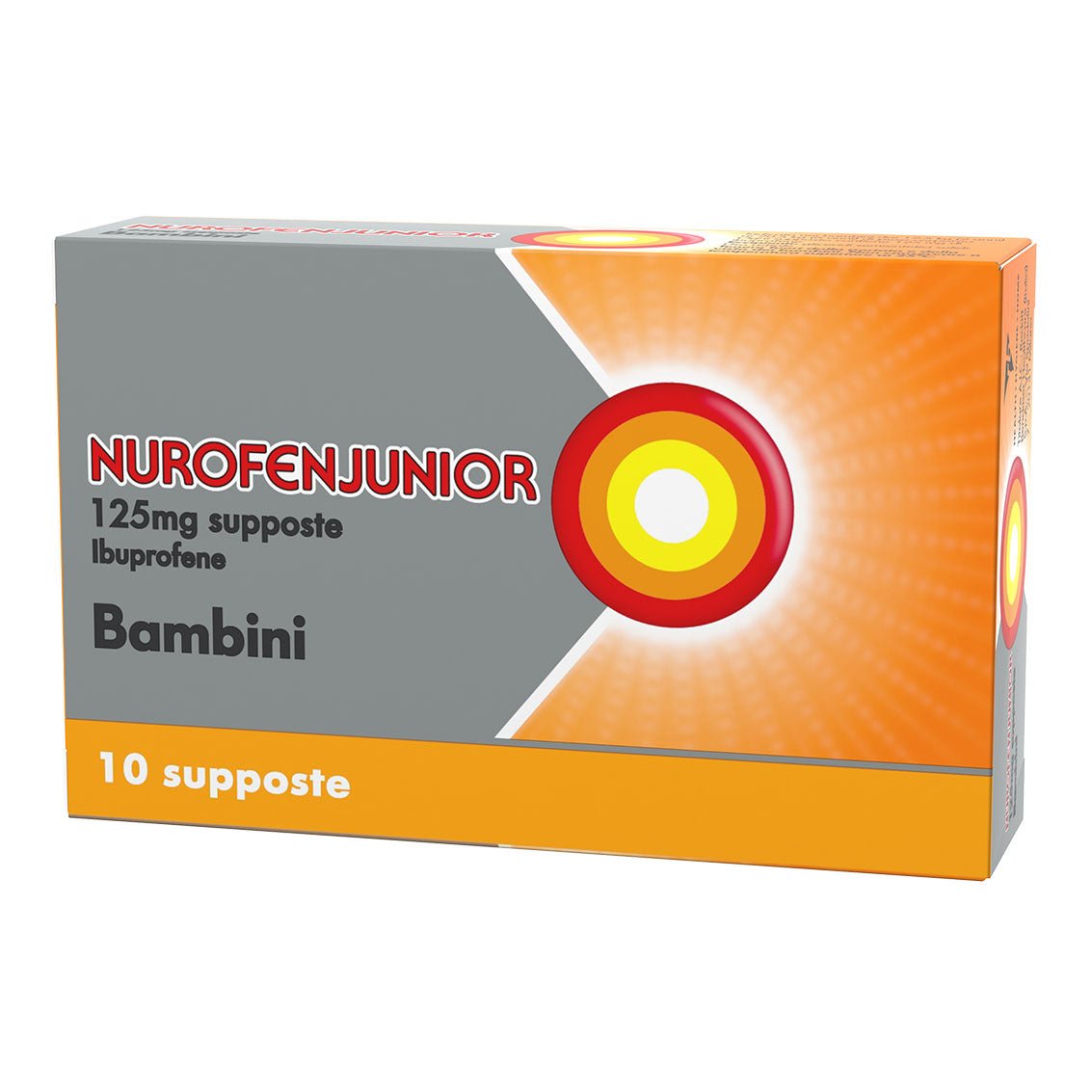
Nurofen Junior 125 mg 10 suppositories children is a medicine specifically formulated for the short-term symptomatic treatment of fever and mild to moderate pain in children aged between 2 and 6 years (body weight between 12.5 and 20.5 kg). The active ingredient, ibuprofen , belongs to the class of nonsteroidal anti-inflammatory drugs (NSAIDs) and is known for its antipyretic, analgesic and anti-inflammatory properties. Suppositories are an ideal solution when oral administration is not possible, for example in the case of vomiting, ensuring rapid and targeted relief from symptoms such as fever, sore throat, toothache and pain associated with colds .
The pack contains 10 rectal suppositories of 125 mg , easy to use and well tolerated by the little ones. Nurofen Junior is indicated for the short-term symptomatic treatment and offers an effective option for the control of fever and pain in children, promoting well-being and recovery in common pediatric conditions. Thanks to its formulation, the product is particularly suitable for pediatric use and guarantees a safe and calibrated dosage for the indicated age group.
The presence of solid semi-synthetic glycerides as excipients ensures good tolerability and facilitates rectal administration. Nurofen Junior 125 mg suppositories children is a reliable choice for parents looking for an effective antipyretic and analgesic , practical and suitable for the needs of children between 2 and 6 years, offering rapid relief from fever and pain in a safe and controlled way.
ACTIVE INGREDIENTS
Active ingredients contained in Nurofen Junior 125 mg 10 suppositories children - What is the active ingredient in Nurofen Junior 125 mg 10 suppositories children?
Each suppository contains: ibuprofen 125 mg For the full list of excipients, see section 6.1.EXCIPIENTS
Composition of Nurofen Junior 125 mg 10 suppositories for children - What does Nurofen Junior 125 mg 10 suppositories for children contain?
Solid semi-synthetic glyceridesDIRECTIONS
Therapeutic indications Nurofen Junior 125 mg 10 suppositories children - Why is Nurofen Junior 125 mg 10 suppositories children used? What is it used for?
Short-term symptomatic treatment of mild to moderate pain. Short-term symptomatic treatment of fever. Nurofenjunior suppositories are indicated when oral administration is inadvisable, e.g. in case of vomiting. Nurofenjunior is indicated in children from 12.5 kg (2 years) to 20.5 kg (6 years) of body weightCONTRAINDICATIONS AND SIDE EFFECTS
Contraindications Nurofen Junior 125 mg 10 suppositories children - When should Nurofen Junior 125 mg 10 suppositories children not be used?
Hypersensitivity to the active substance or to any of the excipients listed in section 6.1. Patients who have previously shown hypersensitivity reactions (e.g. bronchospasm, angioedema, asthma, rhinitis or urticaria) associated with acetylsalicylic acid, ibuprofen or other nonsteroidal anti-inflammatory drugs. History of gastrointestinal bleeding or perforation associated with previous treatment with NSAIDs. In the presence or history of recurrent peptic ulcer/haemorrhage (two or more confirmed episodes of ulceration or bleeding). Patients with severe renal insufficiency, severe hepatic insufficiency or severe cardiac insufficiency. Patients with a history of cerebrovascular bleeding or other active bleeding. Patients with unexplained disorders of blood formation. Patients with severe dehydration (caused by vomiting, diarrhoea or insufficient fluid intake). In the last trimester of pregnancy (see section 4.6). Children weighing less than 12.5 kg (under 2 years of age).DOSAGE
Quantity and method of taking Nurofen Junior 125 mg 10 suppositories for children - How to take Nurofen Junior 125 mg 10 suppositories for children?
Dosage For short-term treatment only. The maximum daily dose of ibuprofen is 20-30 mg/kg body weight, divided into 3 or 4 administrations. This means: Children weighing between 12.5 and 17 kg (between 2 and 4 years): 1 suppository at the start of treatment, to be repeated, if necessary, after at least 6-8 hours. No more than 3 suppositories should be administered in 24 hours. Children weighing between 17 and 20.5 kg (between 4 and 6 years): 1 suppository at the start of treatment, to be repeated if necessary, after at least 6 hours. No more than 4 suppositories should be administered in 24 hours. Nurofenjunior 125 mg suppositories are contraindicated in children weighing less than 12.5 kg (under 2 years of age), as lower suppository strengths are required (see also section 4.3). Administration in patients with renal or hepatic impairment should be done after consulting a doctor. If this medicine is required for more than 3 days, or in case of worsening of symptoms, a doctor should be consulted. Undesirable effects may be minimised by using the lowest effective dose for the shortest duration necessary to control symptoms (see section 4.4). Method of administration Rectal useCONSERVATION
Storage Nurofen Junior 125 mg 10 suppositories children - How to store Nurofen Junior 125 mg 10 suppositories children?
Do not store above 25°CWARNINGS
Warnings Nurofen Junior 125 mg 10 suppositories children - About Nurofen Junior 125 mg 10 suppositories children it is important to know that:
Undesirable effects may be minimised by using the lowest effective dose for the shortest duration necessary to control symptoms (see gastrointestinal and cardiovascular effects below). Elderly : Elderly patients have an increased frequency of adverse reactions to NSAIDs, especially gastrointestinal bleeding and perforation, which may be fatal. The elderly are at increased risk of sequelae from adverse reactions. Caution is required in patients with: • Systemic lupus erythematosus or mixed connective tissue disease, due to increased risk of aseptic meningitis (see section 4.8). • Inborn errors of porphyrin metabolism (e.g. acute intermittent porphyria). • Gastrointestinal disorders and chronic inflammatory bowel disease (ulcerative colitis, Crohn's disease) (see section 4.8). • History of hypertension and/or heart failure as fluid retention and oedema have been reported in association with NSAID therapy • Renal impairment as renal function may deteriorate (see sections 4.3 and 4.8). • Hepatic dysfunction (see sections 4.3 and 4.8) • Immediately following major surgery • Hay fever, nasal polyps or chronic obstructive respiratory disease as there is an increased risk of allergic reactions in these patients. These may manifest themselves in the form of asthma attacks (so-called “analgesic asthma”), Quincke’s oedema or urticaria • In patients who have already shown allergic reactions to other substances as they are at higher risk of developing hypersensitivity reactions following the administration of Nurofenjunior Other NSAIDs : the use of Nurofenjunior in children should be avoided in conjunction with the administration of other NSAIDs including cyclooxygenase-2 selective inhibitors. Masking of symptoms of underlying infections Nurofen junior may mask the symptoms of infection, which may delay the initiation of adequate treatment and therefore worsen the outcome of the infection. This has been observed in community-acquired bacterial pneumonia and in bacterial complications of varicella. When Nurofen junior is administered for the relief of infection-related fever or pain, monitoring for infection is advised. In non-hospital settings, the patient should seek medical advice if symptoms persist or worsen. Cardiovascular and cerebrovascular effects : Caution is advised (advice from a doctor or pharmacist) before administering Nurofenjunior to patients with a history of hypertension and/or heart failure, since fluid retention, hypertension and oedema have been reported following therapy with NSAIDs. Clinical trial and epidemiological data suggest that use of ibuprofen, particularly at high doses (2400 mg/day) and in long-term treatment, may be associated with a modest increased risk of arterial thrombotic events (e.g. myocardial infarction or stroke). In general, epidemiological studies do not indicate that low doses of ibuprofen (e.g. ≤ 1200 mg/day) are associated with an increased risk of myocardial infarction. Gastrointestinal (GI) effects : GI bleeding, ulceration or perforation, which can be fatal, has been reported with all NSAIDs at anytime during treatment, with or without warning symptoms or a previous history of serious GI events, rectal and anal disorders. The risk of GI bleeding, ulceration or perforation is higher with increasing NSAID doses, in patients with a history of ulcer, particularly if complicated with haemorrhage or perforation (see section 4.3) and in the elderly. These patients should start treatment on the lowest dose. Concomitant use of gastroprotective agents (e.g. misoprostol or proton pump inhibitors) should be considered for these patients and also for patients taking low dose aspirin or other drugs likely to increase GI risk (see below and section 4.5). Patients with a history of gastrointestinal toxicity, particularly when elderly, should report any unusual abdominal symptoms (especially gastrointestinal bleeding) particularly in the initial stages of treatment. Caution should be advised in patients receiving concomitant medications which could increase the risk of ulceration or bleeding, such as oral corticosteroids, anticoagulants such as warfarin, selective serotonin reuptake inhibitors or anti-platelet agents such as acetylsalicylic acid (see section 4.5). If gastrointestinal bleeding or ulceration occurs in patients receiving Nurofen Junior, the treatment should be withdrawn. NSAIDs should be given with caution to patients with a history of gastrointestinal disease (ulcerative colitis, Crohn's disease) as these conditions may be exacerbated (see section 4.8). Respiratory : bronchospasm may be worsened in patients suffering from or with a history of bronchial asthma, chronic rhinitis, sinusitis, nasal polyposis or allergic disease. Other considerations: Severe acute hypersensitivity reactions (e.g. anaphylactic shock) are observed very rarely. At the first signs of a hypersensitivity reaction after administration/intake of Nurofenjunior, therapy should be discontinued. Medical rescue measures, in line with the symptoms, should be undertaken by specialist personnel. Ibuprofen, the active substance of Nurofenjunior, can temporarily inhibit platelet function (thrombocyte aggregation). Therefore, it is recommended to carefully monitor patients with coagulation disorders. In case of prolonged administration of Nurofenjunior, regular monitoring of liver values, kidney function as well as blood counts is required. Prolonged use of any type of analgesic for headaches may worsen the symptoms. If this situation occurs or is suspected, a doctor should be consulted and treatment should be discontinued. The diagnosis of medication overuse headache (MOH) should be suspected in patients who experience frequent or daily headaches despite or because of the regular use of headache medications. Active substance-related undesirable effects, particularly those affecting the gastrointestinal tract or the central nervous system, may be increased when NSAIDs are taken in combination with alcohol. In patients with heart failure, renal or hepatic failure, in those taking diuretics or in those who have undergone major surgery resulting in dehydration, monitoring of urine output and renal function should be considered. Renal disorders : In general, the habitual use of analgesics, especially the combination of different analgesic substances, may cause permanent renal damage, with risk of renal failure (analgesic nephropathy). Paediatric population : There is a risk of renal damage in dehydrated children. Impaired female fertility : see section 4.6. Severe skin reactions : Serious skin reactions, some of them fatal, including exfoliative dermatitis, Stevens-Johnson syndrome, and toxic epidermal necrolysis, have been reported very rarely in association with the use of NSAIDs (see section 4.8). Patients appear to be at highest risk early in the course of therapy: the onset of the reaction occurring in the majority of cases within the first month of treatment. Acute generalised exanthematous pustulosis (AGEP) has been reported in association with medicinal products containing ibuprofen. Nurofen Junior should be discontinued at the first appearance of signs and symptoms of severe skin reactions, such as rash, mucosal lesions or any other sign of hypersensitivity. Chickenpox may exceptionally be the cause of serious infectious complications of the skin and soft tissues. It is advisable to avoid the use of Nurofen Junior in case of chickenpox.INTERACTIONS
Interactions Nurofen Junior 125 mg 10 suppositories children - Which medicines or foods can modify the effect of Nurofen Junior 125 mg 10 suppositories children?
Ibuprofen should not be used in combination with: Acetylsalicylic acid (aspirin): unless low dose acetylsalicylic acid, as is common clinical practice, has been advised by your doctor, as this may increase the risk of adverse reactions (see section 4.4). Other NSAIDs including cyclooxygenase-2 selective inhibitors: Avoid concomitant use of two or more NSAIDs as this may increase the risk of adverse reactions (see section 4.4). Experimental data suggest that ibuprofen may inhibit the effects of low dose acetylsalicylic acid on platelet aggregation when the drugs are administered concomitantly. However, the limited data and the uncertainties regarding the application of ex vivo extrapolated data to the clinical situation do not allow definitive conclusions to be drawn for regular use of ibuprofen and no clinically relevant effect is considered likely for occasional use of ibuprofen (see section 5.1). Ibuprofen (like other NSAIDs) should be used with caution in combination with: - Corticosteroids: increased risk of gastrointestinal ulceration or bleeding (see section 4.4) - Anticoagulants: NSAIDs may enhance the effects of anticoagulants, such as warfarin (see section 4.4) - Phenytoin: concomitant use of Nurofen Junior with phenytoin may increase the serum levels of these medicinal products. Correct use of the drugs (administered for a maximum period of 3 days) does not normally require monitoring of serum phenytoin levels. - Antiplatelet agents and selective serotonin reuptake inhibitors (SSRIs): may increase the risk of gastrointestinal bleeding (see section 4.4). - Antihypertensives (ACE inhibitors, beta-blockers and angiotensin II antagonists) and diuretics: NSAIDs may decrease the efficacy of these medicinal products. In some patients with compromised renal function (e.g. dehydrated patients or elderly patients with compromised renal function) the co-administration of an ACE inhibitor, a beta-blocker or an angiotensin II antagonist and agents that inhibit cyclooxygenase may result in further deterioration of renal function, including possible acute renal failure, which is usually reversible. Therefore, the combination should be administered with caution, especially in elderly patients. Patients should be adequately hydrated and consideration should be given to monitoring renal function after initiation of concomitant therapy and at regular intervals thereafter. Diuretics may increase the risk of nephrotoxicity of NSAIDs. - Lithium: There is evidence to support a potential increase in plasma lithium levels. Correct use of the drugs (administered for a maximum period of 3 days) does not normally require monitoring of serum lithium levels. - Probenecid and sulfinpyrazone: Medicines containing probenecid or sulfinpyrazone may delay the excretion of ibuprofen. - Potassium-sparing diuretics: Concomitant administration of Nurofenjunior and potassium-sparing diuretics may lead to hyperkalaemia (monitoring of serum potassium is recommended). - Cardiac glycosides (Digoxin): NSAIDs may worsen heart failure, reduce GFR and plasma glycoside levels. Concomitant use of Nurofenjunior with digoxin-containing preparations may increase the serum levels of these medicinal products. Correct use of the drugs (administered for a maximum of 3 days) does not normally require monitoring of serum digoxin levels. - Methotrexate: There is evidence of a potential increase in plasma levels of methotrexate. Administration of Nurofenjunior within 24 hours before and after methotrexate administration may lead to elevated methotrexate concentrations and an increase in its toxic effects. - Tacrolimus: The risk of nephrotoxicity is increased if the two drugs are administered concomitantly. - Ciclosporin: There is limited evidence of a possible interaction between the two drugs resulting in an increased risk of nephrotoxicity. - Zidovudine: There is evidence of an increased risk of haemarthrosis and haematoma in HIV-seropositive haemophiliac patients treated concomitantly with zidovudine and ibuprofen. - Sulfonylureas: Clinical studies have shown interactions between nonsteroidal anti-inflammatory drugs and antidiabetics (sulfonylureas). Although no interactions between ibuprofen and sulfonylureas have been described so far, monitoring of blood glucose levels is recommended as a precautionary measure during concomitant use. - Quinolone antibiotics: Data from animal studies indicate that NSAIDs may increase the risk of convulsions associated with quinolone antibiotics. Patients taking NSAIDs and quinolones may have an increased risk of developing convulsions. - CYP2C9 inhibitors: Concomitant administration of ibuprofen and CYP2C9 inhibitors may increase the exposure to ibuprofen (CYP2C9 substrate). In a study with voriconazole and fluconazole (CYP2C9 inhibitors), an increased exposure to S(+)-ibuprofen by approximately 80% to 100% was demonstrated. Consideration should be given to reducing the ibuprofen dose when strong CYP2C9 inhibitors are co-administered, particularly when high doses of ibuprofen are administered with voriconazole or fluconazole.SIDE EFFECTS
Like all medicines, Nurofen Junior 125 mg 10 suppositories children can cause side effects - What are the side effects of Nurofen Junior 125 mg 10 suppositories children?
The following list of undesirable effects includes all undesirable effects that have been recognized during treatment with ibuprofen, including those observed during prolonged high-dose therapy in patients with rheumatism. The reported frequencies, which extend beyond the reports of very rare undesirable effects, refer to short periods of treatment for daily doses of up to a maximum of 1,200 mg of ibuprofen for oral pharmaceutical forms and up to a maximum of 1,800 mg for suppositories. It should be taken into account that the following adverse reactions are predominantly dose-dependent and vary from individual to individual. The adverse reactions associated with the administration of ibuprofen are listed below according to system organ class and frequency. Frequencies are defined as: very common (≥1/10), common (≥1/100, <1/10), uncommon (≥1/1,000, <1/100), rare (≥1/10,000, <1/1,000), very rare (<1/10,000), not known (cannot be estimated from the available data). Within each frequency grouping, adverse events are presented in decreasing order of seriousness. The most frequently observed adverse reactions are gastrointestinal in nature. Adverse reactions are in most cases dose-dependent. In particular, the risk of gastrointestinal bleeding depends on the dose and duration of treatment. Peptic ulcers, perforation or gastrointestinal bleeding, sometimes fatal, particularly in the elderly, may occur (see section 4.4). Nausea, vomiting, diarrhoea, flatulence, constipation, dyspepsia, abdominal pain, melaena, haematemesis, ulcerative stomatitis, exacerbation of colitis and Crohn's disease have been reported following administration of ibuprofen (see section 4.4). Less frequently, gastritis has been observed. Oedema, hypertension and cardiac failure have been reported in association with NSAID treatment. Clinical trial and epidemiological data suggest that use of ibuprofen, particularly at high doses (2,400 mg daily) and in long-term treatment, may be associated with a small increased risk of arterial thrombotic events (for example myocardial infarction or stroke) (see section 4.4). Worsening of infection-related inflammation (for example development of necrotising fasciitis) has been described in association with the use of nonsteroidal anti-inflammatory drugs. This is probably due to the mechanism of action of nonsteroidal anti-inflammatory drugs. If signs of infection occur or worsen during the use of Nurofenjunior, the patient is advised to contact a doctor immediately to assess whether anti-infective/antibiotic therapy is necessary. For prolonged treatment, blood counts should be monitored regularly. If any symptoms of hypersensitivity reactions occur, the patient should be instructed to inform the doctor immediately and stop taking Nurofenjunior; this may also happen at the first use, in which case immediate medical assistance is required. The patient should be instructed to stop taking the medicine and consult a doctor immediately if severe upper abdominal pain or melaena or haematemesis occurs.| Classification by systems and organs | Frequency | Adverse reaction |
| Infections and infestations | Very rare | Worsening of infection-related inflammation (e.g. development of necrotizing fasciitis), in exceptional cases severe skin infections and soft tissue complications have been reported during chickenpox infection. |
| Pathologies of the haemolymphopoietic system | Very rare | Hematopoietic disorders (anemia, leukopenia, thrombocytopenia, pancytopenia, agranulocytosis). The first signs are: fever, sore throat, superficial mouth ulcers, flu-like symptoms, severe fatigue, nose and skin bleeding and bruising. In these cases, the patient should be advised to immediately stop the drug, avoid any over-the-counter drugs containing analgesics or antipyretics, and consult a doctor. |
| Psychiatric disorders | Very rare | Psychotic reactions, depression |
| Immune system disorders | Hypersensitivity reactions consisting of:¹ | |
| Uncommon | Hives and itching | |
| Very rare | Severe hypersensitivity reactions. Symptoms may include: swelling of the face, tongue and larynx, dyspnea, tachycardia, hypotension (anaphylaxis, angioedema or severe shock). Exacerbation of asthma. | |
| Not known | Respiratory tract reactivity including asthma, bronchospasm or dyspnea. | |
| Nervous system disorders | Uncommon | Central nervous system disorders such as headache, dizziness, insomnia, agitation, irritability or tiredness. |
| Very rare | Aseptic meningitis² | |
| Eye pathologies | Uncommon | Visual disturbances |
| Ear and labyrinth pathologies | Rare | Tinnitus |
| Heart disease | Very rare | Heart failure, palpitations and edema, myocardial infarction |
| Vascular pathologies | Very rare | Hypertension, vasculitis |
| Gastrointestinal disorders | Common | Gastrointestinal problems, such as abdominal pain, nausea and dyspepsia. Diarrhoea, flatulence, constipation, heartburn, vomiting and slight loss of blood in the stomach and/or intestines which in exceptional cases may cause anemia. |
| Uncommon | Gastrointestinal ulcers, perforation or gastrointestinal bleeding. Ulcerative stomatitis, worsening of colitis or Crohn's disease (see section 4.4), gastritis, localized rectal irritation. | |
| Very rare | Esophagitis and formation of diaphragmatic-like intestinal structures, pancreatitis. | |
| Hepatobiliary pathologies | Very rare | Liver dysfunction, liver damage, especially in long-term therapy, liver failure, acute hepatitis. |
| Skin and subcutaneous tissue disorders | Uncommon | Various skin rashes |
| Very rare | Severe forms of skin reactions such as bullous reactions including Stevens-Johnson syndrome, erythema multiforme and toxic epidermal necrolysis, alopecia. | |
| Not known | Drug reaction with eosinophilia and systemic symptoms (DRESS syndrome) Acute generalized exanthematous pustulosis (AGEP). Photosensitivity reactions. | |
| Kidney and urinary disorders | Rare | Damage to kidney tissue (papillary necrosis) may rarely occur. |
| and high concentrations of urea in the blood. | ||
| Very rare | Formation of edema especially in patients with arterial hypertension or renal insufficiency, nephrotic syndrome, interstitial nephritis which may be accompanied by acute renal failure. | |
| Diagnostic tests | Rare | Decrease in the level of hemoglobin in the blood |
OVERDOSE
Overdose Nurofen Junior 125 mg 10 suppositories children - What are the risks of Nurofen Junior 125 mg 10 suppositories children in case of overdose?
The risk of toxicity may occur at doses above 200 mg/kg. a) Symptoms of overdose: Symptoms of overdose may include nausea, vomiting, abdominal pain or more rarely diarrhoea. Nystagmus, blurred vision, tinnitus, headache and gastrointestinal bleeding may also occur. In more severe cases of poisoning, central nervous system toxicity is observed, manifested by vertigo, dizziness, drowsiness, occasionally excitement and disorientation, loss of consciousness or coma. Occasionally patients develop convulsions. In severe cases of poisoning, metabolic acidosis may occur. Hypothermia and hyperkalemia may occur, and the prothrombin time/INR may be prolonged, probably due to interference with the action of circulating clotting factors. Acute renal failure, liver damage, hypotension, respiratory depression and cyanosis may also occur. Exacerbation of asthma may occur in asthmatic subjects. b) Treatment of overdose: There is no specific antidote. Treatment should be symptomatic and supportive and should include maintaining a patent airway and monitoring cardiac function and vital signs until the patient is stabilized. If frequent or prolonged, convulsions should be treated with intravenous diazepam or lorazepam. Administer bronchodilators if asthma occurs. The local poison control center should be contacted for medical advice.PREGNANCY AND BREASTFEEDING
If you are pregnant or breast-feeding, think you may be pregnant or are planning to have a baby, ask your doctor for advice before taking Nurofen Junior 125 mg 10 suppositories for children.
Pregnancy Inhibition of prostaglandin synthesis may adversely affect the pregnancy and/or the embryo/fetal development. Results of epidemiological studies suggest an increased risk of miscarriage and of cardiac malformations and gastroschisis after use of a prostaglandin synthesis inhibitor in early pregnancy. The absolute risk of cardiac malformations was increased from less than 1%, up to approximately 1.5%. The risk is believed to increase with dose and duration of therapy. In animals, administration of prostaglandin synthesis inhibitors has been shown to result in increased pre- and post-implantation loss and embryo-fetal mortality. In addition, an increased incidence of various malformations, including cardiovascular, has been reported in animals given prostaglandin synthesis inhibitors during the organogenetic period. During the first and second trimester of pregnancy, ibuprofen should not be given unless clearly necessary. If ibuprofen is used by a woman attempting to conceive, or during the first and second trimester of pregnancy, the dose and duration of treatment should be kept as low as possible. During the third trimester of pregnancy, all prostaglandin synthesis inhibitors may expose the fetus to: - cardiopulmonary toxicity (with premature closure of the ductus arteriosus and pulmonary hypertension); - renal dysfunction which may progress to renal failure with oligo-hydroamniosis; the mother and the neonate, at the end of pregnancy, to: - possible prolongation of bleeding time, an anti-aggregating effect which may occur even at very low doses; - inhibition of uterine contractions resulting in delayed or prolonged labor. Consequently, ibuprofen is contraindicated during the third trimester of pregnancy. Breastfeeding Ibuprofen and metabolites pass into breast milk only in small amounts. Since no adverse effects in the infant are known to date, stopping breastfeeding is not usually required if the medicine is taken at the doses recommended for fever and pain for short-term treatments. Fertility There is evidence that medicines that inhibit cyclooxygenase/prostaglandin synthesis may cause impairment of female fertility by effect on ovulation. This effect is reversible after treatment discontinuation.DRIVING AND USE OF MACHINERY
Taking Nurofen Junior 125 mg 10 suppositories children before driving or using machines - Does Nurofen Junior 125 mg 10 suppositories children affect driving or using machines?
For short-term treatment, Nurofenjunior has no or negligible influence on the ability to drive or use machines.OUR PRODUCTS FOR THIS SEASON
-
Curial βeta Dry eye supplement 30 capsules Dr.Tili
Vendor:TilpharmaRegular price €22,50Regular priceUnit price per€22,50Sale price €22,50 -
T - Relaxfast Sleep Supplement 60 Capsules Dr.Tili
Vendor:TilpharmaRegular price €24,50Regular priceUnit price per€24,50Sale price €24,50 -
Face Serum C5 Vitamin C 30ml Dr.Tili Skinlab
Vendor:TilabRegular price €62,50Regular priceUnit price per€62,50Sale price €62,50 -
Dr.Tili Skinlab E15 Vitamin E Face Serum 30ml
Vendor:TilabRegular price €32,50Regular priceUnit price per€32,50Sale price €32,50 -
Vit+ Face Vitamin Cream 50ml Dr.Tili Skinlab
Vendor:TilabRegular price €34,00Regular priceUnit price per€34,00Sale price €34,00 -
Anti-aging Facial Treatment Hyaluronic Acid IAL B3 30ml Dr.Tili Skinlab
Vendor:TilabRegular price €46,00Regular priceUnit price per€46,00Sale price €46,00 -
Body Milk Hydra Milk 200Ml. Dr.Tili Skinlab
Vendor:TilabRegular price €16,90Regular priceUnit price per€16,90Sale price €16,90 -
Facial Cleansing Milk 150ml Dr.Tili Skinlab
Vendor:TilabRegular price €18,90Regular priceUnit price per€18,90Sale price €18,90 -
Soothing Facial Toner 125ml Dr.Tili Skinlab
Vendor:TilabRegular price €14,50Regular priceUnit price per€14,50Sale price €14,50 -
Soothing Face Cream 50ml Dr.Tili Skinlab
Vendor:TilabRegular price €19,50Regular priceUnit price per€19,50Sale price €19,50

















-

ASSISTANCE - TELEPHONE ORDERS
-

SHIPPING
Shipping to Italy 24/48H
Delivery also on Saturday and Sunday
Free over €49.90
Shipping to Europe 24/72H
Free over €80 -

SAFETY
The security of your data is important to us!
We strictly comply with the European GDPR regarding
Privacy and processing of personal data
The payments you make on our site are 100% safe and guaranteed -

RETURNS
Fast returns via DIY portal and 14 days to change your mind.
Immediate and free replacements for incorrect or non-compliant products delivered.


