

Alfasigma
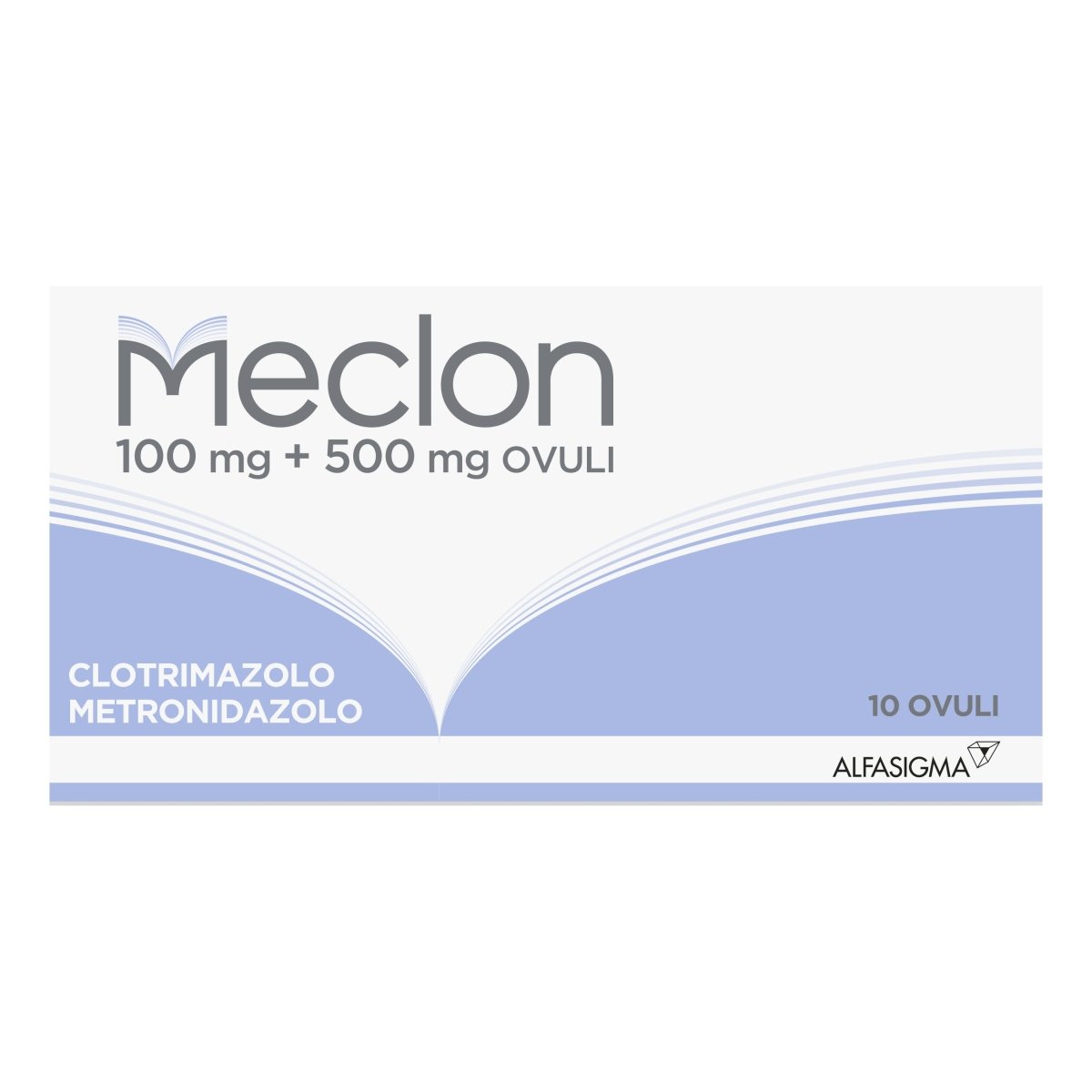
Meclon 100 mg + 500 mg 10 ovules
Meclon 100 mg + 500 mg 10 ovules
Couldn't load pickup availability

NET WEIGHT OF THE PRODUCT
NET WEIGHT OF THE PRODUCT
10ct
EAN
EAN
023703010
MINSAN
MINSAN
023703010
In compliance with article 118 "authorization of advertising to the public" of the legislative decree of 24 April 2006, number 219
INDICATIONS
Cervicitis, cervico-vaginitis, vaginitis and vulvo-vaginitis from Trichomonas vaginalis even if associated with Candida or with a bacterial component.
CONTRAINDICATIONS
Hypersensitivity to the active ingredients or any of the excipients.
WARNINGS AND PRECAUTIONS FOR USE
Inform the patient to avoid contact with eyes. The simultaneous use of oral Metronidazole is subject to the contraindications, side effects and warnings described for the aforementioned product. Avoid treatment with Meclon during the menstrual period. MECLON ovali should be used in early childhood under the direct supervision of a doctor and only in cases of actual need. Cases of severe hepatotoxicity/acute liver failure, including cases with fatal outcome, with very rapid onset after starting treatment in patients suffering from Cockayne syndrome, have been reported with metronidazole-containing medicinal products for systemic use. Therefore, in this population metronidazole should be used after a careful evaluation of the risk-benefit ratio and only in the absence of alternative treatments. Liver function tests should be performed just before the start of therapy, during and after the end of treatment, until liver function parameters have returned to normal or baseline values have been reached. If liver function test values increase significantly during treatment, the drug should be discontinued. Patients with Cockayne syndrome should be advised to immediately report any symptoms of potential liver injury to their doctor and to discontinue treatment with metronidazole.
INTERACTIONS
None.
SIDE EFFECTS
Given the poor absorption by local application of the active ingredients Metronidazole and Clotrimazole, the adverse reactions found with topical formulations are limited to: Immune system disorders: Not known (frequency cannot be estimated from the available data): hypersensitivity reactions. Pathologies of the skin and subcutaneous tissue: Very rare (frequency <1/10,000): local irritative phenomena such as itching, allergic contact dermatitis, skin rashes. The possible occurrence of side effects leads to the interruption of treatment.
OUR PRODUCTS FOR THIS SEASON
-
Curial βeta Dry eye supplement 30 capsules Dr.Tili
Vendor:TilpharmaRegular price €22,50Regular priceUnit price per€22,50Sale price €22,50 -
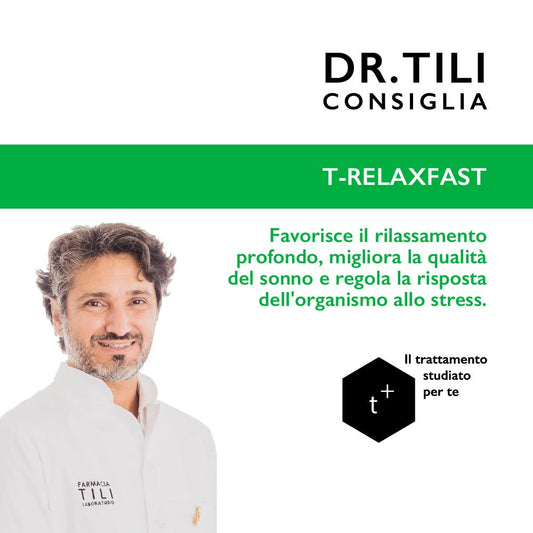
T - Relaxfast Sleep Supplement 60 Capsules Dr.Tili
Vendor:TilpharmaRegular price €24,50Regular priceUnit price per€24,50Sale price €24,50 -
Face Serum C5 Vitamin C 30ml Dr.Tili Skinlab
Vendor:TilabRegular price €62,50Regular priceUnit price per€62,50Sale price €62,50 -
Dr.Tili Skinlab E15 Vitamin E Face Serum 30ml
Vendor:TilabRegular price €32,50Regular priceUnit price per€32,50Sale price €32,50 -
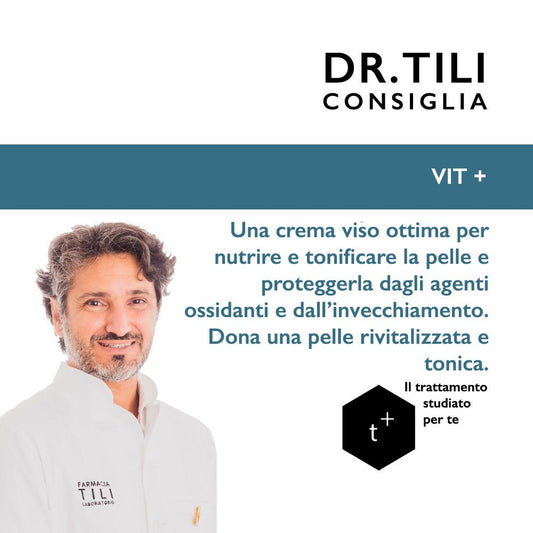
Vit+ Face Vitamin Cream 50ml Dr.Tili Skinlab
Vendor:TilabRegular price €34,00Regular priceUnit price per€34,00Sale price €34,00 -
Anti-aging Facial Treatment Hyaluronic Acid IAL B3 30ml Dr.Tili Skinlab
Vendor:TilabRegular price €46,00Regular priceUnit price per€46,00Sale price €46,00 -
Body Milk Hydra Milk 200Ml. Dr.Tili Skinlab
Vendor:TilabRegular price €16,90Regular priceUnit price per€16,90Sale price €16,90 -
Facial Cleansing Milk 150ml Dr.Tili Skinlab
Vendor:TilabRegular price €18,90Regular priceUnit price per€18,90Sale price €18,90 -
Soothing Facial Toner 125ml Dr.Tili Skinlab
Vendor:TilabRegular price €14,50Regular priceUnit price per€14,50Sale price €14,50 -
Soothing Face Cream 50ml Dr.Tili Skinlab
Vendor:TilabRegular price €19,50Regular priceUnit price per€19,50Sale price €19,50












-

ASSISTANCE - TELEPHONE ORDERS
-

SHIPPING
Shipping to Italy 24/48H
Delivery also on Saturday and Sunday
Free over €49.90
Shipping to Europe 24/72H
Free over €80 -

SAFETY
The security of your data is important to us!
We strictly comply with the European GDPR regarding
Privacy and processing of personal data
The payments you make on our site are 100% safe and guaranteed -

RETURNS
For returns, contact our customer service: you have 14 days to change your mind.
Immediate, free replacement of wrong or non-conforming products.


