

Opella Healthcare
Maalox Reflux 20 mg 14 gastro-resistant tablets
Maalox Reflux 20 mg 14 gastro-resistant tablets

Maalox Reflux 20 mg is a pantoprazole -based medicine indicated for the short-term treatment of gastroesophageal reflux disease (GERD) in adults, including heartburn and acid regurgitation . The enteric-coated tablets release the active ingredient into the intestine, reducing stomach acid production and providing rapid symptom relief .
Couldn't load pickup availability

NET WEIGHT OF THE PRODUCT
NET WEIGHT OF THE PRODUCT
EAN
EAN
041056021
MINSAN
MINSAN
041056021
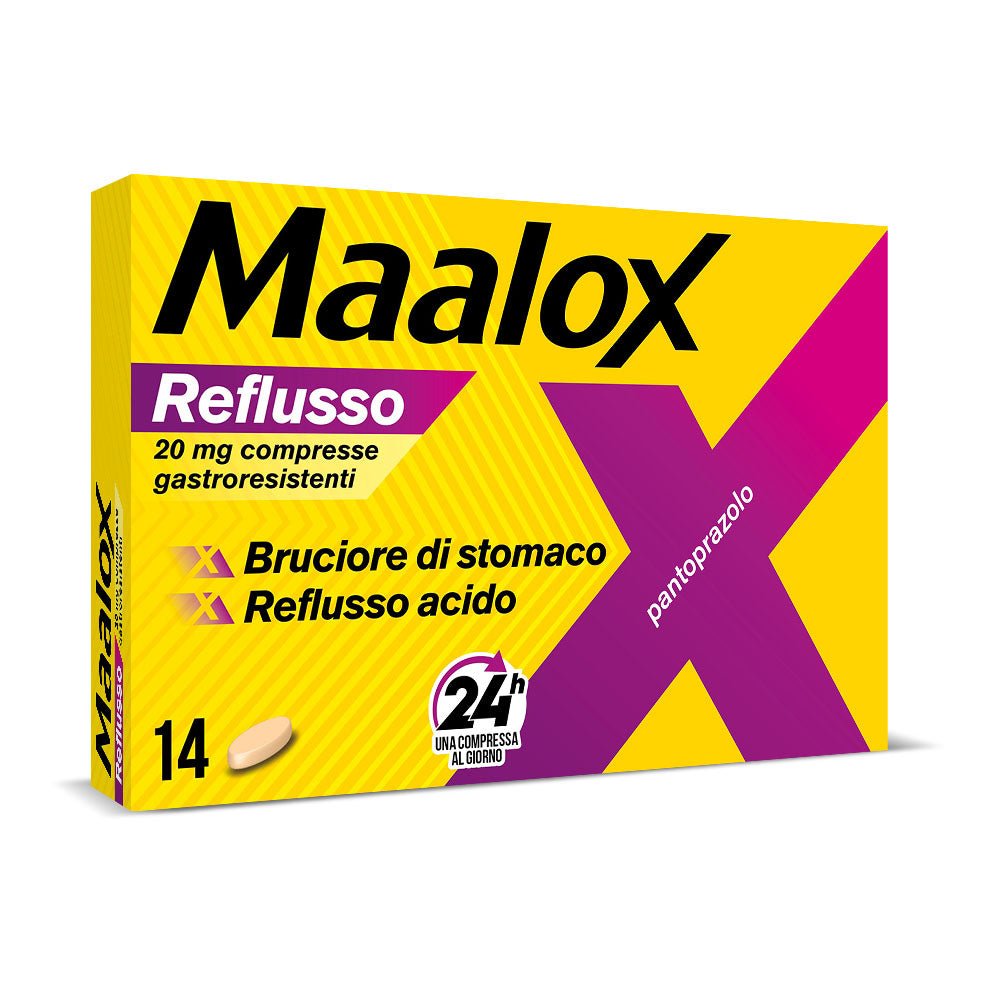
Maalox Reflux 20 mg 14 gastro-resistant tablets is a specific medicine for the short-term treatment of gastroesophageal reflux symptoms , such as heartburn and acid regurgitation , in adults. Each tablet contains 20 mg of pantoprazole , an active ingredient belonging to the class of proton pump inhibitors, which works by reducing the production of gastric acid in the stomach, thus promoting rapid relief from the typical discomfort of reflux.
Maalox Reflux gastro-resistant tablets are designed to resist the acidic environment of the stomach and release the active ingredient directly into the intestine, ensuring a targeted and effective action . This 14-tablet format is ideal for a short treatment cycle, to be taken before meals to maximize the effectiveness of the drug.
Maalox Reflux is indicated for those who suffer from occasional or recurrent symptoms of gastroesophageal reflux and want a practical and reliable remedy for the control of heartburn and acid regurgitation. Thanks to its formulation, the drug offers a rapid improvement in symptoms after just a few days of treatment, helping to improve the quality of daily life.
Choose Maalox Reflux 20 mg gastro-resistant tablets for an effective and safe treatment of reflux symptoms , with the guarantee of a product designed for use in adults and developed according to the highest pharmaceutical quality standards.
ACTIVE INGREDIENTS
Active ingredients contained in Maalox Reflusso 20 mg 14 gastro-resistant tablets - What is the active ingredient in Maalox Reflusso 20 mg 14 gastro-resistant tablets?
Each gastro-resistant tablet contains 20 mg pantoprazole (as sodium sesquihydrate). Excipients with known effect: 38.425 mg maltitol and 0.345 mg soya lecithin (derived from soya oil) and a maximum of 1.84 mg sodium. For the full list of excipients, see section 6.1.EXCIPIENTS
Composition of Maalox Reflux 20 mg 14 gastro-resistant tablets - What does Maalox Reflux 20 mg 14 gastro-resistant tablets contain?
Core : maltitol (E965), crospovidone type B, carmellose sodium, anhydrous sodium carbonate, calcium stearate. Coating : poly(vinyl alcohol), talc, titanium dioxide (E 171), macrogol 3350, soya lecithin, yellow iron oxide (E 172), anhydrous sodium carbonate, methacrylic acid ethyl acrylate copolymer (1:1) (dispersion containing polysorbate 80 and sodium lauryl sulphate), triethyl citrate.DIRECTIONS
Therapeutic indications Maalox Reflux 20 mg 14 gastro-resistant tablets - Why is Maalox Reflux 20 mg 14 gastro-resistant tablets used? What is it used for?
Short-term treatment of reflux symptoms (e.g. heartburn, acid regurgitation) in adults.CONTRAINDICATIONS AND SIDE EFFECTS
Contraindications Maalox Reflux 20 mg 14 gastro-resistant tablets - When should Maalox Reflux 20 mg 14 gastro-resistant tablets not be used?
Hypersensitivity to the active substance, substituted benzimidazoles, to peanuts, to soya or to any of the other excipients listed in section 6.1. The concomitant administration of MAALOX REFLUX with HIV protease inhibitors whose absorption depends on the acidity of the intragastric pH, such as atazanavir and nelfinavir, is contraindicated due to the significant reduction in their bioavailability (see section 4.5).DOSAGE
Quantity and method of taking Maalox Reflux 20 mg 14 gastro-resistant tablets - How to take Maalox Reflux 20 mg 14 gastro-resistant tablets?
Dosage The recommended dose is 20 mg pantoprazole (one tablet) per day. It may be necessary to take the tablets for 2-3 consecutive days to obtain an improvement in symptoms. Once complete relief of symptoms has been achieved, treatment should be discontinued. Treatment should not exceed 4 weeks without consulting a doctor. If no improvement in symptoms is noted within 2 weeks of continuous treatment, the patient should contact their doctor. Special populations No dose adjustment is necessary in elderly patients or in patients with renal or hepatic impairment. Paediatric population The use of MAALOX REFLUSSO is not recommended in children and adolescents under 18 years of age due to insufficient data on safety and efficacy. Method of administration The gastro-resistant tablets of MAALOX REFLUSSO 20 mg should not be chewed or crushed, and should be swallowed whole with liquid before a meal.CONSERVATION
Storage Maalox Reflux 20 mg 14 gastro-resistant tablets - How to store Maalox Reflux 20 mg 14 gastro-resistant tablets?
Do not store above 25°C.WARNINGS
Warnings Maalox Reflux 20 mg 14 gastro-resistant tablets - About Maalox Reflux 20 mg 14 gastro-resistant tablets it is important to know that:
Patients should be instructed to contact their doctor if: • they have unintentional weight loss, anaemia, gastrointestinal bleeding, dysphagia, recurrent vomiting or bloody vomiting, as treatment with pantoprazole may alleviate symptoms and delay diagnosis of serious disease. Malignancy should be excluded in these cases; • they have previously had gastric ulcer or gastrointestinal surgery; • they are on continuous symptomatic treatment for indigestion or heartburn for 4 weeks or more; • they have jaundice, hepatic impairment, or liver disease; • they have any other serious disease affecting general well-being; • they are over 55 years of age with new or recently changed symptoms. Patients with recurrent symptoms of indigestion or heartburn should consult their doctor at regular intervals. In particular, patients over 55 years of age who are taking any non-prescription medicine for indigestion or heartburn on a daily basis should inform their pharmacist or doctor. Patients should not take another proton pump inhibitor or H 2 antagonist at the same time. Patients who are to undergo endoscopy or breath tests should consult their doctor before taking this medicine. Patients should be advised that the tablets are not intended to provide immediate relief. Patients may begin to feel better after about 1 day of treatment with pantoprazole, but may need to take it for 7 days to achieve complete control of heartburn. Patients should not take pantoprazole as a preventive medicine. Gastrointestinal infections caused by bacteria Reduction of stomach acidity, due to any means including proton pump inhibitors, increases stomach counts of bacteria normally present in the gastrointestinal tract. Treatment with acid-reducing medicines leads to a slightly increased risk of gastrointestinal infections such as Salmonella , Campylobacter or Clostridium difficile . Subacute cutaneous lupus erythematosus (SCLE) Proton pump inhibitors are associated with very infrequent cases of SCLE. If lesions occur, especially in sun-exposed areas of the skin, and if accompanied by arthralgia, the patient should seek medical advice promptly and the physician should consider discontinuing MAALOX REFLUX. Subacute cutaneous lupus erythematosus (SCLE) after previous treatment with a proton pump inhibitor may increase the risk of SCLE with other proton pump inhibitors. Severe cutaneous adverse reactions (SCARs) Serious skin reactions including Stevens-Johnson syndrome (SJS), Lyell's syndrome, which can be fatal or life-threatening, and drug reaction with eosinophilia and systemic symptoms (DRESS) have been reported in association with pantoprazole treatment (see section 4.8). Patients should be informed of the signs and symptoms of serious skin reactions and monitored carefully. If SCARs are observed, treatment discontinuation should be considered. Kounis syndrome Cases of Kounis syndrome, a serious allergic reaction which can lead to myocardial infarction and death, have been reported with pantoprazole (see section 4.8). Symptoms may include chest pain occurring in association with an allergic reaction. Prompt medical treatment and surveillance are mandatory. Soya lecithin This medicinal product contains lecithin derived from soya oil. If the patient is allergic to peanut or soya, this medicinal product should not be used. Maltitol This medicinal product contains maltitol. Patients with rare hereditary problems of fructose intolerance should not take this medicinal product. Sodium This medicinal product contains less than 1 mmol sodium (23 mg) per tablet, i.e. essentially 'sodium-free'. Interference with laboratory tests Increased Chromogranin A (CgA) level may interfere with investigations for neuroendocrine tumours. To avoid this interference, treatment with MAALOX REFLUX should be stopped for at least 5 days before CgA measurements (see section 5.1). If CgA and gastrin levels have not returned to reference range after initial measurement, measurements should be repeated 14 days after cessation of proton pump inhibitor treatment. This medicinal product is intended for short-term use (up to 4 weeks) only (see section 4.2). Patients should be warned of the additional risks with long-term use and the need for a prescription and periodic monitoring should be emphasised. The following additional risks are considered relevant in long-term treatment: Influence on the absorption of vitamin B12 Pantoprazole, like all acid-blocking medicines, may reduce the absorption of vitamin B12 (cyanocobalamin) due to hypo- or achlorhydria. This should be considered in patients with reduced body stores or risk factors for reduced vitamin B12 absorption on long-term therapy or if symptoms are observed. Bone fractures Proton pump inhibitors, especially if used in high doses and over long durations (> 1 year), may modestly increase the risk of hip, wrist and spine fracture, predominantly in the elderly or in presence of other recognised risk factors. Observational studies suggest that proton pump inhibitors may increase the overall risk of fracture by 10-40%. Some of this increase may be due to other risk factors. Patients at risk of osteoporosis should receive care according to current clinical guidelines and they should have an adequate intake of vitamin D and calcium. Hypomagnesaemia Severe hypomagnesaemia has been reported in patients treated with PPIs like pantoprazole for at least 3 months, and in many cases for one year. Serious manifestations of hypomagnesemia, such as fatigue, tetany, delirium, convulsions, dizziness and ventricular arrhythmia, may occur and may be insidious in onset and under-recognized. In most patients, hypomagnesemia improves after magnesium replacement and discontinuation of the PPI. For patients expected to receive prolonged PPI therapy or in combination with digoxin or drugs that may cause hypomagnesemia (e.g., diuretics), healthcare professionals should consider measuring magnesium levels before starting PPI treatment and periodically during treatment.INTERACTIONS
Interactions Maalox Reflux 20 mg 14 gastro-resistant tablets - Which medicines or foods can modify the effect of Maalox Reflux 20 mg 14 gastro-resistant tablets?
Effect of pantoprazole on the absorption of other medicinal products MAALOX REFLUX may reduce the absorption of active substances whose bioavailability is dependent on gastric pH (e.g. ketoconazole). HIV protease inhibitors Co-administration of pantoprazole with HIV protease inhibitors, such as atazanavir and nelfinavir whose absorption is dependent on the acidity of the intragastric pH, is contraindicated due to significant reduction in their bioavailability (see section 4.3). Coumarin anticoagulants (phenprocoumon or warfarin) Although no interactions were observed during concomitant treatment with phenprocoumon or warfarin in clinical pharmacokinetic studies, a few isolated cases of changes in International Normalised Ratio (INR) have been reported during concomitant treatment in the post-marketing period. Therefore, in patients treated with coumarin anticoagulants (e.g. phenprocoumon or warfarin), monitoring of the prothrombin time/INR is recommended after initiation, discontinuation or discontinuation of pantoprazole. Methotrexate Concomitant use of high-dose methotrexate (e.g. 300 mg) and proton pump inhibitors has been reported to increase methotrexate levels in some patients. Therefore, in cases where high-dose methotrexate is used, for example in the treatment of cancer and psoriasis, a temporary withdrawal of pantoprazole therapy should be considered. Other interaction studies Pantoprazole is metabolised in the liver via the cytochrome P450 enzyme system. Interaction studies with carbamazepine, caffeine, diazepam, diclofenac, digoxin, ethanol, glibenclamide, metoprolol, naproxen, nifedipine, phenytoin, piroxicam, theophylline and an oral contraceptive containing levonorgestrel and ethinylestradiol have not shown any clinically significant interactions. However, an interaction of pantoprazole with other substances metabolised by the same enzyme system cannot be excluded. There were no interactions with concomitantly administered antacids.SIDE EFFECTS
Like all medicines, Maalox Reflux 20 mg 14 gastro-resistant tablets can cause side effects - What are the side effects of Maalox Reflux 20 mg 14 gastro-resistant tablets?
Summary of safety profile Approximately 5% of patients can be expected to experience adverse reactions. The most commonly reported adverse reactions are diarrhoea and headache, both occurring in approximately 1% of patients. Tabulated list of adverse reactions The following adverse reactions have been observed with pantoprazole. Within the table below, adverse reactions are classified according to the MedDRA frequency classification: very common (≥1/10); common (≥1/100, <1/10); uncommon (≥1/1,000, <1/100); rare (≥1/10,000, <1/1,000); very rare (<1/10,000), not known (cannot be estimated from the available data). Within each frequency grouping, adverse reactions are presented in order of decreasing seriousness. Table 1. Adverse reactions with pantoprazole in clinical trials and post-marketing experience| Frequency Classification by systems and organs | Common | Uncommon | Rare | Very rare | Not known |
| Pathologies of the haemolymphopoietic system | Agranulocytosis | Thrombocytopenia, Leukopenia, Pancytopenia | |||
| Immune system disorders | Hypersensitivity (including anaphylactic reactions and anaphylactic shock) | ||||
| Metabolism and nutrition disorders | Hyperlipidemia and increased lipids (triglycerides, cholesterol), weight changes | Hyponatremia, Hypomagnesemia Hypocalcemia in association with hypomagnesemia | |||
| Psychiatric disorders | Sleep disorders | Depression (and all aggravated forms) | Disorientation (and all aggravated forms) | Hallucinations, Confusion (especially in predisposed patients, as well as the aggravation of these events in case of pre-existence) | |
| Nervous system disorders | Headache, dizziness | Taste disorders | Paresthesia | ||
| Eye pathologies | Vision disturbances / blurred vision | ||||
| Heart disease | Kounis Syndrome | ||||
| Gastrointestinal disorders | Fundic gland polyps (benign) | Diarrhea, Nausea/vomiting, Abdominal distension and bloating, Constipation, Dry mouth, Abdominal pain and discomfort | Microscopic colitis | ||
| Hepatobiliary pathologies | Increased levels of liver enzymes (transaminases, γ-GT) | Increased bilirubin | Hepatocellular injury, Jaundice, Hepatocellular failure | ||
| Skin and subcutaneous tissue disorders | Skin rash / exanthema / eruption, Itching | Urticaria, Angioedema | Stevens-Johnson syndrome (SJS), Lyell syndrome, Erythema multiforme, Photosensitivity, Subacute cutaneous lupus erythematosus, Drug reaction with eosinophilia and systemic symptoms (DRESS) (see section 4.4) | ||
| Musculoskeletal and connective tissue disorders | Wrist, hip and spine fractures | Arthralgia, Myalgia | |||
| Kidney and urinary disorders | Interstitial nephritis | ||||
| Reproductive system and breast disorders | Gynecomastia | ||||
| Systemic disorders and conditions related to the administration site | Asthenia, fatigue and malaise | Increased body temperature, Peripheral edema |
OVERDOSE
Overdose Maalox Reflux 20 mg 14 gastro-resistant tablets - What are the risks of Maalox Reflux 20 mg 14 gastro-resistant tablets in case of overdose?
Doses of up to 240 mg administered intravenously over 2 minutes have been well tolerated. Since pantoprazole is extensively protein bound, it is not readily dialysable. In cases of overdose with clinical signs of intoxication, apart from symptomatic and supportive treatment, no specific therapeutic recommendations can be made.PREGNANCY AND BREASTFEEDING
If you are pregnant or breast-feeding, think you may be pregnant or are planning to have a baby, ask your doctor for advice before taking Maalox Reflux 20 mg 14 gastro-resistant tablets.
Pregnancy There are no adequate data from the use of pantoprazole in pregnant women. Studies in animals have shown reproductive toxicity. Preclinical studies have shown no evidence of impaired fertility or teratogenic effects (see section 5.3). The potential risk for humans is unknown. MAALOX REFLUX should not be used during pregnancy. Breast-feeding Pantoprazole/metabolites have been detected in breast milk. The effect of pantoprazole on newborns/infants is unknown. MAALOX REFLUX should not be used during breast-feeding. Fertility There was no evidence of impaired fertility following the administration of pantoprazole in animal studies (see section 5.3).DRIVING AND USE OF MACHINERY
Taking Maalox Reflux 20 mg 14 gastro-resistant tablets before driving or using machines - Does Maalox Reflux 20 mg 14 gastro-resistant tablets affect driving or using machines?
MAALOX REFLUX has no or negligible influence on the ability to drive or use machines. However, adverse reactions to the drug such as dizziness and visual disturbances may occur (see section 4.8). In such cases, patients should not drive or use machines.OUR PRODUCTS FOR THIS SEASON
-
Curial βeta Dry eye supplement 30 capsules Dr.Tili
Vendor:TilpharmaRegular price €22,50Regular priceUnit price per€22,50Sale price €22,50 -
T - Relaxfast Sleep Supplement 60 Capsules Dr.Tili
Vendor:TilpharmaRegular price €24,50Regular priceUnit price per€24,50Sale price €24,50 -
Face Serum C5 Vitamin C 30ml Dr.Tili Skinlab
Vendor:TilabRegular price €62,50Regular priceUnit price per€62,50Sale price €62,50 -
Dr.Tili Skinlab E15 Vitamin E Face Serum 30ml
Vendor:TilabRegular price €32,50Regular priceUnit price per€32,50Sale price €32,50 -
Vit+ Face Vitamin Cream 50ml Dr.Tili Skinlab
Vendor:TilabRegular price €34,00Regular priceUnit price per€34,00Sale price €34,00 -
Anti-aging Facial Treatment Hyaluronic Acid IAL B3 30ml Dr.Tili Skinlab
Vendor:TilabRegular price €46,00Regular priceUnit price per€46,00Sale price €46,00 -
Body Milk Hydra Milk 200Ml. Dr.Tili Skinlab
Vendor:TilabRegular price €16,90Regular priceUnit price per€16,90Sale price €16,90 -
Facial Cleansing Milk 150ml Dr.Tili Skinlab
Vendor:TilabRegular price €18,90Regular priceUnit price per€18,90Sale price €18,90 -
Soothing Facial Toner 125ml Dr.Tili Skinlab
Vendor:TilabRegular price €14,50Regular priceUnit price per€14,50Sale price €14,50 -
Soothing Face Cream 50ml Dr.Tili Skinlab
Vendor:TilabRegular price €19,50Regular priceUnit price per€19,50Sale price €19,50

















-

ASSISTANCE - TELEPHONE ORDERS
-

SHIPPING
Shipping to Italy 24/48H
Delivery also on Saturday and Sunday
Free over €49.90
Shipping to Europe 24/72H
Free over €80 -

SAFETY
The security of your data is important to us!
We strictly comply with the European GDPR regarding
Privacy and processing of personal data
The payments you make on our site are 100% safe and guaranteed -

RETURNS
Fast returns via DIY portal and 14 days to change your mind.
Immediate and free replacements for incorrect or non-compliant products delivered.


