

Eg
Lisomucil Cough 100 mg/5 ml 200 ml syrup
Lisomucil Cough 100 mg/5 ml 200 ml syrup
Lisomucil Cough 100 mg/5 ml syrup is a carbocysteine -based mucolytic indicated for productive coughs and acute and chronic respiratory tract conditions. It thins thick mucus, facilitates expectoration and improves breathing. Suitable for adults and children over 2 years old, it is available in a 200 ml bottle, also in a formulation with or without sugar .
Couldn't load pickup availability

NET WEIGHT OF THE PRODUCT
NET WEIGHT OF THE PRODUCT
EAN
EAN
023185061
MINSAN
MINSAN
023185061

Lisomucil Tosse 100 mg/5 ml 200 ml syrup is a mucolytic syrup based on carbocysteine , specifically formulated to promote the fluidification and elimination of mucus in acute and chronic respiratory tract conditions . Thanks to its action, Lisomucil Tosse helps make mucus less dense and more easily expectorated, proving particularly indicated in cases of productive cough and the presence of abundant bronchial secretions.
This cough syrup is available in a 200 ml bottle and contains 100 mg of carbocysteine per 5 ml , ensuring an effective dosage for both adults and children over 2 years. The formulation with sugar makes it pleasant to the palate, making it easier to administer even to the little ones. Lisomucil syrup is ideal for the treatment of acute and chronic cough , acting as a fluidifier and supporting the natural process of cleaning the airways.
Lisomucil Tosse is a cough medicine widely used in respiratory conditions such as bronchitis, tracheitis and other conditions that involve excessive mucus production. Its active ingredient carbocisteine acts directly on the structure of the mucus, promoting its elimination and helping to improve breathing. Thanks to its effectiveness, Lisomucil Tosse is a reliable choice for those looking for a mucolytic syrup of proven effectiveness for the whole family.
ACTIVE INGREDIENTS
Active ingredients contained in Lisomucil Tosse 100 mg/5 ml 200 ml syrup - What is the active ingredient of Lisomucil Tosse 100 mg/5 ml 200 ml syrup?
1 ml of syrup contains: Active ingredient : carbocysteine 20 mg. Excipients with known effect : Sugar syrup : sucrose, methyl parahydroxybenzoate (E218), and cochineal red A (E124) Sugar-free syrup : liquid maltitol, methyl parahydroxybenzoate (E218), sodium and cochineal red A (E124). For the full list of excipients, see section 6.1.EXCIPIENTS
Composition of Lisomucil Tosse 100 mg/5 ml 200 ml syrup - What does Lisomucil Tosse 100 mg/5 ml 200 ml syrup contain?
LISOMUCIL TOSSE MUCOLYTIC syrup with sugar Sucrose, methyl parahydroxybenzoate, vanillin, cochineal red A (E124), raspberry flavouring, cherry flavouring, sodium hydroxide, purified water. LISOMUCIL TOSSE MUCOLYTIC syrup without sugar Hydroxyethylcellulose, sodium saccharin, liquid maltitol, sodium methyl parahydroxybenzoate, cochineal red A (E124), cherry-raspberry flavouring, sodium hydroxide, purified water.DIRECTIONS
Therapeutic indications Lisomucil Cough 100 mg/5 ml 200 ml syrup - Why is Lisomucil Cough 100 mg/5 ml 200 ml syrup used? What is it used for?
LISOMUCIL TOSSE MUCOLITICO syrup with sugar Mucolytic and fluidifying in acute and chronic respiratory tract conditions. LISOMUCIL TOSSE MUCOLITICO syrup without sugar Mucolytic and fluidifying in acute and chronic respiratory tract conditions, particularly in the case of low-carb, normocaloric or hypocaloric diets.CONTRAINDICATIONS AND SIDE EFFECTS
Contraindications Lisomucil Cough 100 mg/5 ml 200 ml syrup - When should Lisomucil Cough 100 mg/5 ml 200 ml syrup not be used?
Hypersensitivity to the active substance or to any of the excipients listed in section 6.1. Active gastroduodenal ulcer. Children under 2 years of age.DOSAGE
Quantity and method of taking Lisomucil Tosse 100 mg/5 ml 200 ml syrup - How to take Lisomucil Tosse 100 mg/5 ml 200 ml syrup?
Unless otherwise prescribed by your doctor, the following dosage regimen may be used: - over 5 years: 1 measuring teaspoon, 2 - 3 times a day. - between 2 and 5 years: ½ - 1 measuring teaspoon, 2 times a day. These doses may be increased as directed by your doctor. The maximum recommended duration of treatment is 5 days. Treatment for longer periods may be performed at your doctor's discretion.CONSERVATION
Storage Lisomucil Cough 100 mg/5 ml 200 ml syrup - How is Lisomucil Cough 100 mg/5 ml 200 ml syrup stored?
Store below 25°C.WARNINGS
Warnings Lisomucil Cough 100 mg/5 ml 200 ml syrup - About Lisomucil Cough 100 mg/5 ml 200 ml syrup it is important to know that:
Mucolytics may induce bronchial obstruction in children under 2 years of age. In fact, the capacity for bronchial mucus drainage is limited in this age group, due to the physiological characteristics of the airways. They should therefore not be used in children under 2 years of age (see section 4.3). Gastrointestinal bleeding Cases of gastrointestinal bleeding have been reported with the use of carbocisteine. Caution is recommended in the elderly, in patients with a history of gastroduodenal ulcers or in patients taking concomitant medications known to increase the risk of gastrointestinal bleeding. In case of gastrointestinal bleeding, the patient should stop treatment with carbocisteine. Asthmatic and debilitated patients Specific precautions are recommended in patients with severe respiratory insufficiency, in patients with asthma and with a history of bronchospasm, as well as in debilitated patients. The use of carbocisteine causes a decrease in mucus viscosity and an increase in mucus removal, both through epithelial ciliary activity and through the cough reflex. Therefore, an increase in cough and sputum is expected. The use of antitussive drugs inhibits the cough reflex and increases the risk of airway obstruction, due to an increase in mucus accumulation in the airways. The concomitant use of this medicine with cough sedative drugs and/or drugs that inhibit bronchial secretion (e.g. anti-muscarinic drugs) is not recommended. LISOMUCIL TOSSE MUCOLITICO syrup with sugar contains 3.5 g of sucrose per 5 ml of syrup (1 teaspoon). Patients with rare hereditary problems of fructose intolerance, glucose-galactose malabsorption or sucrase-isomaltase insufficiency should not take this medicine. The daily dosage of 3 teaspoons per day (equal to 15 ml of syrup) provides 10.5 g of sucrose, while the dosage of 2 teaspoons per day (equal to 10 ml of syrup) provides 7 g of sucrose. To be taken into consideration in people with diabetes mellitus. LISOMUCIL TOSSE MUCOLITICO sugar-free syrup contains liquid maltitol. Patients with rare hereditary problems of fructose intolerance should not take this medicine. The liquid maltitol contained in the syrup does not promote the onset of tooth decay. LISOMUCIL TOSSE MUCOLITICO sugar-free syrup and LISOMUCIL TOSSE MUCOLITICO syrup with sugar contain cochineal red A (E 124) which may cause allergic reactions. LISOMUCIL TOSSE MUCOLITICO sugar-free syrup and LISOMUCIL TOSSE MUCOLITICO syrup with sugar contain methyl parahydroxybenzoate (E218) which may cause allergic reactions (possibly delayed). LISOMUCIL TOSSE MUCOLITICO sugar-free syrup contains 13.4 mg sodium per 5 ml dose (1 teaspoon). The daily dosage of 3 teaspoons per day (equivalent to 15 ml of syrup) provides 40 mg sodium, while the dosage of 2 teaspoons (equivalent to 10 ml of syrup) provides 26.8 mg sodium equivalent to 2% and 1.34% respectively of the maximum daily intake recommended by the WHO which corresponds to 2 g of sodium for an adult. LISOMUCIL TOSSE MUCOLITICO syrup with sugar contains less than 1 mmol (23 mg) sodium per 5 ml of syrup (1 teaspoon), i.e. essentially 'sodium-free'.INTERACTIONS
Interactions Lisomucil Cough 100 mg/5 ml 200 ml syrup - Which medicines or foods can modify the effect of Lisomucil Cough 100 mg/5 ml 200 ml syrup?
At the current state of knowledge, there are no known incompatibilities between the administration of carbocisteine and the most common drugs used in the treatment of upper and lower airway conditions, nor with foods or laboratory tests.SIDE EFFECTS
Like all medicines, Lisomucil Tosse 100 mg/5 ml 200 ml syrup can cause side effects - What are the side effects of Lisomucil Tosse 100 mg/5 ml 200 ml syrup?
Undesirable effects are listed according to the following frequency classification: Very common (≥ 1/10); common (≥ 1/100, < 1/10); uncommon (≥ 1/1,000, < 1/100); rare (≥ 1/10,000, < 1/1,000); very rare (< 1/10,000), not known (frequency cannot be estimated from the available data). Immune system disorders. Frequency not known: anaphylactic reaction, allergic skin rashes, fixed drug eruption. Gastrointestinal disorders . Very common: diarrhoea, nausea and upper abdominal pain. Frequency; not known: epigastric discomfort, vomiting and gastrointestinal bleeding (in this case stop treatment and consult your doctor to establish appropriate therapy) Skin and subcutaneous tissue disorders frequency not known: bullous dermatitis, Stevens-Johnson syndrome, erythema multiforme, toxic skin eruption rash. In such cases stop treatment and consult your doctor to establish appropriate therapy. Respiratory, thoracic and mediastinal disorders. Frequency not known: bronchial obstruction. In such cases stop treatment and consult your doctor to establish appropriate therapy. Reporting of suspected adverse reactions Reporting suspected adverse reactions that occur after authorisation of the medicinal product is important, as it allows continued monitoring of the benefit/risk balance of the medicinal product. Healthcare professionals are asked to report any suspected adverse reactions via the national reporting system at https://www.aifa.gov.it/content/segnalazioni-reazioni-avverse.OVERDOSE
Overdose Lisomucil Cough 100 mg/5 ml 200 ml syrup - What are the risks of Lisomucil Cough 100 mg/5 ml 200 ml syrup in case of overdose?
Symptoms of overdose include: headache, nausea, diarrhea, gastralgia. Induce vomiting and possibly perform gastric lavage.PREGNANCY AND BREASTFEEDING
If you are pregnant or breast-feeding, think you may be pregnant or are planning to have a baby, ask your doctor for advice before taking Lisomucil Cough 100 mg/5 ml 200 ml syrup.
LISOMUCIL TOSSE MUCOLYTIC is contraindicated during pregnancy and breastfeeding (see paragraph 4.3). No clinical data are available.DRIVING AND USE OF MACHINERY
Taking Lisomucil Cough 100 mg/5 ml 200 ml syrup before driving or using machines - Does Lisomucil Cough 100 mg/5 ml 200 ml syrup affect driving or using machines?
LISOMUCIL TOSSE MUCOLYTIC does not alter or alters in a negligible way the ability to drive vehicles and use machinery.OUR PRODUCTS FOR THIS SEASON
-
Curial βeta Dry eye supplement 30 capsules Dr.Tili
Vendor:TilpharmaRegular price €22,50Regular priceUnit price per€22,50Sale price €22,50 -
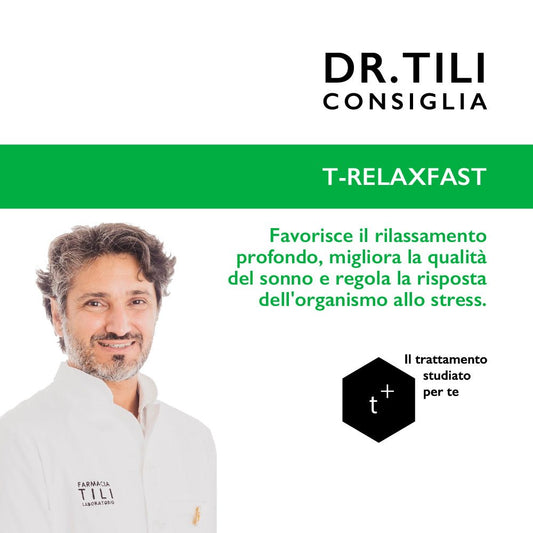
T - Relaxfast Sleep Supplement 60 Capsules Dr.Tili
Vendor:TilpharmaRegular price €24,50Regular priceUnit price per€24,50Sale price €24,50 -
Face Serum C5 Vitamin C 30ml Dr.Tili Skinlab
Vendor:TilabRegular price €62,50Regular priceUnit price per€62,50Sale price €62,50 -
Dr.Tili Skinlab E15 Vitamin E Face Serum 30ml
Vendor:TilabRegular price €32,50Regular priceUnit price per€32,50Sale price €32,50 -
Vit+ Face Vitamin Cream 50ml Dr.Tili Skinlab
Vendor:TilabRegular price €34,00Regular priceUnit price per€34,00Sale price €34,00 -
Anti-aging Facial Treatment Hyaluronic Acid IAL B3 30ml Dr.Tili Skinlab
Vendor:TilabRegular price €46,00Regular priceUnit price per€46,00Sale price €46,00 -
Body Milk Hydra Milk 200Ml. Dr.Tili Skinlab
Vendor:TilabRegular price €16,90Regular priceUnit price per€16,90Sale price €16,90 -
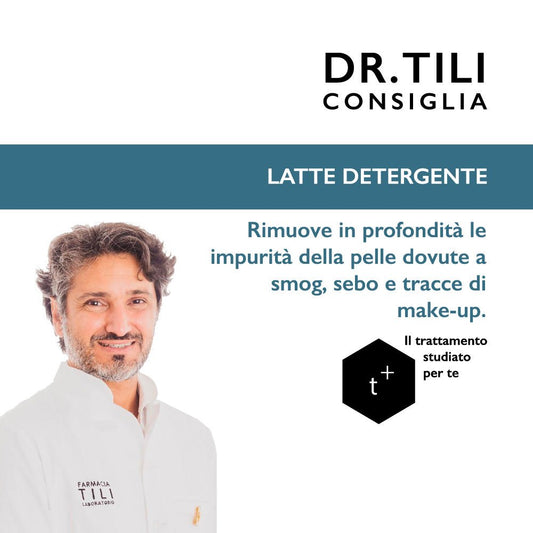
Facial Cleansing Milk 150ml Dr.Tili Skinlab
Vendor:TilabRegular price €18,90Regular priceUnit price per€18,90Sale price €18,90 -
Soothing Facial Toner 125ml Dr.Tili Skinlab
Vendor:TilabRegular price €14,50Regular priceUnit price per€14,50Sale price €14,50 -
Soothing Face Cream 50ml Dr.Tili Skinlab
Vendor:TilabRegular price €19,50Regular priceUnit price per€19,50Sale price €19,50















-

ASSISTANCE - TELEPHONE ORDERS
-

SHIPPING
Shipping to Italy 24/48H
Delivery also on Saturday and Sunday
Free over €49.90
Shipping to Europe 24/72H
Free over €80 -

SAFETY
The security of your data is important to us!
We strictly comply with the European GDPR regarding
Privacy and processing of personal data
The payments you make on our site are 100% safe and guaranteed -

RETURNS
Fast returns via DIY portal and 14 days to change your mind.
Immediate and free replacements for incorrect or non-compliant products delivered.


