

Zambon
Fluimucil 300 mg/3 ml Nebulizer Solution 20 Vials
Fluimucil 300 mg/3 ml Nebulizer Solution 20 Vials

Fluimucil 300 mg/3 ml solution for nebulizer it's a mucolytic drug based on N-acetylcysteine, indicated for thinning and eliminating thick mucus from the respiratory tract in cases of acute and chronic bronchitis, pulmonary emphysema, cystic fibrosis and bronchiectasis. The package contains 20 single-dose vials of 3 ml for aerosol home therapy.
Couldn't load pickup availability

NET WEIGHT OF THE PRODUCT
NET WEIGHT OF THE PRODUCT
60ml
EAN
EAN
020582300
MINSAN
MINSAN
020582300
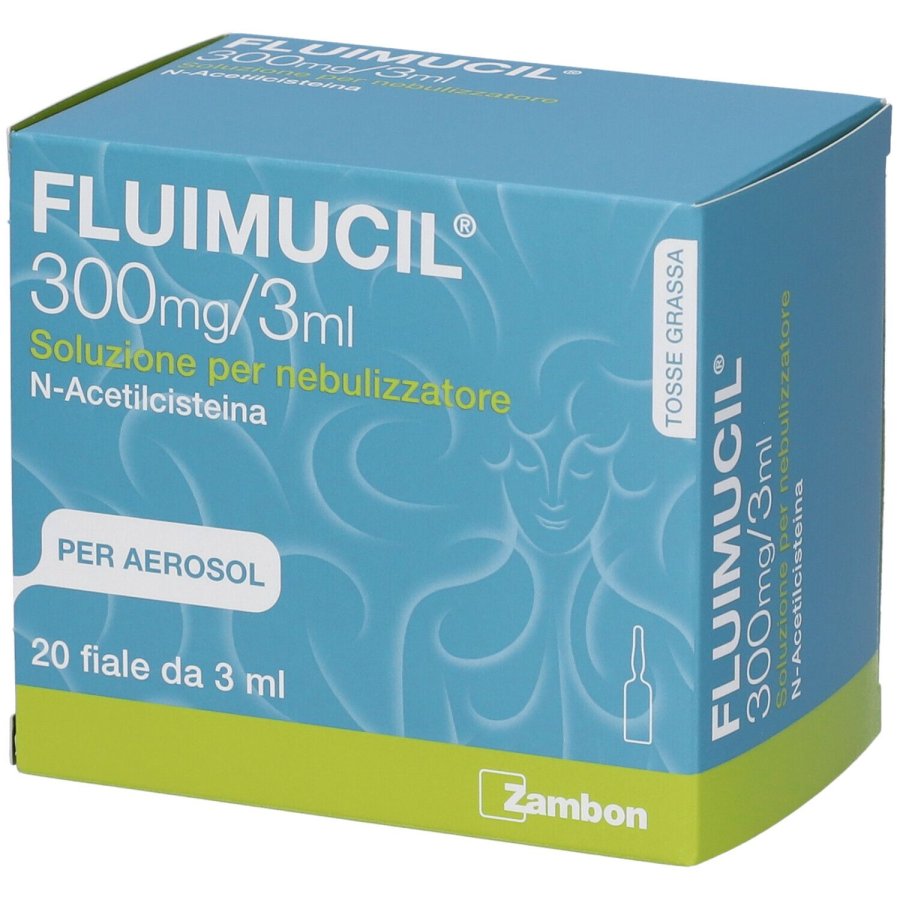
Fluimucil 300 mg/3 ml solution for nebulizer it's a mucolytic drug based on N-acetylcysteine, produced by Zambon, indicated to facilitate the elimination of thick and viscous mucus from the respiratory tract. It is used in the treatment of acute and chronic bronchitis, pulmonary emphysema, cystic fibrosis and bronchiectasis.
The wording in nebulizer solution allows direct administration by inhalation through the aerosol, ensuring localized and rapid action on the respiratory tract. The package contains 20 single-dose vials of 3 ml, practices for continuous home therapy.
INDICATIONS
What is Fluimucil 300 mg/3 ml nebulizer solution and what is it used for?
Fluimucil contains the active ingredient N-acetylcysteine, which belongs to a group of medicines called mucolytics, used to facilitate the elimination of mucus from the respiratory tract.
Fluimucil is indicated for the treatment of respiratory system diseases characterized by an increase in the production of thick and viscous mucus (thick and viscous hypersecretion) such as:
- inflammation of the bronchi (acute bronchitis, chronic bronchitis and its exacerbations);
- pathology of the pulmonary alveoli (pulmonary emphysema);
- cystic fibrosis (mucoviscidosis);
- dilation of the bronchi (bronchiectasis).
Talk to your doctor if you do not feel better or if you feel worse after 10 days.
CONTRAINDICATIONS
When should Fluimucil 300 mg/3 ml nebulizer solution not be used?
Do not take Fluimucil:
- if you are allergic to N-acetylcysteine, or any of the other ingredients of this medicine (listed in section 6);
- if the patient is a child under 2 years of age.
WARNINGS AND PRECAUTIONS
On Fluimucil 300 mg/3 ml nebulizer solution it is important to know that:
Talk to your doctor or pharmacist before taking Fluimucil. Take this medicine with caution and always under your doctor's supervision in the following cases:
- if you suffer from an inflammatory disease of the bronchi called bronchial asthma. Stop taking Fluimucil immediately if you have contraction of the bronchial muscles (bronchospasm);
- if you have suffered from atopy and asthma in the past as you may develop allergic reactions;
- if you are intolerant to histamine as you may develop allergic reactions;
- if you suffer or have suffered from a stomach or intestinal problem called peptic ulcer, especially if you are taking other medicines that cause stomach problems (gastroinjurious medicines) together with Fluimucil.
This medicine may increase the volume of bronchial mucus (bronchial secretions), especially at the beginning of treatment. Therefore, if this occurs and you are unable to eliminate the bronchial secretions by coughing (expectorate), contact your doctor who will show you a method to eliminate the mucus (postural drainage or bronchoaspiration).
Allergic (hypersensitivity/anaphylactoid) reactions may occur with N-acetylcysteine. Checking for signs of an allergic reaction may be necessary.
If you notice a sulfur smell when you open the vial, or the solution turns pink in the opened vial or when you transfer the solution into the aerosol machine, do not worry because this does not indicate any alteration of the medicine.
Laboratory tests: N-acetylcysteine can interfere with some blood and urine tests (colorimetric assay for the determination of salicylates and tests for determining ketones). Tell your doctor that you are taking this medicine before having these tests.
Children: Fluimucil should not be administered to children under 2 years of age, as it can block the bronchi and prevent normal breathing. The same warnings and precautions reported for adults apply to children and adolescents.
SIDE EFFECTS
What are the side effects of Fluimucil 300 mg/3 ml nebulizer solution?
Like all medicines, this medicine can cause side effects, although not everybody gets them.
Frequency not known (frequency of which cannot be established from the available data):
- allergic reactions (hypersensitivity);
- contraction of bronchial muscles (bronchospasm);
- runny nose (rhinorrhea);
- breathing difficulties (bronchial obstruction);
- inflammation of the mouth (stomatitis);
- vomit;
- nausea;
- urticaria;
- rash;
- itching.
In very rare cases, serious skin reactions have occurred (Stevens Johnson syndrome or Lyell syndrome). If you have changes in the mucous membranes or skin, stop taking the medicine and contact your doctor. Furthermore, a reduction in platelet aggregation (prolongation of bleeding time) is possible.
If you get any side effects, talk to your doctor or pharmacist, including any not listed in this leaflet. You can also report side effects directly via the national reporting system at: https://www.aifa.gov.it/content/segnalazioni-reazioni-avverse.
OUR PRODUCTS FOR THIS SEASON
-
Curial βeta Dry eye supplement 30 capsules Dr.Tili
Vendor:TilpharmaRegular price €22,50Regular priceUnit price per€22,50Sale price €22,50 -
T - Relaxfast Sleep Supplement 60 Capsules Dr.Tili
Vendor:TilpharmaRegular price €24,50Regular priceUnit price per€24,50Sale price €24,50 -
Face Serum C5 Vitamin C 30ml Dr.Tili Skinlab
Vendor:TilabRegular price €62,50Regular priceUnit price per€62,50Sale price €62,50 -
Dr.Tili Skinlab E15 Vitamin E Face Serum 30ml
Vendor:TilabRegular price €32,50Regular priceUnit price per€32,50Sale price €32,50 -
Vit+ Face Vitamin Cream 50ml Dr.Tili Skinlab
Vendor:TilabRegular price €34,00Regular priceUnit price per€34,00Sale price €34,00 -
Anti-aging Facial Treatment Hyaluronic Acid IAL B3 30ml Dr.Tili Skinlab
Vendor:TilabRegular price €46,00Regular priceUnit price per€46,00Sale price €46,00 -
Body Milk Hydra Milk 200Ml. Dr.Tili Skinlab
Vendor:TilabRegular price €16,90Regular priceUnit price per€16,90Sale price €16,90 -
Facial Cleansing Milk 150ml Dr.Tili Skinlab
Vendor:TilabRegular price €18,90Regular priceUnit price per€18,90Sale price €18,90 -
Soothing Facial Toner 125ml Dr.Tili Skinlab
Vendor:TilabRegular price €14,50Regular priceUnit price per€14,50Sale price €14,50 -
Soothing Face Cream 50ml Dr.Tili Skinlab
Vendor:TilabRegular price €19,50Regular priceUnit price per€19,50Sale price €19,50

















-

ASSISTANCE - TELEPHONE ORDERS
-

SHIPPING
Shipping to Italy 24/48H
Delivery also on Saturday and Sunday
Free over €49.90
Shipping to Europe 24/72H
Free over €80 -

SAFETY
The security of your data is important to us!
We strictly comply with the European GDPR regarding
Privacy and processing of personal data
The payments you make on our site are 100% safe and guaranteed -

RETURNS
Fast returns via DIY portal and 14 days to change your mind.
Immediate and free replacements for incorrect or non-compliant products delivered.


