

Difa Cooper
Carexidil 5% 60 ml cutaneous spray solution
Carexidil 5% 60 ml cutaneous spray solution

Carexidil 5% scalp spray solution is a treatment for hair loss and androgenetic alopecia in men and women. Based on 5% minoxidil , it stimulates hair follicles , promotes hair regrowth , and helps increase density and thickness. This practical scalp spray allows for targeted application to thinning areas, ideal for daily use .
Couldn't load pickup availability

NET WEIGHT OF THE PRODUCT
NET WEIGHT OF THE PRODUCT
EAN
EAN
037291010
MINSAN
MINSAN
037291010
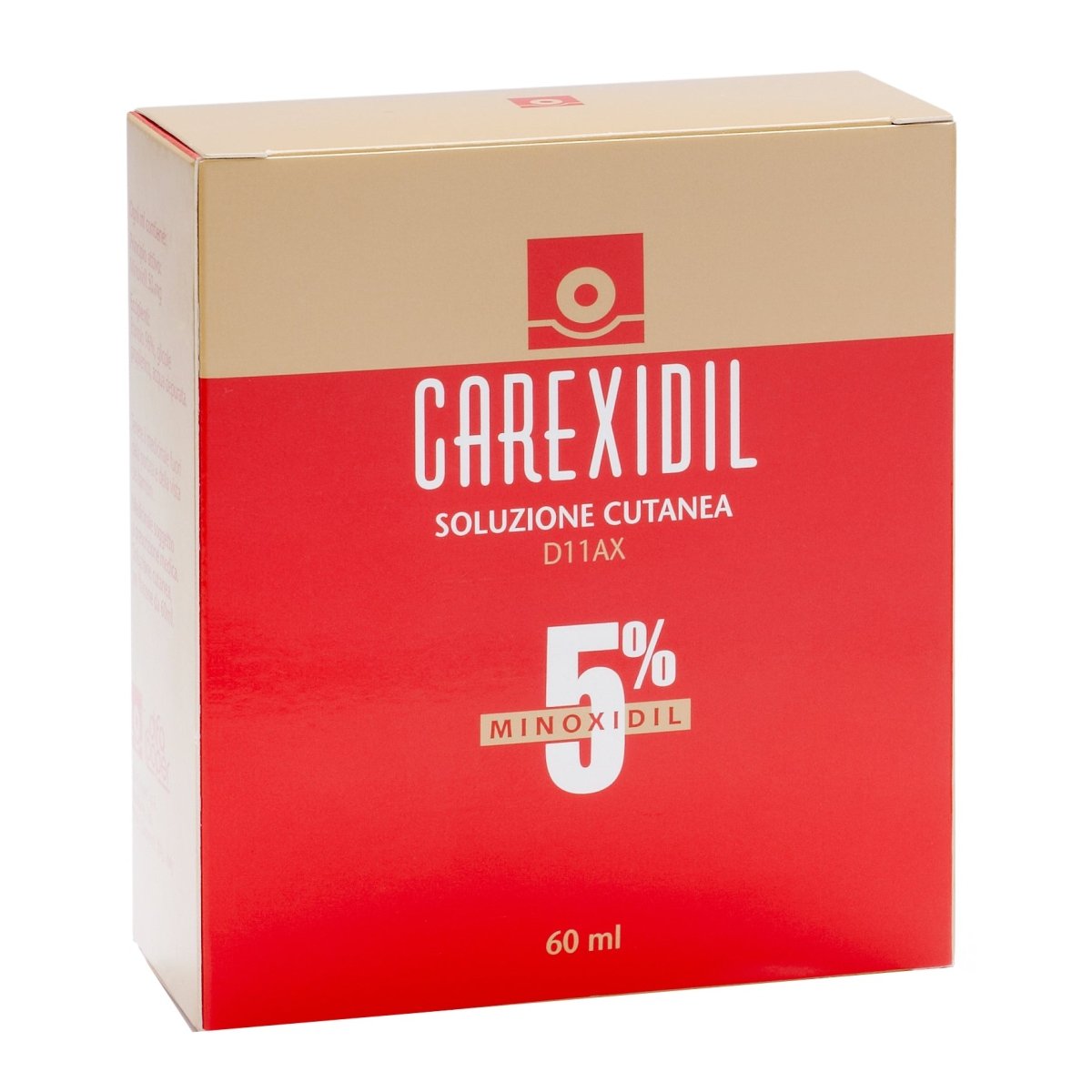
Carexidil 5% 60 ml cutaneous spray solution is a specific treatment for hair loss and androgenetic alopecia in men and women. Its formulation based on minoxidil 5% acts directly on the hair follicles , promoting the stimulation of hair regrowth and counteracting the progression of baldness. The 60 ml cutaneous spray format allows for targeted and uniform application on the affected areas of the scalp, ensuring optimal distribution of the solution and easy integration into the daily routine.
Carexidil 5% is particularly indicated as a cutaneous solution for the treatment of androgenetic alopecia , the most common form of baldness, both male and female. Minoxidil is an active ingredient recognized for its ability to prolong the hair growth phase (anagen) and to increase the density and thickness of existing hair. The product's action manifests itself progressively, with the first visible results generally after a few months of constant use.
Carexidil 5% scalp solution is easy to apply thanks to the special spray dispenser, which allows you to precisely dose the necessary amount and reach even the most difficult areas. The presence of ethyl alcohol and glycerol among the excipients ensures rapid drying and a feeling of lightness, without greasing the hair. The product is suitable for both men and women who want to combat hair loss and promote natural regrowth , improving the appearance and health of the scalp.
Carexidil 5% spray cutaneo solution represents a reliable and proven effective choice for those looking for a topical hair medicine , able to directly intervene on the causes of baldness and offer concrete support in stimulating hair follicles . Ideal for those who want a practical, safe and clinically proven baldness treatment .
ACTIVE INGREDIENTS
Active ingredients contained in Carexidil 5% 60 ml cutaneous spray solution - What is the active ingredient of Carexidil 5% 60 ml cutaneous spray solution?
100 ml of carexidil 5% cutaneous spray, solution contain 5 g of minoxidil. Excipients with known effect: ethyl alcohol For the full list of excipients, see section 6.1.EXCIPIENTS
Composition of Carexidil 5% 60 ml cutaneous spray solution - What does Carexidil 5% 60 ml cutaneous spray solution contain?
Ethyl alcohol (96%), glycerol, 2-butenedioic acid polymer with methoxyethene, monobutyl ester and purified water.DIRECTIONS
Therapeutic indications Carexidil 5% 60 ml cutaneous spray solution - Why is Carexidil 5% 60 ml cutaneous spray solution used? What is it used for?
Carexidil is indicated for the symptomatic treatment of androgenic alopecia in men and women. The efficacy of Carexidil has not been determined in the following forms: localized or generalized congenital alopecia; cicatricial alopecia of various nature (post-traumatic, psychic or infectious origin); acute diffuse alopecia from toxic substances, from medications in which hair regrowth is conditioned by the suppression of the specific cause; area celsi.CONTRAINDICATIONS AND SIDE EFFECTS
Contraindications Carexidil 5% 60 ml cutaneous spray solution - When should Carexidil 5% 60 ml cutaneous spray solution not be used?
Hypersensitivity to minoxidil or to any of the excipients listed in paragraph 6.1 Carexidil should not be used in the presence of coronary heart disease, arrhythmias, congestive heart failure or valvular heart disease. Do not use during pregnancy and breastfeeding.DOSAGE
Quantity and method of taking Carexidil 5% 60 ml cutaneous spray solution - How to take Carexidil 5% 60 ml cutaneous spray solution?
Dosage Apply a dose of 1 ml of Carexidil twice daily, preferably in the morning and evening, to the affected areas of the scalp. The dose is independent of the size of the area to be treated. The total daily dose should not exceed 2 ml. It may be necessary to wait 3-4 months of twice daily applications before evidence of hair growth can be expected. The onset of such signs and their intensity varies from patient to patient. In all cases the physician should evaluate the opportunity to suspend treatment if no therapeutic result is observed within 4 months. If regrowth occurs, it is necessary to continue with the twice daily application of Carexidil in order for hair growth to continue. Relapse to the pre-treatment state following cessation of therapy occurs within 3-4 months. Special populations The use of Carexidil is not recommended in patients over 55 years of age due to the lack of data on safety and efficacy. Paediatric population The use of Carexidil is not recommended in children under 18 years of age, due to a lack of data on safety and efficacy. Method of administration Use Carexidil only according to the instructions. Apply Carexidil only to completely dry hair and scalp. The hair should not be washed after applying Carexidil. Do not apply Carexidil to other areas of the body. After applying Carexidil, wash your hands thoroughly. During treatment with Carexidil, other hair cosmetic products can be used, following the instructions below: - use a mild shampoo. - Carexidil should be allowed to penetrate the scalp before using hair styling products. Do not mix with other preparations to be applied to the scalp. - there is no information available on whether hair dye or permanent treatments alter the effect of Carexidil. However, to avoid possible irritation of the scalp, the patient should ensure that Carexidil has been completely washed off the hair and scalp before using these chemicals. Instructions for use 10 pulses are equivalent to 1 ml of solution dispensed. Unscrew the white polypropylene cap. Insert the spray applicator into the bottle and screw tightly. Apply the extender to the stem, press to secure it firmly. Direct the extender towards the area to be treated, spray once and distribute Carexidil with the fingertips on the area to be treated. Repeat the operation for a total of 10 times to reach the application of a dose of 1 ml of solution. Avoid inhaling the vapors.CONSERVATION
Storage Carexidil 5% 60 ml cutaneous spray solution - How is Carexidil 5% 60 ml cutaneous spray solution stored?
No special storage precautions.WARNINGS
Warnings Carexidil 5% 60 ml cutaneous spray solution - About Carexidil 5% 60 ml cutaneous spray solution it is important to know that:
Patients who are to be treated with Carexidil should have a medical history and undergo physical examinations. The doctor should ensure that the patient has a normal, healthy scalp, i.e. not red, inflamed, infected, irritated or painful. Minoxidil is not indicated when there is no family history of hair loss, the hair loss is sudden and/or patchy, caused by childbirth or when the cause is unknown. Some patients have experienced changes in hair color and/or texture with the use of minoxidil. Increased hair loss may occur because minoxidil changes the hair from the resting telogen phase to the growing anagen phase (old hairs fall out as new hairs grow in their place). This temporary increase in hair loss usually occurs between two and six weeks after starting treatment and subsides within a couple of weeks (the first sign that minoxidil is working). If hair loss persists, users should stop using Carexidil and consult a doctor. The use, especially if prolonged, of topical products may give rise to sensitization phenomena. In this case, stop treatment and consult a doctor to establish appropriate therapy. Although extensive clinical studies with minoxidil have not demonstrated that there is sufficient absorption of this active ingredient to cause systemic effects, some absorption of minoxidil occurs through the scalp and there is a potential risk of systemic effects such as salt and fluid retention, generalized and local edema, pericardial effusion, pericarditis, cardiac tamponade, tachycardia, angina or increased orthostatic hypotension induced by antihypertensive drugs such as guanethidine and derivatives. In the presence of cardiovascular disorders, including hypertension, careful medical evaluation is necessary. The patient should stop using Carexidil and consult a physician if hypotension is detected or the patient develops chest pain, rapid heartbeat, weakness, dizziness, sudden unexplained weight gain, swelling of the hands or feet, persistent redness, dermatological reactions or scalp irritation, or if other new unexpected symptoms appear (see section 4.8). Patients with a history of underlying cardiac disorders should be warned that Carexidil may worsen these disorders. Patients should be periodically monitored for any suspicion of systemic effects of minoxidil. Accidental ingestion may cause serious cardiac adverse events. Patients should avoid inhaling the product when using the spray applicator. In the event of systemic side effects or dermatological reactions, discontinue administration of the drug. Unwanted hair growth may be caused by transfer of the product to areas other than the scalp. Important information about some of the excipients Carexidil 5% cutaneous spray, solution contains: § ethyl alcohol: may cause burning and irritation to the eyes. In case of accidental contact with sensitive surfaces (eyes, abraded skin and mucous membranes), the area should be wetted with large quantities of fresh tap waterINTERACTIONS
Interactions Carexidil 5% 60 ml cutaneous spray solution - Which medicines or foods can modify the effect of Carexidil 5% 60 ml cutaneous spray solution?
Carexidil should not be used concomitantly with other medicinal products applied topically to the scalp (corticosteroids, tretinoin and antralin). No other interactions associated with the use of minoxidil are currently known. Although not clinically demonstrated, there is a possibility of increased orthostatic hypotension in patients receiving concomitant therapy with peripheral vasodilators.SIDE EFFECTS
Like all medicines, Carexidil 5% 60 ml cutaneous spray solution can cause side effects - What are the side effects of Carexidil 5% 60 ml cutaneous spray solution?
The frequency of adverse reactions to topical minoxidil is defined using the following convention: very common (≥ 1/10); common (≥ 1/100, < 1/10); uncommon (≥ 1/1,000, < 1/100); rare (≥ 1/10,000, < 1/1,000); very rare (< 1/10,000); not known (cannot be estimated from the available data). Adverse reactions reported in clinical trials The safety of topical minoxidil is based on data from 7 randomized, placebo-controlled clinical trials in adults evaluating minoxidil 2% and 5% solution (Table 1), and two randomized, placebo-controlled clinical trials in adults evaluating a 5% minoxidil cutaneous foam (Table 2). Table 1 : Adverse reactions recorded with a frequency ≥1% in adult subjects treated with Minoxidil 2% or 5% topical solution in randomized placebo-controlled clinical studies are reported.| Organ System Classification | Frequency |
| Adverse reactions | |
| Systemic disorders and conditions related to the administration site | |
| Peripheral edema | Municipalities |
| Nervous system disorders | |
| Headache | Very common |
| Respiratory, thoracic and mediastinal pathologies | |
| Dyspnea | Municipalities |
| Skin and subcutaneous tissue disorders | |
| Dermatitis, Dermatitis acneiform, Hypertrichosis, Pruritus, Rash | Municipalities |
| Organ System Classification | Frequency |
| Adverse reactions | |
| Diagnostic tests | |
| Weight gain | Municipalities |
| Nervous system disorders | |
| Headache | Municipalities |
| Skin and subcutaneous tissue disorders | |
| Itching, Skin rash | Municipalities |
| Organ system classification | Frequency | Adverse reactions |
| Nervous system disorders | ||
| Uncommon | Dizziness, Vertigo, Tingling, Neuritis, Taste disturbances, Burning sensation. | |
| Eye pathologies | ||
| Uncommon | Visual disturbances | |
| Rare | Eye irritation | |
| Ear and labyrinth pathologies | ||
| Uncommon | Ear infection, Otitis externa. | |
| Vascular pathologies | ||
| Municipalities | Hypertension | |
| Uncommon | Hypotension | |
| Heart disease | ||
| Rare | Palpitations, Tachycardia. | |
| Gastrointestinal disorders | ||
| Very rare | Nausea, Vomiting. | |
| Hepatobiliary pathologies | ||
| Rare | Hepatitis | |
| Kidney and urinary disorders | ||
| Rare | Kidney stones | |
| Reproductive system and breast disorders | ||
| Rare | Sexual dysfunction | |
| Skin and subcutaneous tissue disorders | ||
| Uncommon | Irritation, Pain, Erythema, Oedema Skin desquamation, Eczema, Allergic reaction, Sensitization, Urticaria, Generalized erythema and Facial oedema. Dermatitis (including contact, application site, allergic, atopic and seborrheic dermatitis). Dry skin (including application site dryness), Blisters, Acne. | |
| Rare | Bleeding and ulceration, Vesiculation, Exacerbation of hair loss, Alopecia. | |
| Very rare | Temporary hair loss, Changes in hair color, Abnormal hair structure. | |
| Immune system disorders | ||
| Very rare | Angioedema, Hypersensitivity, Contact dermatitis. | |
| Systemic disorders and conditions related to the administration site | ||
| Uncommon | Weakness | |
| Very rare | Chest pain | |
OVERDOSE
Overdose Carexidil 5% 60 ml cutaneous spray solution - What are the risks of Carexidil 5% 60 ml cutaneous spray solution in case of overdose?
If higher than recommended doses of Carexidil are applied or to areas of the body other than the scalp, there is the potential for increased systemic absorption of minoxidil. Accidental ingestion of minoxidil can lead to serious adverse effects. Following accidental ingestion, minoxidil is completely absorbed through the gastrointestinal tract and may cause systemic effects related to its vasodilatory action. Signs and symptoms of minoxidil overdose are primarily cardiovascular associated with fluid and sodium retention; tachycardia, hypotension, weakness, and dizziness may also occur. Treatment Treatment of minoxidil overdose should be symptomatic and supportive. Fluid retention may be treated with appropriate diuretic therapy. Tachycardia may be controlled by administering a beta-blocking agent. Hypotension may be treated with intravenous administration of normal saline. Sympathomimetic drugs, such as noradrenaline and adrenaline, should be avoided due to their excessive cardiac stimulant activity.PREGNANCY AND BREASTFEEDING
If you are pregnant or breast-feeding, think you may be pregnant or are planning to have a baby, ask your doctor for advice before taking Carexidil 5% 60 ml cutaneous spray solution.
Carexidil should not be used during pregnancy and breast-feeding and in women of childbearing potential who are not using contraceptives. Pregnancy There are no adequate and well-controlled studies in pregnant women. Animal studies have shown a risk to the foetus at exposure levels much higher than those intended for human exposure (see section 5.3). The potential risk in humans is unknown. Breast-feeding Systemically absorbed minoxidil is excreted in breast milk. The effect of minoxidil on newborns/infants is unknown. Fertility There are no adequate and well-controlled studies on female fertility. Animal studies have shown toxicity on fertility, a reduction in conceptions and implantation rates, as well as a reduction in the number of live offspring at exposure levels much higher than those intended for human exposure (see section 5.3). The potential risk in humans is unknown.DRIVING AND USE OF MACHINERY
Taking Carexidil 5% 60 ml cutaneous spray solution before driving or using machines - Does Carexidil 5% 60 ml cutaneous spray solution affect driving or using machines?
Based on the pharmacodynamics and overall safety profile of minoxidil, Carexidil is not expected to interfere with the ability to drive or use machines.OUR PRODUCTS FOR THIS SEASON
-
Curial βeta Dry eye supplement 30 capsules Dr.Tili
Vendor:TilpharmaRegular price €22,50Regular priceUnit price per€22,50Sale price €22,50 -
T - Relaxfast Sleep Supplement 60 Capsules Dr.Tili
Vendor:TilpharmaRegular price €24,50Regular priceUnit price per€24,50Sale price €24,50 -
Face Serum C5 Vitamin C 30ml Dr.Tili Skinlab
Vendor:TilabRegular price €62,50Regular priceUnit price per€62,50Sale price €62,50 -
Dr.Tili Skinlab E15 Vitamin E Face Serum 30ml
Vendor:TilabRegular price €32,50Regular priceUnit price per€32,50Sale price €32,50 -
Vit+ Face Vitamin Cream 50ml Dr.Tili Skinlab
Vendor:TilabRegular price €34,00Regular priceUnit price per€34,00Sale price €34,00 -
Anti-aging Facial Treatment Hyaluronic Acid IAL B3 30ml Dr.Tili Skinlab
Vendor:TilabRegular price €46,00Regular priceUnit price per€46,00Sale price €46,00 -
Body Milk Hydra Milk 200Ml. Dr.Tili Skinlab
Vendor:TilabRegular price €16,90Regular priceUnit price per€16,90Sale price €16,90 -
Facial Cleansing Milk 150ml Dr.Tili Skinlab
Vendor:TilabRegular price €18,90Regular priceUnit price per€18,90Sale price €18,90 -
Soothing Facial Toner 125ml Dr.Tili Skinlab
Vendor:TilabRegular price €14,50Regular priceUnit price per€14,50Sale price €14,50 -
Soothing Face Cream 50ml Dr.Tili Skinlab
Vendor:TilabRegular price €19,50Regular priceUnit price per€19,50Sale price €19,50
















-

ASSISTANCE - TELEPHONE ORDERS
-

SHIPPING
Shipping to Italy 24/48H
Delivery also on Saturday and Sunday
Free over €49.90
Shipping to Europe 24/72H
Free over €80 -

SAFETY
The security of your data is important to us!
We strictly comply with the European GDPR regarding
Privacy and processing of personal data
The payments you make on our site are 100% safe and guaranteed -

RETURNS
Fast returns via DIY portal and 14 days to change your mind.
Immediate and free replacements for incorrect or non-compliant products delivered.


